Toyota LC80: common faults & what to check
Thinking about buying a used Toyota LC80 (1990–1998) in Australia? We've documented 18 known faults for this model spanning engine, cooling, body & rust, and suspension. Each researched and verified before it's published. The most serious issues here are rated critical. Every one is listed below with its symptoms and repair cost, and each has its own page with where to look and what to ask the seller. Free, no account needed.
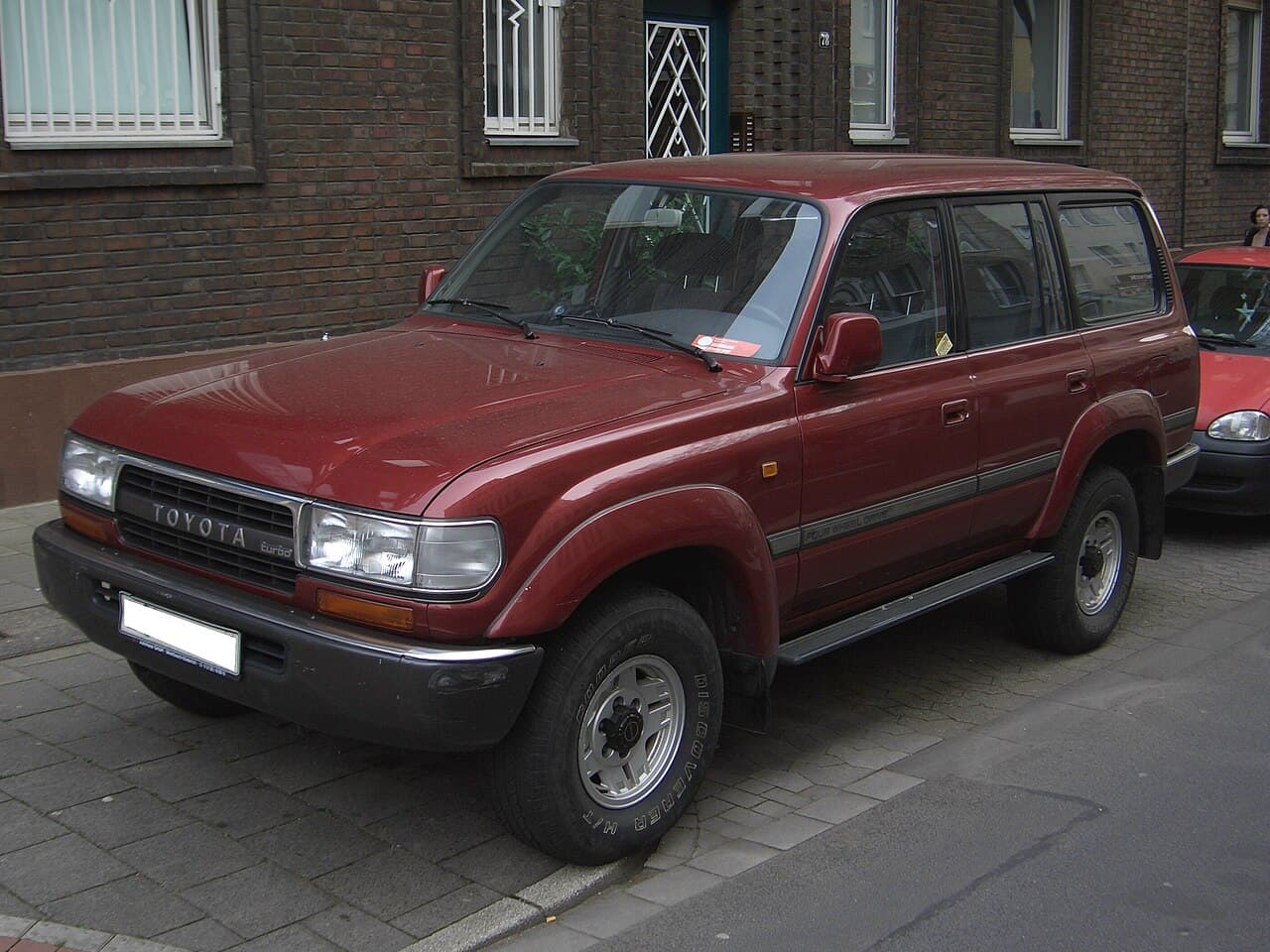
Check this exact Toyota LC80
- Money owing
- Written off
- Accident claims
- Odometer history
18
Critical
≈A$640–2,580
5
Which Toyota LC80 are you looking at?
Start your free check on this Toyota LC80
Pick the engine above first: the LC80 came with 7, and without it the report has to show all of their faults. Pick the engine
Can't confirm for this car
Toyota LC80
Nothing has been narrowed yet, so nothing below is a claim about a particular car. Pick a year and an engine to see which faults apply.
Tell us the engine, or check the engine code on the car, before relying on this.
matched on no vehicle context
What to look out for
Serious issue
Get to the vehicle before the seller has warmed it up and put your hand on the bonnet when you arrive to be sure it is stone cold.
1HD-FT 24-valve cylinder head cracking (pre-1998 head casting)
The 1HD-FT is the 4.2 twenty-four-valve turbo diesel fitted to the HDJ80 from 1995, and its defining weakness is the cylinder head itself cracking — typically between cylinders or through into a valve seat. Any overheating event, and any extra heat from a turned-up injection pump or a bigger turbo, sharply raises the risk. Toyota made a running change in 1998 to a revised head casting and an updated head gasket, released under bulletin TSB-98-04, which means an 80 Series still on its original head has the casting that cracks. A cracked head pushes combustion gas into the coolant and coolant into the cylinders: you get bubbling in the overflow bottle, coolant disappearing with no puddle underneath, sweet white smoke that will not clear, and eventually a hydraulically locked engine. This is not a head-gasket-and-hope job; the head has to come off and be replaced or properly repaired, and it is the single biggest financial risk on this model.
What you would notice
Serious issue
Combustion gas (CO2) sniff test on coolant overflow tank with engine at operating temperature.
Head gasket failure (4.2 1HZ diesel)
Head gasket failure is a possible fault on the naturally aspirated 4.2 1HZ diesel, usually after overheating. The gasket fails between cylinders or at a water jacket passage, typically after years of thermal cycling. Failure is gradual and often masked until coolant loss becomes obvious.
What you would notice
Serious issue
Listen for chain rattle on cold start and under load.
1FZ-FE Timing Chain Guide Rail Fracture
The 1FZ-FE timing chain system uses three nylon guide rails that become brittle through heat cycling and oil degradation. Beyond 150,000 km the plastic fractures, with fragments falling into the oil pan or jamming the chain. A fractured guide allows chain lateral movement and whip, causing audible chain noise and progressive timing variation. In severe cases the chain jumps a sprocket tooth or derails entirely, causing immediate valve-to-piston contact and catastrophic internal engine damage. This is a well-documented failure mode in the Toyota enthusiast community.
What you would notice
Serious issue
Perform a combustion gas test (block test / CO sniffer) on the coolant reservoir.
1FZ-FE Head Gasket Failure at High Mileage
The 1FZ-FE 4.5L inline-six petrol engine is prone to head gasket failure, particularly on high-mileage examples or any engine that has been overheated. The cast-iron block and aluminium head have differing thermal expansion rates, and the OEM multi-layer steel gasket is marginal at the fire-ring where cylinders 4 and 5 are closest to the coolant passage. Overheating events — often caused by a failed thermostat or blocked radiator — accelerate gasket degradation. Once compromised, coolant enters combustion chambers or the oil gallery.
What you would notice
Serious issue
Inspect EGR cooler exterior for coolant staining or calcium deposits.
1HD-FT EGR Cooler Crack and Coolant Contamination
The 1HD-FT 4.2L turbo diesel uses an EGR cooler that is prone to internal cracking at the coolant-side heat exchanger walls. The failure mode is thermal fatigue from repeated heat-soak cycles, particularly on vehicles used for long highway runs alternated with cold soaks. When the cooler cracks, coolant leaks internally into the EGR circuit and is inducted into the intake manifold, causing hydrolock risk and severe cylinder scoring if not caught early. External coolant weep from the cooler housing is an early warning sign.
What you would notice
Costly issue
Closely inspect both lower corners of the rear door(s) with a torch.
Rear Door Lower Corner Rust-Through
The 80 Series factory rear door design traps water and debris at the lower corners where the outer skin meets the frame channel. The factory drainage holes in this area are undersized and block readily with mud and organic matter, allowing moisture to sit against bare steel. Rust progresses from inside the door cavity outward, causing bubbling paint then rust-through at the lower corners. Both rear barn doors are affected, across all engine variants.
What you would notice
All 18 documented issues
5 rated criticalDepends on which engine this Toyota LC80 has: 18 issues
Engine, transmission & cooling
011HD-FT 24-valve cylinder head cracking (pre-1998 head casting)
Can't confirm for this car02Head gasket failure (4.2 1HZ diesel)
Can't confirm for this car
Can't confirm for this car
Head gasket failure is a possible fault on the naturally aspirated 4.2 1HZ diesel, usually after overheating. The gasket fails between cylinders or at a water jacket passage, typically after years of thermal cycling. Failure is gradual and often masked until coolant loss becomes obvious.
 Example of the part — not this vehicle
A used multi-layer head gasket. Discolouration between a cylinder and a water gallery is the tell.
Symptoms to notice
What to check
Ask the seller
031FZ-FE Timing Chain Guide Rail Fracture
Can't confirm for this car041FZ-FE Head Gasket Failure at High Mileage
Can't confirm for this car051HD-FT EGR Cooler Crack and Coolant Contamination
Can't confirm for this car061HZ Timing Chain Stretch at High Mileage
Can't confirm for this car
Can't confirm for this car
The 1HZ diesel uses a duplex roller timing chain that elongates significantly beyond 250,000 km of use. Chain slack causes retarded valve timing, reducing power and increasing fuel consumption. The plastic upper chain guide and mechanical tensioner wear concurrently, compounding the slack. A distinctive metallic rattle on cold start before oil pressure builds is the primary symptom. A jumped timing chain on a diesel risks valve-to-piston contact and severe internal engine damage.
 Example of the part — not this vehicle
The front of a twin-cam engine with the timing cover off — chain, sprockets and guides.
Symptoms to notice
What to check
Ask the seller
071HZ Injection Pump Governor Weight Wear
Can't confirm for this car081FZ-FE Timing Chain Tensioner Rattle on Cold Start
Can't confirm for this car
Can't confirm for this car
The 1FZ-FE uses a hydraulic timing chain tensioner that relies on oil pressure to maintain chain tension. At high mileage, the tensioner's non-return valve and spring weaken, allowing the oil film to drain down when the engine is stopped. On next cold start, the chain goes slack for several seconds until oil pressure builds, producing a characteristic metallic rattling from the front of the engine. Prolonged or severe slack can cause the chain to skip a tooth, resulting in valve timing errors and potential contact between valves and pistons.
Example of the part — not this vehicleThe front of a twin-cam engine with the timing cover off — chain, sprockets and guides.
Symptoms to notice
What to check
Ask the seller
091FZ-FE Petrol Cooling System Plastic Component Failure
Can't confirm for this carBody, brakes, suspension & interior
01Rear Floor Pan and Chassis Rail Rust
Can't confirm for this car
Can't confirm for this car
The 80 Series body has known rust-prone areas in the rear floor pan (particularly under the third-row seat area and behind the rear wheel arches where mud accumulates against the inner panel), and in the main chassis rails under the body where the box-section traps moisture and debris. In Australian coastal markets, salt-laden air combined with off-road mud packing accelerates this corrosion. In severe cases, structural chassis rail integrity is compromised, which affects tow rating legality and structural safety. Rust-through in the rear floor pan also allows exhaust fumes to enter the cabin.
Symptoms to notice
What to check
Ask the seller
02Rear Door Lower Corner Rust-Through
Can't confirm for this car03Recirculating Ball Steering Box Worn Sector Shaft Splines
Can't confirm for this car
Can't confirm for this car
The 80 Series uses a recirculating ball hydraulic steering box, and the sector shaft — the output shaft that connects to the drag link — develops worn splines at the pitman arm interface on high-mileage or hard-used vehicles. The splines are a tapered interference fit, and repeated high steering loads (common in off-road use) cause the pitman arm to work on the splines. Once the splines are worn, the pitman arm has rotational play relative to the shaft, producing a dead spot on centre and a clunking or knocking sensation through the steering wheel when changing direction. The steering box itself can also develop internal wear, resulting in vague on-centre feel.
Symptoms to notice
What to check
Ask the seller
0480 Series (J80) chassis cracking at the steering box and panhard rod mount
Can't confirm for this car
Can't confirm for this car
Fatigue cracking of the front left chassis rail around the steering box mounting bolts and the panhard rod (track bar) bracket is a known issue on the 80 Series Land Cruiser (J80). It is most often found on vehicles that have done off-road work or run larger tyres at low pressure, which loads the steering box mount. Small cracks can be ground out, welded and plated by a fabricator, but a crack left to grow lets the steering box move and can make the steering vague. Many owners fit a reinforcement plate as a preventive fix.
Symptoms to notice
What to check
Ask the seller
05Front Axle Birfield Joint Wear and Failure
Can't confirm for this car
Can't confirm for this car
The 80 Series uses full-time four-wheel drive with Birfield (constant-velocity) joints in the front axle shafts inside the sealed knuckle housing. These joints are packed with grease at the factory and are designed as high-load components, but the grease degrades over time and the ball and groove surfaces wear, particularly on vehicles used regularly with the centre diff locked or driven aggressively off-road. Once worn, the joint produces audible clicking or grinding under steering lock and on take-off, and can ultimately seize or shed balls, leaving the driver without front drive on one or both sides.
Symptoms to notice
What to check
Ask the seller
06Rear Coil Spring Cracking Under Load
Can't confirm for this car
Can't confirm for this car
The 80 Series moved to rear coil springs over the leaf-sprung 60 Series, and the OEM springs are prone to cracking at the lower coil seat area on vehicles that have been heavily loaded (towing, roof racks, aftermarket accessories, overlanding) or have high mileage. The spring steel fatigues at the point of maximum stress concentration where the coil contacts the rubber isolator on the axle perch. A cracked spring can partially collapse, giving a sudden drop in ride height on one corner.
Symptoms to notice
What to check
Ask the seller
07Front Sway Bar Bushing and End-Link Wear
Can't confirm for this car
Can't confirm for this car
The 80-series front sway bar rubber bushings and end links deteriorate from age and off-road use. The rubber in the centre cradle bushings cracks and collapses, and the end links develop play or seize. While not catastrophic, this produces handling vagueness and a rolling, loose feel on corners that is commonly misdiagnosed as shock absorber or steering wear. Replacement is inexpensive and often neglected on working 4WDs.
Symptoms to notice
What to check
Ask the seller
Fluid leaks
01Front Diff Stub Axle Oil Seal Failure
Can't confirm for this car
Can't confirm for this car
The front differential stub axle oil seals deteriorate with age, heat cycling, and water ingress from creek crossings. Failed seals allow differential oil to migrate outward along the axle shaft and contaminate the wheel hub bearing assembly. Differential oil displaces the hub bearing grease, stripping its lubricating properties and causing accelerated bearing wear and eventual hub failure.
Symptoms to notice
What to check
Ask the seller
02Differential and Axle Shaft Seal Weeping
Can't confirm for this car
Can't confirm for this car
Both the front and rear differentials on the 80 Series are known to develop weeping oil seals at the axle shaft exits as the nitrile seal lips harden with age and heat cycling. The rear differential pinion seal is also a common weep point. Seal failure is accelerated on vehicles that have been submerged during off-road use, as water intrusion degrades the seal lip. Diff oil loss leads to premature bearing and crown-wheel-and-pinion wear; on the front axle, leaking diff oil can migrate into the brake drum or disc area and contaminate brake friction material.
Symptoms to notice
What to check
Ask the seller
Toyota LC80 faults in detail
Other Toyota models
Toyota LC80 buyer questions
Is the Toyota LC80 reliable?
Like any used car, it depends on the specific example and its service history. Across the 18 documented faults for the Toyota LC80, the recurring problem areas are engine, cooling, and body & rust. A Toyota LC80 with a full service history and no signs of the issues listed on this page can be a sound buy but each one needs to be checked individually before you commit.
What are the most common problems with a used Toyota LC80?
We've catalogued 18 known faults for the Toyota LC80, covering engine, cooling, and body & rust. All 18 are written out in full on this page, with the symptoms to notice, what to inspect, and typical repair costs for each. Free to read, no account needed.
How much do repairs cost on a Toyota LC80?
Most single repairs on the Toyota LC80 fall between ≈A$640–2,580 at independent-workshop rates (an approximate guide in Australian dollars). Some of the 18 documented faults cost less and a few cost considerably more, and no one car needs them all. Knowing which ones to look for before you view is what lets you negotiate the price down or walk away.
Should I get a pre-purchase inspection on a Toyota LC80?
Yes. A Toyota LC80 inspection focused on its known weak points is the single best way to avoid an expensive mistake. KickTyres gives you a guided, model-specific inspection with AI photo analysis from A$28.90, far less than the cost of missing one of the faults on this page. For a big purchase, a mechanic's pre-purchase inspection on the car you settle on is still worth it.