 2005–2010RGRG2.0L petrol (K20A)PetrolSee faults & what to checkPhoto: TTTNIS via Wikimedia Commons, Public domain.
Honda2001–2022 Critical issues documented
Honda StepWGN: common faults & what to check
Thinking about buying a used Honda StepWGN (2001–2022) in New Zealand? We've documented 31 known faults for this model spanning cooling, suspension, engine, and transmission. Each researched and verified before it's published. The most serious issues here are rated critical. Every one is listed below with its symptoms and repair cost, and each has its own page with where to look and what to ask the seller. Free, no account needed.
Check this exact Honda StepWGN
- Odometer history
- Money owing
- Reported stolen
- Ownership history
31
Critical
$350–$1,300
27
Which Honda StepWGN are you looking at?
Petrol
2005–2010RGRG2.0L petrol (K20A)PetrolSee faults & what to checkPhoto: TTTNIS via Wikimedia Commons, Public domain.2005–2010RGRG2.4L petrol (K24A)PetrolSee faults & what to checkPhoto: TTTNIS via Wikimedia Commons, Public domain. 2009–2016RKRK2.0L petrol (K20A)PetrolSee faults & what to checkPhoto: TTTNIS via Wikimedia Commons, Public domain.
 2015–nowRPRP1.5L petrol (L15B2)PetrolSee faults & what to checkPhoto: User 3204 via Wikimedia Commons, CC BY-SA 4.0.
Hybrid
2015–nowRPRP2.0 hybridHybridSee faults & what to checkPhoto: User 3204 via Wikimedia Commons, CC BY-SA 4.0.Engine not documented
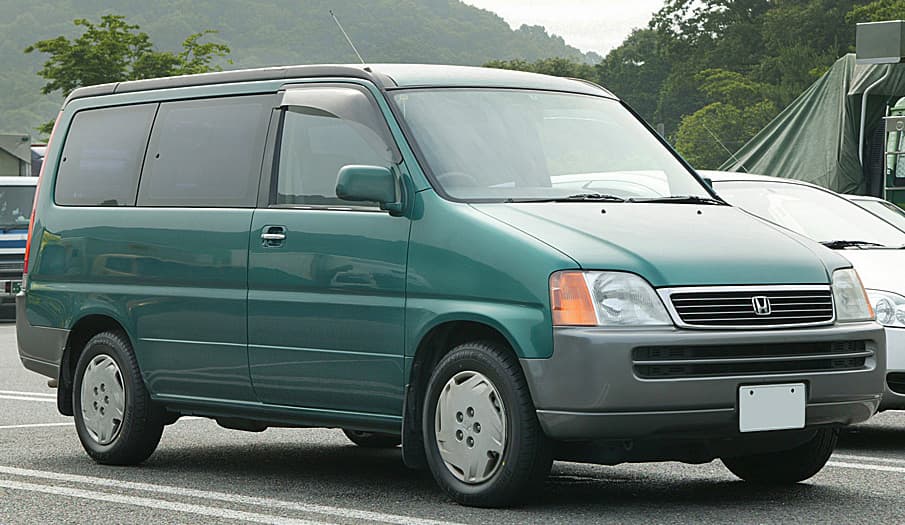 1996–2006RFRFEngine not documented for this generationEngine not documentedSee faults & what to checkPhoto: Tennen-Gas via Wikimedia Commons, CC BY-SA 3.0.
Now narrow it to the engine
Start your free check on this Honda StepWGN
Honda StepWGNEngine not picked yet
Pick the engine above first: the StepWGN came with 3, and without it the report has to show all of their faults. Pick the engine
Can't confirm for this car
Honda StepWGN
Nothing has been narrowed yet, so nothing below is a claim about a particular car. Pick a year and an engine to see which faults apply.
Tell us the engine, or check the engine code on the car, before relying on this.
matched on no vehicle context
What to look out for
Serious issue
Inspect the dust boot for cracking or oil contamination.
Front Lower Control Arm Ball Joint Wear
The RP3 and RP4 Step WGN front suspension uses a MacPherson strut layout with a pressed-in lower ball joint on the aluminium lower control arm. The ball joint dust boot deteriorates from road spray and heat cycling, allowing moisture and grit ingress that accelerates wear of the joint socket; once play develops, the joint can separate under cornering loads, which is a critical safety failure. High parts-availability from both OEM Honda (part 51360-SWA-A01 and related supersessions) and aftermarket suppliers specifically for the RP1-RP5 generation confirms workshop recognition of this as a recurring wear item.
What you would notice
Serious issue
Visually inspect the ball joint rubber boot for tears or missing material and grease contamination on surrounding components.
Front Lower Control Arm Ball Joint Wear and Separation
The front lower control arm ball joints on both the RF and RK series Step WGN are a documented failure point captured in Japanese shaken (mandatory roadworthiness inspection) rejection records. The ball joint stud is a press-fit into the knuckle, and the rubber boot protecting the grease-packed joint deteriorates with UV exposure and road contamination. Once the boot tears, water and road grit intrude, accelerating wear of the ball taper. In advanced cases the joint develops free play detectable as a clunk over bumps; in severe cases, the stud can separate from the socket, causing sudden loss of wheel geometry control — a critical safety event. Japanese shaken records show the front lower arm joint as a recurring rejection item on Step WGNs over 8 years old.
What you would notice
Serious issue
Start the engine cold and listen for a high-pitched bearing whine from the front-left bay where the EWP is mounted on the inverter cooling circuit.
i-MMD inverter electric water pump bearing failure
The RP6 Spada e:HEV uses Honda's second-generation i-MMD hybrid system, which relies on a dedicated electric water pump (EWP) to circulate coolant through the Power Control Unit (PCU) inverter and drive motor assembly. Premature bearing wear inside this EWP reduces coolant flow to the inverter, triggering PCU over-temperature protection faults and forcing the vehicle into reduced-power or combustion-only limp mode. Early bearing degradation is audible as a high-pitched whine from the front-left engine bay at low road speeds. Replacement requires draining the separate inverter cooling circuit and fitting a JDM-specification Honda EWP assembly, which can be on extended back-order for grey-import vehicles without dealer parts priority.
What you would notice
Costly issue
Cycle the power sliding door fully open and closed three times while observing speed and listening for motor strain.
Power Sliding Door Motor Burnout
All three Stepwagon generations (RF, RG, RK) use an electrically-driven power sliding door. The DC drive motor is undersized relative to the friction loads created by worn rollers, dirty guide rails, and deteriorated door seals. When the motor stalls against increased resistance, the amperage spikes and the motor windings overheat and burn out. This is the single most reported failure mode across the RF3, RG1, and RK1 platforms.
What you would notice
Costly issue
Operate the power door through five full open-and-close cycles and listen for grinding, stuttering, or unusual motor strain noise.
Power Sliding Door Cable Fraying and Motor Burnout
The power sliding door system fitted to Step WGNs uses a cable-drive mechanism actuated by an electric motor mounted in the B-pillar or door assembly. The steel drive cable runs through a plastic conduit and is subject to fatigue, kinking, and fraying — particularly near the pulleys at the top and bottom of the door track. Cable wear is accelerated by infrequent lubrication of the door track and misalignment from door strikes or hinge wear. A fraying cable creates increased electrical load on the drive motor, which then overheats and burns out its brushes or thermal fuse. The door controller module also accumulates fault codes that can disable the power function entirely. This failure is among the most frequently reported mechanical issues on Step WGNs in NZ and Australia given their age and the intensive use of the sliding door on a family vehicle.
What you would notice
Costly issue
Check the electrical connector for oil contamination.
VTEC Solenoid OCV Gasket Oil Leak
On RF3 and RF4 Step WGNs fitted with the K20A and K24A engines, the rubber O-ring and gasket sealing the VTEC oil control valve (OCV/solenoid) to the cylinder head deteriorates with heat cycling. Oil migrates from the solenoid base along the cam cover and drips onto the exhaust manifold heat shield, creating a persistent burning oil smell. The failure is progressive — early stages present only as oil seepage, but the gasket eventually hardens and shrinks, causing a steady external leak and loss of VTEC oil pressure. Because the OCV controls the rocker-arm switching mechanism, degraded sealing also introduces intermittent VTEC engagement failure under high RPM.
What you would notice
Honda StepWGN service schedule
Sixth Generation · 2022–2026 · 2.0L (LFB) - e:HEV Air/Spada Hybrid trim
Due by distance
- 40,000 km
Routine hybrid cooling system inspection and cabin air filter refresh.
- 80,000 km
Assess the hybrid battery health and perform a comprehensive transmission fluid flush.
- 120,000 km
Replace the spark plugs and assess the suspension bushings and struts in detail.
Sixth Generation · 2022–2026 · 1.5L (L15C) - VTEC Turbo trim
Due by distance
- 60,000 km
Flush the transmission fluid specifically for the CVT to maintain longevity.
- 100,000 km
Inspect the spark plugs and check the turbo inlet hoses for aging.
- 120,000 km
Assess the cooling system and ensure the water pump is operating efficiently.
Fifth Generation · 2017–2022 · 2.0L (LFA) - e:HEV Hybrid trim
Due by distance
- 100,000 km
Inspect the hybrid cooling system and consider flushing the inverter coolant - clean fluid is vital for e:HEV longevity.
- 150,000 km
A professional assessment of the hybrid battery health is worthwhile, though these units are generally robust for high-mileage commuting.
- 200,000 km
Focus on the suspension components, particularly the shocks and struts, which may be feeling their age on our country roads.
Fifth Generation · 2015–2022 · 1.5L (L15B) - VTEC Turbo trim
Due by distance
- 60,000 km
Flush the transmission fluid to ensure the longevity of the CVT belt and pulley system.
- 100,000 km
Review the turbocharger lines and spark plug health for optimal engine efficiency.
- 150,000 km
Inspect the cooling system hoses and radiator health for age-related wear.
Fourth Generation · 2009–2015 · 2.0L (R20A) - Standard i-VTEC
Due by distance
- 100,000 km
The accessory drive belt and spark plugs are due for their first major inspection or replacement.
- 150,000 km
Verify cooling system health, specifically checking for radiator seepage.
- 200,000 km
Have a specialist inspect the engine mounts for vibrations - these can soften and cause minor cabin resonance at idle.
Third Generation · 2005–2009 · 2.4L (K24A) - Spada/Performance trim
Due by distance
- 150,000 km
Full cooling system refresh, including a new thermostat and coolant flush, keeps the K24 engine running optimally.
- 200,000 km
Engine mounts and suspension bushings get inspected for perishing here, common in cars of this age.
- 250,000 km
Assess the alternator and starter motor longevity to keep the electrical system reliable for daily commutes.
Third Generation · 2005–2009 · 2.0L (R20A) - Base i-VTEC trim
Due by distance
- 150,000 km
Suspension bushings and engine mounts might benefit from a professional inspection.
- 200,000 km
Verify the timing chain condition and ensure the transmission fluid has been serviced regularly.
- 250,000 km
Have the alternator and starter motor assessed - these components have seen significant duty by this stage.
Second Generation · 2001–2005 · 2.0L (K20A) - Standard i-VTEC
Due by distance
- 150,000 km
Cooling system hoses and thermostat seals might show age here - a good time to refresh the coolant.
- 200,000 km
Check the alternator brushes and power steering pump for weeping seals.
- 250,000 km
Have the suspension struts and shock absorbers professionally evaluated for rebound performance - these components often reach the end of their optimal lifespan by this stage.
First Generation (Facelift) · 2000–2001 · 2.0L (B20B) - Standard family trim
Due by distance
- 150,000 km
Confirm the timing belt has been replaced recently, as the B20B is an interference engine.
- 200,000 km
Review the health of cooling system components like the water pump and thermostat.
- 250,000 km
Alternator brushes and starter motor solenoids may eventually need professional attention.
See all 31 documented issues
Depends on which engine this Honda StepWGN has — 31
Engine, transmission & cooling
01i-MMD inverter electric water pump bearing failure
Can't confirm for this car
OccasionalCooling $1,200–$3,800 to fix
Can't confirm for this car
The RP6 Spada e:HEV uses Honda's second-generation i-MMD hybrid system, which relies on a dedicated electric water pump (EWP) to circulate coolant through the Power Control Unit (PCU) inverter and drive motor assembly. Premature bearing wear inside this EWP reduces coolant flow to the inverter, triggering PCU over-temperature protection faults and forcing the vehicle into reduced-power or combustion-only limp mode. Early bearing degradation is audible as a high-pitched whine from the front-left engine bay at low road speeds. Replacement requires draining the separate inverter cooling circuit and fitting a JDM-specification Honda EWP assembly, which can be on extended back-order for grey-import vehicles without dealer parts priority.
Symptoms to notice
What to check
Ask the seller
02L15B2 1.5T direct injection fuel-wash oil dilution
Can't confirm for this car03CVT Judder and Belt-Pulley Wear
Can't confirm for this car
CommonTransmission $300–$7,500 to fix
Can't confirm for this car
RK and RP Stepwgn CVT-equipped models develop judder felt as a vibration or shudder during light throttle application from rest or during low-speed transitions, caused by degraded CVT fluid reducing the belt-to-pulley friction coefficient or by physical belt and pulley wear. Neglected CVT fluid intervals significantly accelerate belt wear. Early-stage judder often resolves with a Honda-genuine CVT fluid flush; severe belt wear requires transmission replacement.
Symptoms to notice
What to check
Ask the seller
04CVT RE0F11A push-belt judder under light throttle
Can't confirm for this car05RK CVT Belt Slip and Judder Under Load
Can't confirm for this car
OccasionalTransmission $2,800–$6,500 to fix
Can't confirm for this car
The RK1/RK5 Stepwagon uses Honda's Multimatic S CVT (M2CA/M2JA units). The steel push-belt and conical pulley faces are sensitive to fluid contamination and extended service intervals. As the belt wears, it begins slipping under acceleration load, producing a hunting sensation where engine revs rise without a proportional increase in vehicle speed. The condition progresses to judder and shudder at low speeds, and in advanced cases the TCM defaults to a limp-home ratio and triggers a transmission warning.
Symptoms to notice
What to check
Ask the seller
06Sport Hybrid i-MMD Low-Speed Shudder and EV-to-Engine Transition Jolt
Can't confirm for this car07CVT Shudder and Belt/Pulley Wear Under Load (RK Series)
Can't confirm for this car08Air Conditioning Compressor Clutch Failure
Can't confirm for this car
CommonCooling $500–$1,500 to fix
Can't confirm for this car
The Sanden or Denso compressors fitted across the Stepwgn range develop electromagnetic clutch coil failure and pulley bearing wear, causing the clutch to slip, drag, or disengage permanently. Clutch coil burnout is commonly triggered by low refrigerant charge (due to gradual R134a loss from aged O-ring seals), which causes the compressor to cycle more aggressively and overheat the clutch coil. In some cases the clutch disc welds itself to the pulley due to heat, causing continuous compressor drive that leads to full serpentine belt failure. Honda workshop procedures require refrigerant system leak testing before clutch replacement to avoid repeat failure.
Symptoms to notice
What to check
Ask the seller
09K24A VTC Actuator Cold-Start Rattle
Can't confirm for this car10VTEC Solenoid OCV Gasket Oil Leak
Can't confirm for this car11Throttle Body Carbon Fouling
Can't confirm for this car
CommonEngine $80–$300 to fix
Can't confirm for this car
K20A/K24A throttle body butterfly and bore accumulate carbon causing rough idle and hesitation.
Symptoms to notice
What to check
Ask the seller
12K20A / K24A VTEC Oil Pressure Switch Failure
Can't confirm for this car
CommonEngine $80–$180 to fix
Can't confirm for this car
The VTEC oil pressure switch (also called the VTEC pressure sensor) monitors oil pressure at the rocker shaft to confirm that the VTEC engagement mechanism has actuated. On RF3 and RF4 engines, this switch is a known wear item that fails in two ways: the internal diaphragm ruptures (causing the ECU to see no VTEC confirmation signal and throw P1259), or the switch body develops an external oil weep around its threaded base. Failed switches prevent VTEC from engaging, locking the engine into its low-lift cam profile and noticeably dulling high-RPM performance. The switch is inexpensive but frequently misdiagnosed, leading owners to replace the OCV solenoid first at greater cost.
Symptoms to notice
What to check
Ask the seller
Electrical
01Electric Power Steering Column Motor Failure
Can't confirm for this car
OccasionalElectrical $500–$1,800 to fix
Can't confirm for this car
EPS column motor fails causing sudden or gradual loss of power assistance.
Symptoms to notice
What to check
Ask the seller
02Power Sliding Door Cable Fraying and Drive Motor Overload Failure
Can't confirm for this car03Power sliding door cable fraying causing door fault
Can't confirm for this car04Power Sliding Door Motor Burnout
Can't confirm for this car05Power Sliding Door Cable Fraying and Motor Burnout
Can't confirm for this car0612V auxiliary battery drain causing hybrid lockout
Can't confirm for this car
OccasionalElectrical $280–$900 to fix
Can't confirm for this car
The RP6 Spada e:HEV relies on a small 12V lead-acid auxiliary battery to power the Body Control Module, hybrid system wake-up relay, and keyless entry receiver. Unlike a conventional petrol vehicle, a flat 12V battery in an i-MMD hybrid prevents the high-voltage traction system from initialising, rendering the vehicle completely inoperable — it cannot be push-started and cannot respond to conventional jump-starting without first recovering 12V supply. Parasitic drain faults — commonly from the telematics unit or infotainment system remaining active after locking — can flatten the 12V battery overnight. NZ grey imports with aftermarket dashcam or audio wiring add unmonitored drain paths, and JDM-original 12V batteries are frequently over five years old on arrival.
Symptoms to notice
What to check
Ask the seller
Body, brakes, suspension & interior
01Front Lower Control Arm Ball Joint Wear
Can't confirm for this car
CommonSuspension $400–$900 to fix
Can't confirm for this car
The RP3 and RP4 Step WGN front suspension uses a MacPherson strut layout with a pressed-in lower ball joint on the aluminium lower control arm. The ball joint dust boot deteriorates from road spray and heat cycling, allowing moisture and grit ingress that accelerates wear of the joint socket; once play develops, the joint can separate under cornering loads, which is a critical safety failure. High parts-availability from both OEM Honda (part 51360-SWA-A01 and related supersessions) and aftermarket suppliers specifically for the RP1-RP5 generation confirms workshop recognition of this as a recurring wear item.
 Example of the part — not this vehicle
A separated lower ball joint: the control arm has dropped and the wheel has splayed out under the guard.
Symptoms to notice
What to check
Ask the seller
02Front Lower Control Arm Ball Joint Wear and Separation
Can't confirm for this car
CommonSuspension $280–$650 to fix
Can't confirm for this car
The front lower control arm ball joints on both the RF and RK series Step WGN are a documented failure point captured in Japanese shaken (mandatory roadworthiness inspection) rejection records. The ball joint stud is a press-fit into the knuckle, and the rubber boot protecting the grease-packed joint deteriorates with UV exposure and road contamination. Once the boot tears, water and road grit intrude, accelerating wear of the ball taper. In advanced cases the joint develops free play detectable as a clunk over bumps; in severe cases, the stud can separate from the socket, causing sudden loss of wheel geometry control — a critical safety event. Japanese shaken records show the front lower arm joint as a recurring rejection item on Step WGNs over 8 years old.
Example of the part — not this vehicleA separated lower ball joint: the control arm has dropped and the wheel has splayed out under the guard.
Symptoms to notice
What to check
Ask the seller
03Electric Power Steering Rack Rattle
Can't confirm for this car
OccasionalSuspension $950–$3,200 to fix
Can't confirm for this car
The RP1-RP5 Stepwgn uses a column-assist electric power steering (EPS) system that develops an internal rattle or clunk from the steering rack when the vehicle encounters sharp bumps or low-speed kerb strikes. The noise originates from worn tie-rod inner joints and play in the rack-and-pinion valve body, which becomes apparent as the EPS torque sensor assist map ages and rack preload tolerances open up. Honda issued updated rack assemblies and tie-rod end specifications under service information for several RP-series complaints. The fault is often misdiagnosed as a suspension issue because the noise transfers through the body structure.
Symptoms to notice
What to check
Ask the seller
04Electric Power Steering Rack Rattle and Stiction (RK Series)
Can't confirm for this car
OccasionalSuspension $550–$2,200 to fix
Can't confirm for this car
RK5 and RK6 Step WGNs replaced the hydraulic power steering of the RF series with an electric power steering (EPS) rack. The rack unit on these vehicles develops two distinct failure modes as mileage accumulates: internal rattle from worn rack-and-pinion bearing preload (the anti-rattle spring or bearing cup loses its seating), and stiction — a notchy, on-centre resistance or slight hesitation when returning from lock — caused by wear in the EPS motor's internal helical gear that assists the rack. The rattle presents as a mechanical knock from the steering column area when traversing rough surfaces at low speed and is frequently misidentified as a front suspension issue. Honda issued dealer technical service guidance in Japan covering recalibration of the EPS torque sensor as a first step before rack replacement.
Symptoms to notice
What to check
Ask the seller
05Rear Multi-Link Suspension Bush Deterioration and Collapse
Can't confirm for this car
CommonSuspension $600–$1,500 to fix
Can't confirm for this car
The RP3 and RP4 Step WGN rear suspension uses a multi-link design with multiple rubber-bonded bushes on each trailing arm, lateral link, and toe-control link. The OEM rubber compound used in these bushes deteriorates with age and exposure to road oils and New Zealand road surfaces, causing the rubber to crack, separate from its metal sleeve, or collapse radially; when bushes collapse the rear axle geometry shifts outside specification, producing oversteering handling behaviour, tyre scrub, and vibration under acceleration. Parts suppliers including BuyCarParts and EUSpares list dedicated rear bush kits specifically for the Honda Stepwagon, confirming the component as a documented replacement item, and the issue accelerates in vehicles imported from Japan with high urban mileage.
Symptoms to notice
What to check
Ask the seller
06Front lower arm inner bush failure & highway shimmy
Can't confirm for this car
CommonSuspension $480–$1,300 to fix
Can't confirm for this car
The RP3 Stepwagon front suspension uses a two-pivot lower control arm with a large bonded rubber-to-metal compliance bush pressed into the front subframe mount. This bush degrades and delaminates under combined exposure to NZ road camber variation, age, and residual humidity or salt from JDM use. As the bush loses axial stiffness, the control arm fore-aft position becomes indeterminate under braking and cornering loads, introducing a steering shimmy that manifests as a 60 to 100 km/h oscillation through the steering wheel. This oscillation is consistently misdiagnosed as a wheel balance fault — standard balancing does not resolve it. Replacement requires hydraulic pressing of the bush or fitting a complete lower arm assembly.
Example of the part — not this vehicleA separated lower ball joint: the control arm has dropped and the wheel has splayed out under the guard.
Symptoms to notice
What to check
Ask the seller
07Rear Suspension Beam Bush Collapse
Can't confirm for this car08Rear Subframe Rubber Mount Deterioration
Can't confirm for this car
CommonSuspension $420–$900 to fix
Can't confirm for this car
The rear subframe on Step WGNs is attached to the body via four large rubber-bonded mounts that isolate road noise and absorb load from the rear suspension and drivetrain. On vehicles over 10 years old — which encompasses virtually all RF-series Step WGNs in the NZ used car market — the natural rubber in these mounts hardens, cracks, and eventually debonds from the metal sleeves. Deteriorated mounts allow the rear subframe to move under braking, acceleration, and cornering loads, introducing a clunking or thudding sensation from the rear that is often misdiagnosed as shock absorber wear. In severe cases the subframe shifts enough to affect rear wheel alignment, causing unusual tyre wear. NZ workshop records consistently flag these mounts on RF-series Step WGNs over 150,000 km.
Symptoms to notice
What to check
Ask the seller
09Sliding Door Roller Guide Rail Wear
Can't confirm for this car10Brake Caliper Guide Pin Seizure Causing Uneven Pad Wear
Can't confirm for this car11Electric Power Steering Rack Internal Rattle and Clunk
Can't confirm for this car
CommonSuspension $1,200–$2,800 to fix
Can't confirm for this car
The RP3 and RP4 Step WGN uses a column-assist electric power steering (EPS) system where the rack-and-pinion gear develops internal play between the rack teeth and pinion over time, producing a rattle or clunk transmitted through the steering column on rough roads or at low speeds. The yoke preload spring that maintains rack-to-housing tension can weaken or the poppet seating wears, allowing the rack to knock against its housing under abrupt lateral inputs. This is a documented pattern across Honda EPS-equipped vehicles of this era and is confirmed by workshop TSB references for rattling EPS racks requiring rack assembly replacement.
Symptoms to notice
What to check
Ask the seller
12Rear Trailing Arm Bush Collapse
Can't confirm for this car
CommonSuspension $300–$800 to fix
Can't confirm for this car
Rear trailing arm bushes harden and collapse causing rear knocking and imprecision.
Symptoms to notice
What to check
Ask the seller
Fluid leaks
01K20A Valve Cover Gasket Oil Seep
Can't confirm for this car
CommonFluid Leaks $180–$420 to fix
Can't confirm for this car
The K20A-equipped Stepwagon (RF3, RG1) uses a rubber valve cover gasket that hardens and shrinks with age and heat cycling. Oil seeps past the gasket, particularly at the rear corners where the gasket meets the spark plug tube seals. The oil tracks down the back of the engine and onto the exhaust, causing a burning oil smell. The PCV system also pressurises the cover if the breather is restricted, worsening the leak rate.
Symptoms to notice
What to check
Ask the seller
Honda StepWGN faults in detail
Brake Caliper Guide Pin Seizure Causing Uneven Pad WearCVT RE0F11A push-belt judder under light throttleCVT Shudder and Belt/Pulley Wear Under Load (RK Series)K24A VTC Actuator Cold-Start RattleL15B2 1.5T direct injection fuel-wash oil dilutionPower Sliding Door Cable Fraying and Drive Motor Overload FailurePower Sliding Door Cable Fraying and Motor BurnoutPower sliding door cable fraying causing door faultPower Sliding Door Motor BurnoutRear Suspension Beam Bush CollapseSliding Door Roller Guide Rail WearSport Hybrid i-MMD Low-Speed Shudder and EV-to-Engine Transition JoltVTEC Solenoid OCV Gasket Oil Leak
What these repairs cost on other cars
Some of the Honda StepWGN’s documented faults are repairs other models share. Each page lists the documented NZ cost for every model it affects.
Other Honda models
Honda StepWGN buyer questions
Is the Honda StepWGN reliable?
Like any used car, it depends on the specific example and its service history. Across the 31 documented faults for the Honda StepWGN, the recurring problem areas are cooling, suspension, and engine. A Honda StepWGN with a full service history and no signs of the issues listed on this page can be a sound buy but each one needs to be checked individually before you commit.
What are the most common problems with a used Honda StepWGN?
We've catalogued 31 known faults for the Honda StepWGN, covering cooling, suspension, and engine. All 31 are written out in full on this page, with the symptoms to notice, what to inspect, and typical repair costs for each. Free to read, no account needed.
How much do repairs cost on a Honda StepWGN?
Most single repairs on the Honda StepWGN fall between $350–$1,300 at NZ independent-workshop rates. Some of the 31 documented faults cost less and a few cost considerably more, and no one car needs them all. Knowing which ones to look for before you view is what lets you negotiate the price down or walk away.
Should I get a pre-purchase inspection on a Honda StepWGN?
Yes. A Honda StepWGN inspection focused on its known weak points is the single best way to avoid an expensive mistake. KickTyres gives you a guided, model-specific inspection plus a market valuation and negotiation figure for $24.90 far less than the cost of missing one of the faults on this page.