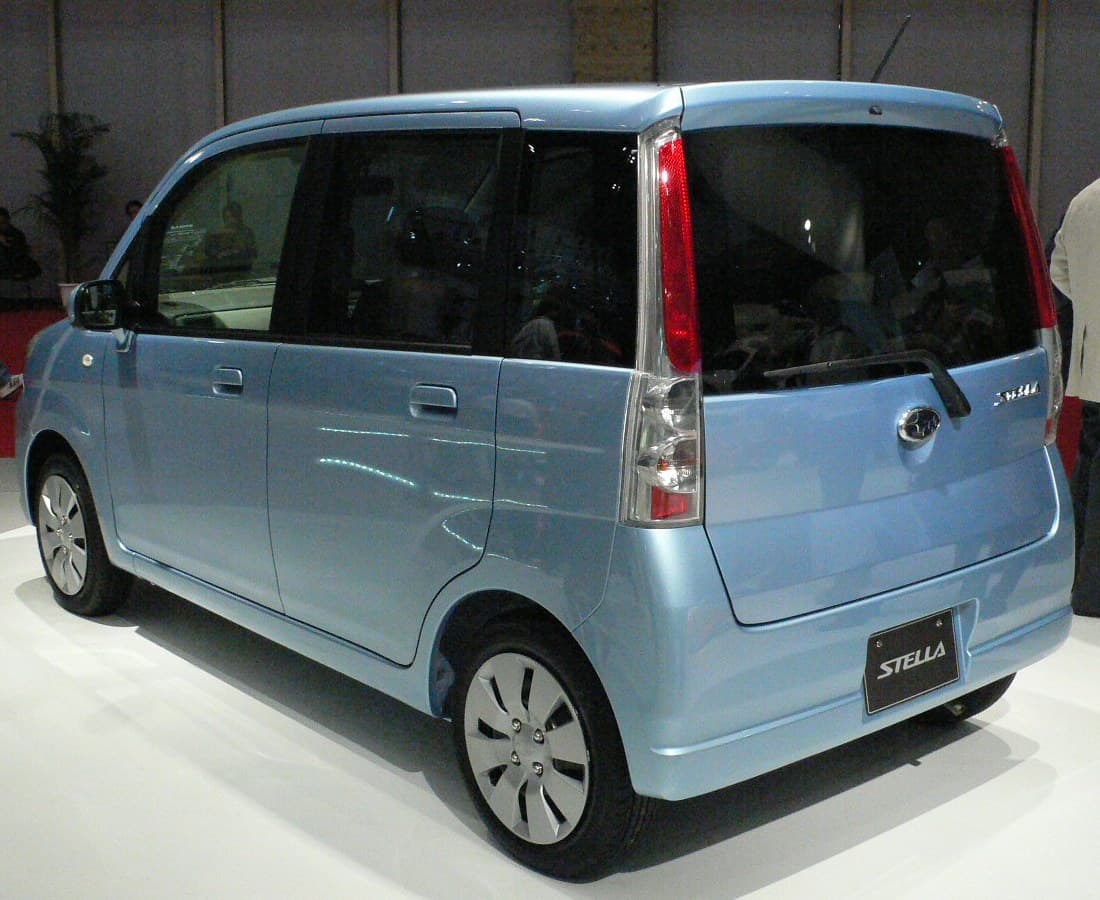
 2006–2011RN1RN10.66 petrolPetrolSee faults & what to checkPhoto: Mytho88 via Wikimedia Commons, CC BY-SA 3.0.
Subaru2006–2011 Major issues documented
Subaru Stella: common faults & what to check
Thinking about buying a used Subaru Stella (2006–2011) in New Zealand? We've documented 10 known faults for this model spanning transmission, engine, electrical, and suspension. Each researched and verified before it's published. The most serious issues here are rated major. Every one is listed below with its symptoms and repair cost, and each has its own page with where to look and what to ask the seller. Free, no account needed.
Check this exact Subaru Stella
- Odometer history
- Money owing
- Reported stolen
- Ownership history
10
Major
$250–$1,800
5
Which Subaru Stella are you looking at?
Petrol
2006–2011RN1RN10.66 petrolPetrolSee faults & what to checkPhoto: Mytho88 via Wikimedia Commons, CC BY-SA 3.0.2006–2011RN1RN10.66 supercharged petrolPetrolSee faults & what to checkPhoto: Mytho88 via Wikimedia Commons, CC BY-SA 3.0.Now narrow it to the engine
Start your free check on this Subaru Stella
Subaru StellaEngine not picked yet
Pick the engine above first: the Stella came with 2, and without it the report has to show all of their faults. Pick the engine
Can't confirm for this car
Subaru Stella
Nothing has been narrowed yet, so nothing below is a claim about a particular car. Pick a year and an engine to see which faults apply.
Tell us the engine, or check the engine code on the car, before relying on this.
matched on no vehicle context
What to look out for
Costly issue
Test drive and feel for rhythmic vibration during take-off and light acceleration.
CVT Belt Judder and Pulley Wear
The CVT develops shudder from belt and pulley surface wear. Correct CVT fluid must be used — Subaru ECVTF or Daihatsu-specified equivalent.
What you would notice
Costly issue
Ask for documented proof of the last cam-timing-belt change.
Timing belt service overdue and supercharger wear on EN07 / supercharged EN07T grades
The EN07 in the Stella is a belt-driven engine, and the cam timing belt is a scheduled replacement item generally quoted at around 100,000 km or ten years (some kei-specialist guides suggest a more conservative 60,000-80,000 km). Sources disagree on whether the EN07 is a true interference design, so a snapped belt may mean either a catastrophic valve-to-piston strike or simply a stranding; either way an overdue belt on an imported car of this age is a real risk because the original service history is usually unknown. Supercharged grades (EN07 with the roots-type blower) add further wear points: the supercharger bearings can become noisy past roughly 130,000 km (about 80,000 miles) and the supercharger drive belt and bypass plumbing need periodic inspection. On any Stella of this age assume the timing belt is due unless there is paperwork proving otherwise, and on a supercharged car listen for boost-related noise.
What you would notice
Costly issue
Check engine oil level frequently between services — consumption of more than 500ml per 5,000 km is abnormal.
EN07 Oil Consumption from Valve Stem Seals
Valve stem seals harden and shrink with age on the EN07 engine, allowing oil to be drawn into the combustion chamber causing blue smoke on startup and increased oil consumption.
What you would notice
Costly issue
Start the car dead cold and watch the exhaust for a blue-grey puff as it fires, then again after it has idled and you blip the throttle.
EN07 valve-stem-seal wear causing oil consumption and blue start-up smoke at higher km
The first-generation Stella (RN1/RN2) uses Subaru's 658cc EN07 four-cylinder, an engine shared across the R2, Pleo and Sambar line. The most frequently reported EN07 wear mode is hardening of the valve stem seals, which lets oil seep past the valves overnight and burn off on the next start. It typically shows up past roughly 120,000-130,000 km (around 80,000 miles) as a puff of blue-grey smoke on cold start-up or on the over-run after a long down-hill, together with the engine quietly using oil between services. The EN07 also has a small oil capacity and a top-mounted filter that can drain down and cause a brief dry start, both of which accelerate the wear, so imported cars with unknown oil-change history are the higher risk. Left unattended the oil use worsens and can foul plugs and the catalytic converter, so it is worth catching early.
What you would notice
Costly issue
Listen for a squealing or chirping from the supercharger drive area under load.
EN07 Supercharger Belt and Tension Idler Bearing Failure
The EN07 supercharged 0.66 engine drives the supercharger via a poly-V belt with a spring-loaded tension idler. The idler bearing wears causing squealing and belt slipping, which manifests as power loss especially under load. Belt failure results in complete loss of supercharger boost and reduced performance.
What you would notice
Costly issue
Any movement indicates replacement needed.
Front Lower Arm Ball Joint Play
Front lower arm ball joints wear causing clunking. Very common on kei cars with small-diameter ball joints.
What you would notice
See all 10 documented issues
Depends on which engine this Subaru Stella has — 10
Engine, transmission & cooling
01i-CVT low-speed shudder and ageing-fluid wear (inferred from Subaru CVT pattern)
Can't confirm for this car02CVT Belt Judder and Pulley Wear
Can't confirm for this car
Very commonTransmission $500–$3,000 to fix
Can't confirm for this car
The CVT develops shudder from belt and pulley surface wear. Correct CVT fluid must be used — Subaru ECVTF or Daihatsu-specified equivalent.
Symptoms to notice
What to check
Ask the seller
03Timing belt service overdue and supercharger wear on EN07 / supercharged EN07T grades
Can't confirm for this car04EN07 Oil Consumption from Valve Stem Seals
Can't confirm for this car
CommonEngine $600–$1,800 to fix
Can't confirm for this car
Valve stem seals harden and shrink with age on the EN07 engine, allowing oil to be drawn into the combustion chamber causing blue smoke on startup and increased oil consumption.
Symptoms to notice
What to check
Ask the seller
05EN07 valve-stem-seal wear causing oil consumption and blue start-up smoke at higher km
Can't confirm for this car06EN07 Supercharger Belt and Tension Idler Bearing Failure
Can't confirm for this car
CommonEngine $250–$700 to fix
Can't confirm for this car
The EN07 supercharged 0.66 engine drives the supercharger via a poly-V belt with a spring-loaded tension idler. The idler bearing wears causing squealing and belt slipping, which manifests as power loss especially under load. Belt failure results in complete loss of supercharger boost and reduced performance.
Symptoms to notice
What to check
Ask the seller
Electrical
01Electric Power Steering Failure
Can't confirm for this car
OccasionalElectrical $500–$1,800 to fix
Can't confirm for this car
The EPS system can develop a fault causing loss of power assistance, leaving heavy manual steering.
Symptoms to notice
What to check
Ask the seller
Body, brakes, suspension & interior
01Front Lower Arm Ball Joint Play
Can't confirm for this car
CommonSuspension $250–$600 to fix
Can't confirm for this car
Front lower arm ball joints wear causing clunking. Very common on kei cars with small-diameter ball joints.
 Example of the part — not this vehicle
A separated lower ball joint: the control arm has dropped and the wheel has splayed out under the guard.
Symptoms to notice
What to check
Ask the seller
02Brake Caliper Slide Pin Seizure
Can't confirm for this car
CommonBrakes $150–$500 to fix
Can't confirm for this car
Front brake caliper guide pins seize from corrosion causing uneven pad wear.
Symptoms to notice
What to check
Ask the seller
03Rear Torsion Beam Axle Bush Collapse
Can't confirm for this car
CommonSuspension $200–$500 to fix
Can't confirm for this car
Rear beam axle bushes harden and collapse causing handling noise and imprecision.
Symptoms to notice
What to check
Ask the seller
Subaru Stella faults in detail
What these repairs cost on other cars
Some of the Subaru Stella’s documented faults are repairs other models share. Each page lists the documented NZ cost for every model it affects.
Other Subaru models
Subaru Stella buyer questions
Is the Subaru Stella reliable?
Like any used car, it depends on the specific example and its service history. Across the 10 documented faults for the Subaru Stella, the recurring problem areas are transmission, engine, and electrical. A Subaru Stella with a full service history and no signs of the issues listed on this page can be a sound buy but each one needs to be checked individually before you commit.
What are the most common problems with a used Subaru Stella?
We've catalogued 10 known faults for the Subaru Stella, covering transmission, engine, and electrical. All 10 are written out in full on this page, with the symptoms to notice, what to inspect, and typical repair costs for each. Free to read, no account needed.
How much do repairs cost on a Subaru Stella?
Most single repairs on the Subaru Stella fall between $250–$1,800 at NZ independent-workshop rates. Some of the 10 documented faults cost less and a few cost considerably more, and no one car needs them all. Knowing which ones to look for before you view is what lets you negotiate the price down or walk away.
Should I get a pre-purchase inspection on a Subaru Stella?
Yes. A Subaru Stella inspection focused on its known weak points is the single best way to avoid an expensive mistake. KickTyres gives you a guided, model-specific inspection plus a market valuation and negotiation figure for $24.90 far less than the cost of missing one of the faults on this page.