Petrol tax is going, and it changes which used car is cheap to run
Cabinet has signed off the law changes that move all 3.5 million light vehicles off petrol tax and onto distance-based charging. Here is what is settled, what is not, and why it quietly changes the case for a fuel-efficient used car.
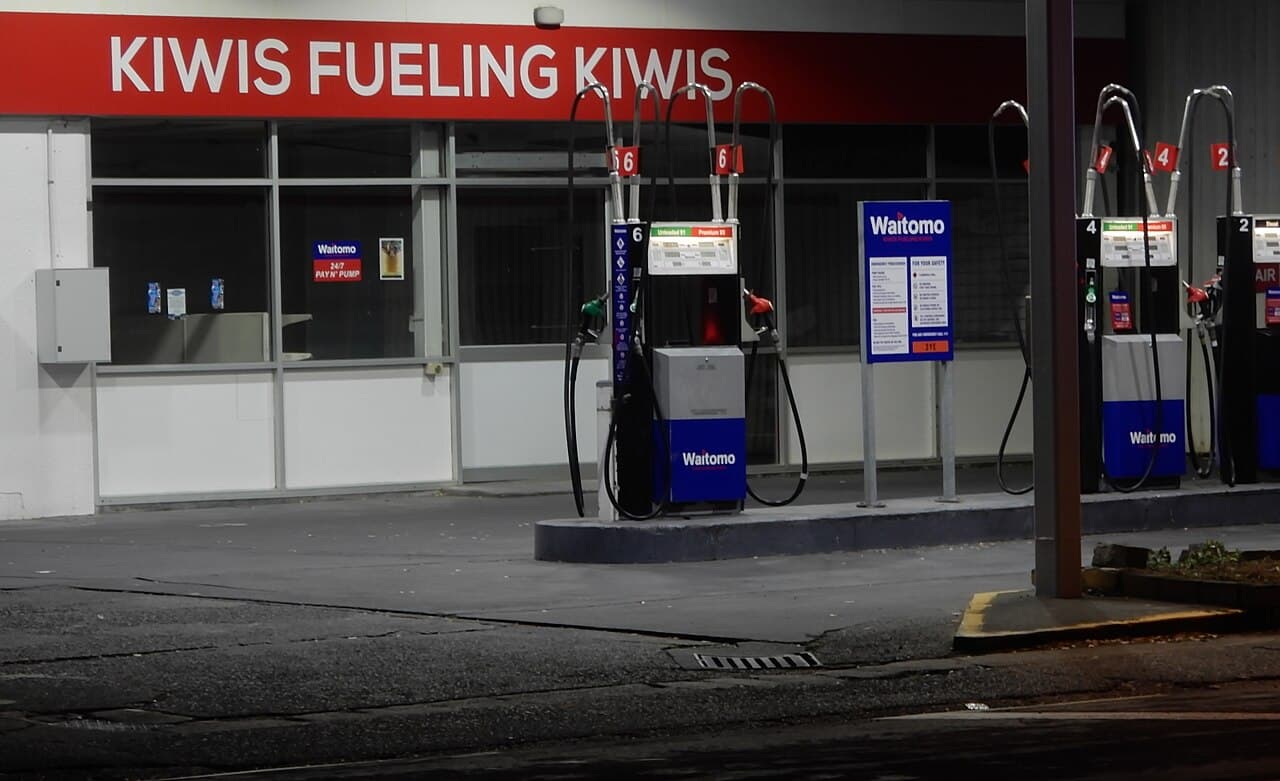
Fill a petrol car in this country and you pay for the road without ever seeing a bill for it. Fuel excise duty, currently somewhere around 70 cents a litre, is already inside the number on the sign. It leaves your account in $70 and $110 chunks and never announces itself as tax. Diesels, EVs and anything over 3.5 tonnes have always done it the other way, buying distance in blocks, in advance.
That two-tier arrangement is being dismantled. Cabinet has agreed to the law changes needed to put all 3.5 million light vehicles onto electronic road user charges, which is being described, not unreasonably, as the biggest change to road funding in fifty years. The legislation is expected to pass during 2026 and the new system is meant to be open for business in 2027: electronic licences instead of paper ones, outside providers allowed to sell you distance, and NZTA finally separated into regulator and retailer instead of being both.
What is settled, and what very much is not
The direction is settled. Almost none of the detail is, and the gap between those two things is where most of the commentary has gone wrong.
- Settled: petrol light vehicles come off fuel excise and start paying by distance, with the charge reflecting weight as well as kilometres.
- Settled: paper licences go, a car with a suitable device already built into it can use that, and post-pay and monthly billing become possible rather than buying a block of kilometres up front.
- Not settled: the date your petrol car changes over, and the rate it pays when it does. Those are the two numbers that decide whether you personally come out ahead, and neither exists yet.
Why this matters when you are choosing a used car
Because the old system quietly rewarded something the new one will not.
Fuel excise is a tax on litres, so economy earns you a discount automatically, without anyone designing it that way. A hybrid sitting at 4.5L/100km pays roughly $31 of excise across 1000km. A big petrol wagon at 12L/100km pays closer to $84 over the same distance. The efficient car was never just cheaper to fill. It was handing over about a third as much road tax, every kilometre, for free.
Charge by distance and that goes away. Two cars covering 1000km pay the same, adjusted for what they weigh rather than what they drink. You keep every cent of the fuel saving. The tax saving that used to arrive stapled to it, you do not.
Weight is the part nobody is arguing about yet
Weight is written into the design, and the fleet has been getting heavier for a decade. Dual-cab utes, seven-seat SUVs and EVs carrying four hundred-odd kilograms of battery all sit at the top end of the light-vehicle class. How steeply that gets priced has not been decided. It is worth watching if you are weighing up something like a Swift against a two-tonne SUV that spends most of its life with one person in it.
What to do about it, which is mostly nothing
- 1.Do not rush a purchase to get ahead of it. There is no deadline to beat, and paying over the odds because you felt hurried will cost you more than any rate ever will.
- 2.Keep buying on economy, but be honest about the size of the prize. At 8,000km a year the difference between two sensible cars is a couple of hundred dollars, which one unexpected repair erases.
- 3.Put the attention on reliability instead. On a nine-year-old car it is the failures, not the fuel, that decide what the year costs you.
- 4.Think about your own mileage properly. A distance charge bills exactly what you do, so somebody commuting in from Pōkeno and somebody doing a 6km school run should not be shortlisting the same car.
Which brings it back to the car in front of you. A Toyota Aqua or a Suzuki Swift is a cheap car to run right up until the week it is not, and a Nissan Leaf bought purely on running costs is a battery nobody has looked at. Road funding decides one line in your budget. What the car is documented to break decides the rest of it.
Running costs are the small number
See every documented fault for the model, engine and year before you commit. Free, no account.
Check the model before you view
Every documented fault for these models, with the years and engines each one applies to.
Frequently asked questions
When do petrol cars start paying road user charges in New Zealand?
No date has been set. Cabinet has agreed to the law changes that make the transition possible, the legislation is expected to pass during 2026, and the new electronic system is meant to be running from 2027. Moving the 3.5 million light vehicles still on petrol tax happens after that, at a pace the Government has pointedly declined to commit to.
Will petrol get cheaper when fuel excise is removed?
The pump price should drop by the excise that comes off it, which is roughly 70 cents a litre, and you pay for distance separately instead. Whether you end up better or worse off depends on how far you drive, what the vehicle weighs, and what rate is eventually set for petrol light vehicles. None of those is settled, so anyone giving you a figure today is estimating.
Does this make buying a fuel-efficient used car pointless?
No, and it is worth being clear about why. Fuel still costs money, and the gap between a car using 4.5 litres per 100km and one using 12 is most of what you spend running it. What changes is the hidden extra: under fuel excise, an efficient car automatically paid less road tax as well. Under a distance charge it pays the same as a thirsty car of similar weight for the same kilometres.
Do I need to buy RUC for my petrol car now?
No. Nothing has changed for petrol light vehicles, and there is nothing to buy. If you drive a diesel, an EV or a plug-in hybrid you are already in the system and that carries on as it is.
Keep reading