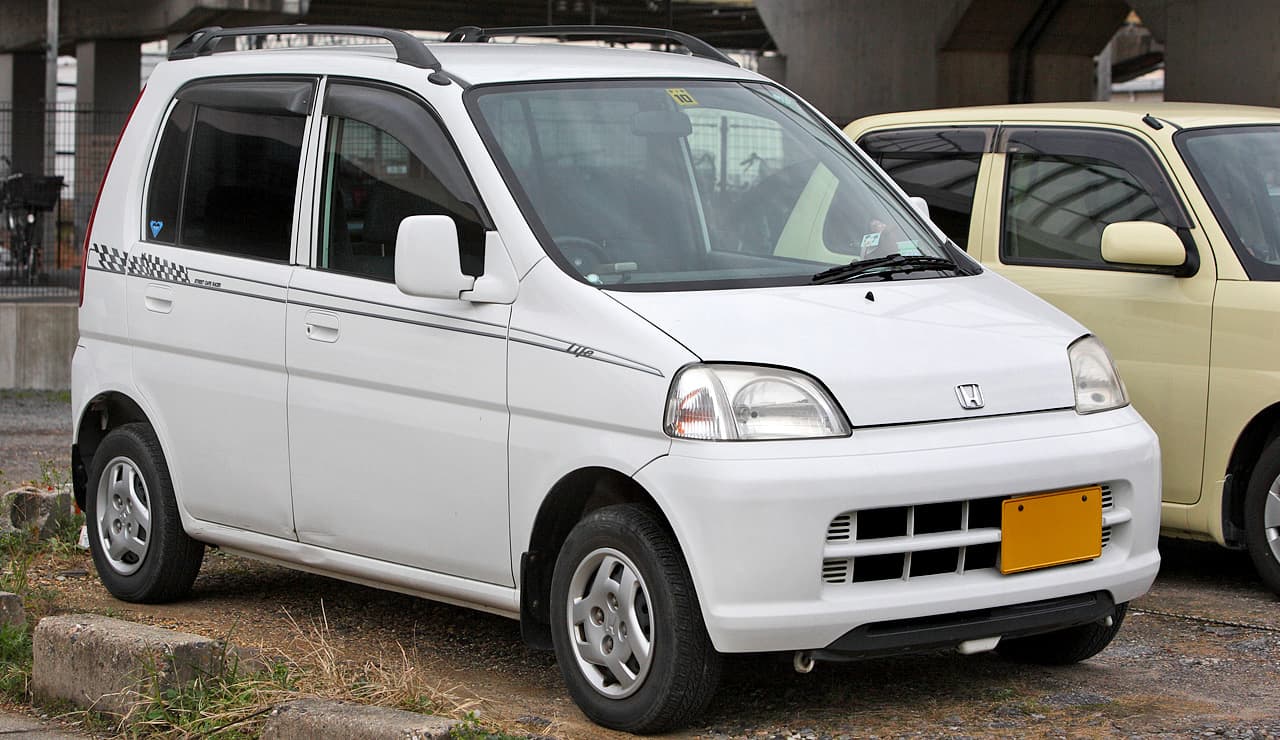
 1998–2003JB1JB1Engine not documented for this generationEngine not documentedSee faults & what to checkPhoto: 天然ガス via Wikimedia Commons, CC BY-SA 3.0.
Honda2006–2012 Critical issues documented
Honda Zest: common faults & what to check
Thinking about buying a used Honda Zest (2006–2012) in New Zealand? We've documented 6 known faults for this model spanning engine, electrical, suspension, and brakes. Each researched and verified before it's published. The most serious issues here are rated critical. Every one is listed below with its symptoms and repair cost, and each has its own page with where to look and what to ask the seller. Free, no account needed.
Check this exact Honda Zest
- Odometer history
- Money owing
- Reported stolen
- Ownership history
6
Critical
$350–$900
4
Which Honda Zest are you looking at?
Engine not documented
1998–2003JB1JB1Engine not documented for this generationEngine not documentedSee faults & what to checkPhoto: 天然ガス via Wikimedia Commons, CC BY-SA 3.0. 2003–2008JB5JB5Engine not documented for this generationEngine not documentedSee faults & what to checkPhoto: Hatsukari715 via Wikimedia Commons, Public domain.
 2008–2014JC1JC1Engine not documented for this generationEngine not documentedSee faults & what to checkPhoto: Mr.choppers via Wikimedia Commons, CC BY-SA 4.0.
Start your free check on this Honda Zest
Honda Zest
Can't confirm for this car
Honda Zest
Nothing has been narrowed yet, so nothing below is a claim about a particular car. Pick a year and an engine to see which faults apply.
Tell us the engine, or check the engine code on the car, before relying on this.
matched on no vehicle context
What to look out for
Serious issue
Check for blue-grey exhaust smoke at idle and under boost.
P07A Turbo Oil Feed Line Clogging and Turbocharger Failure
The P07A 0.66-litre turbocharged engine uses a narrow oil feed banjo bolt orifice to the turbocharger centre bearing. Sludge accumulation from extended oil change intervals or short-trip operation partially or fully blocks this orifice, starving the turbo of lubrication and causing catastrophic bearing and compressor wheel failure. The failure mode is progressive: early-stage restriction produces bearing noise at startup; full blockage destroys the turbo within minutes of cold start.
What you would notice
Costly issue
Lift and support the vehicle.
Front Lower Control Arm Ball Joint Wear
The front suspension on the Zest JH1/JH2 uses a MacPherson strut arrangement with a pressed-in lower ball joint on the aluminium lower control arm. The ball joint socket wears and develops play, causing steering wander and a clunking noise over bumps. Because the ball joint is integral to the arm on many variants, worn units require replacement of the complete lower arm assembly rather than just the joint.
What you would notice
Costly issue
Attempt to slide each caliper by hand with the pin bolts loosened — a seized pin will resist lateral movement.
Brake Caliper Guide Pin Seizure
The front and rear brake calipers on the Zest use sliding-pin designs in which the caliper body floats on two steel guide pins to allow self-centring against the disc. The guide pin rubber boots deteriorate and split, allowing water and road contamination to enter and corrode the pins within the aluminium caliper brackets. Seized guide pins prevent the caliper from retracting fully after brake application, causing the outer brake pad to drag against the disc continuously, generating heat, premature pad and disc wear, and a pulling sensation under braking.
What you would notice
Costly issue
Start the engine and check that the EPS warning lamp extinguishes within two seconds.
Electric Power Steering Motor and Control Unit Failure
The Zest uses a column-type electric power steering (EPS) system in which the assist motor is mounted on the steering column rather than at the rack. The motor brushes, worm gear, and the EPS electronic control unit are known failure points; the control unit is particularly susceptible to capacitor degradation from heat cycling over time. Failure typically presents as complete or intermittent loss of power assistance, illumination of the EPS warning lamp, and occasional self-steering pull to one side when the control unit outputs incorrect torque commands.
What you would notice
Common issue
Check for stored DTC codes P0505 (idle control system malfunction) or P0507 (idle control RPM high).
Idle Air Control Valve Carbon Fouling Causing Rough Idle
The P06A and P07A engines use an idle air control valve (IACV) mounted on the throttle body to regulate bypass airflow and maintain a stable idle speed under varying accessory loads. Short-trip operation and oil vapour from the crankcase ventilation system deposit carbon on the IACV pintle and port, restricting bypass airflow. The result is an unstable or low idle at operating temperature, stalling when coming to a stop, and hesitation when air conditioning is switched on or off.
What you would notice
Worth checking
Operate the power sliding door through its full open and close cycle and listen for hesitation, grinding, or motor strain.
Power Sliding Door Cable Fraying and Drive Motor Failure (Zest Spark)
The Zest Spark variant is equipped with a power sliding door system using a single Bowden-style cable driven by a small electric motor mounted in the door track channel. The cable sheath cracks and the inner wire frays at the radius bends in the door channel over time, particularly in the upper guide rail section. Fraying causes the door to hesitate, reverse unexpectedly, or stop mid-travel; in advanced cases the cable snaps and the door becomes manually operable only. The drive motor itself is also prone to brush wear and armature failure, producing a grinding noise during door operation.
What you would notice
See all 6 documented issues
Depends on which engine this Honda Zest has — 6
Engine, transmission & cooling
01P07A Turbo Oil Feed Line Clogging and Turbocharger Failure
Can't confirm for this car02Idle Air Control Valve Carbon Fouling Causing Rough Idle
Can't confirm for this car
CommonEngine $80–$350 to fix
Can't confirm for this car
The P06A and P07A engines use an idle air control valve (IACV) mounted on the throttle body to regulate bypass airflow and maintain a stable idle speed under varying accessory loads. Short-trip operation and oil vapour from the crankcase ventilation system deposit carbon on the IACV pintle and port, restricting bypass airflow. The result is an unstable or low idle at operating temperature, stalling when coming to a stop, and hesitation when air conditioning is switched on or off.
Symptoms to notice
What to check
Ask the seller
Electrical
01Electric Power Steering Motor and Control Unit Failure
Can't confirm for this car
OccasionalElectrical $600–$1,800 to fix
Can't confirm for this car
The Zest uses a column-type electric power steering (EPS) system in which the assist motor is mounted on the steering column rather than at the rack. The motor brushes, worm gear, and the EPS electronic control unit are known failure points; the control unit is particularly susceptible to capacitor degradation from heat cycling over time. Failure typically presents as complete or intermittent loss of power assistance, illumination of the EPS warning lamp, and occasional self-steering pull to one side when the control unit outputs incorrect torque commands.
Symptoms to notice
What to check
Ask the seller
02Power Sliding Door Cable Fraying and Drive Motor Failure (Zest Spark)
Can't confirm for this car
OccasionalElectrical $400–$1,400 to fix
Can't confirm for this car
The Zest Spark variant is equipped with a power sliding door system using a single Bowden-style cable driven by a small electric motor mounted in the door track channel. The cable sheath cracks and the inner wire frays at the radius bends in the door channel over time, particularly in the upper guide rail section. Fraying causes the door to hesitate, reverse unexpectedly, or stop mid-travel; in advanced cases the cable snaps and the door becomes manually operable only. The drive motor itself is also prone to brush wear and armature failure, producing a grinding noise during door operation.
Symptoms to notice
What to check
Ask the seller
Body, brakes, suspension & interior
01Front Lower Control Arm Ball Joint Wear
Can't confirm for this car
CommonSuspension $350–$900 to fix
Can't confirm for this car
The front suspension on the Zest JH1/JH2 uses a MacPherson strut arrangement with a pressed-in lower ball joint on the aluminium lower control arm. The ball joint socket wears and develops play, causing steering wander and a clunking noise over bumps. Because the ball joint is integral to the arm on many variants, worn units require replacement of the complete lower arm assembly rather than just the joint.
 Example of the part — not this vehicle
A separated lower ball joint: the control arm has dropped and the wheel has splayed out under the guard.
Symptoms to notice
What to check
Ask the seller
02Brake Caliper Guide Pin Seizure
Can't confirm for this car
CommonBrakes $150–$650 to fix
Can't confirm for this car
The front and rear brake calipers on the Zest use sliding-pin designs in which the caliper body floats on two steel guide pins to allow self-centring against the disc. The guide pin rubber boots deteriorate and split, allowing water and road contamination to enter and corrode the pins within the aluminium caliper brackets. Seized guide pins prevent the caliper from retracting fully after brake application, causing the outer brake pad to drag against the disc continuously, generating heat, premature pad and disc wear, and a pulling sensation under braking.
Symptoms to notice
What to check
Ask the seller
Honda Zest faults in detail
What these repairs cost on other cars
Some of the Honda Zest’s documented faults are repairs other models share. Each page lists the documented NZ cost for every model it affects.
Other Honda models
Honda Zest buyer questions
Is the Honda Zest reliable?
Like any used car, it depends on the specific example and its service history. Across the 6 documented faults for the Honda Zest, the recurring problem areas are engine, electrical, and suspension. A Honda Zest with a full service history and no signs of the issues listed on this page can be a sound buy but each one needs to be checked individually before you commit.
What are the most common problems with a used Honda Zest?
We've catalogued 6 known faults for the Honda Zest, covering engine, electrical, and suspension. All 6 are written out in full on this page, with the symptoms to notice, what to inspect, and typical repair costs for each. Free to read, no account needed.
How much do repairs cost on a Honda Zest?
Most single repairs on the Honda Zest fall between $350–$900 at NZ independent-workshop rates. Some of the 6 documented faults cost less and a few cost considerably more, and no one car needs them all. Knowing which ones to look for before you view is what lets you negotiate the price down or walk away.
Should I get a pre-purchase inspection on a Honda Zest?
Yes. A Honda Zest inspection focused on its known weak points is the single best way to avoid an expensive mistake. KickTyres gives you a guided, model-specific inspection plus a market valuation and negotiation figure for $24.90 far less than the cost of missing one of the faults on this page.