 2004–20129979973.6 flat-6 petrolPetrolSee faults & what to checkPhoto: The Car Spy via Wikimedia Commons, CC BY 2.0.
Porsche1997–2023 Critical issues documented
Porsche 911: common faults & what to check
Thinking about buying a used Porsche 911 (1997–2023) in New Zealand? We've documented 18 known faults for this model spanning engine, transmission, suspension, and cooling. Each researched and verified before it's published. The most serious issues here are rated critical. Every one is listed below with its symptoms and repair cost, and each has its own page with where to look and what to ask the seller. Free, no account needed.
Check this exact Porsche 911
- Odometer history
- Money owing
- Reported stolen
- Ownership history
18
Critical
$1,500–$5,500
6
Which Porsche 911 are you looking at?
Petrol
2004–20129979973.6 flat-6 petrolPetrolSee faults & what to checkPhoto: The Car Spy via Wikimedia Commons, CC BY 2.0.2004–20129979973.8 flat-6 petrolPetrolSee faults & what to checkPhoto: The Car Spy via Wikimedia Commons, CC BY 2.0.Fuel not stated
 2011–20199919913.0 twin-turbo flat-6Fuel not statedSee faults & what to checkPhoto: David Villarreal Fernández via Wikimedia Commons, CC BY-SA 2.0.2011–20199919913.8 twin-turbo (Turbo)Fuel not statedSee faults & what to checkPhoto: David Villarreal Fernández via Wikimedia Commons, CC BY-SA 2.0.
 2018–now9929923.0 twin-turbo flat-6Fuel not statedSee faults & what to checkPhoto: Vauxford via Wikimedia Commons, CC BY-SA 4.0.2018–now9929923.8 twin-turbo (Turbo)Fuel not statedSee faults & what to checkPhoto: Vauxford via Wikimedia Commons, CC BY-SA 4.0.
Engine not documented
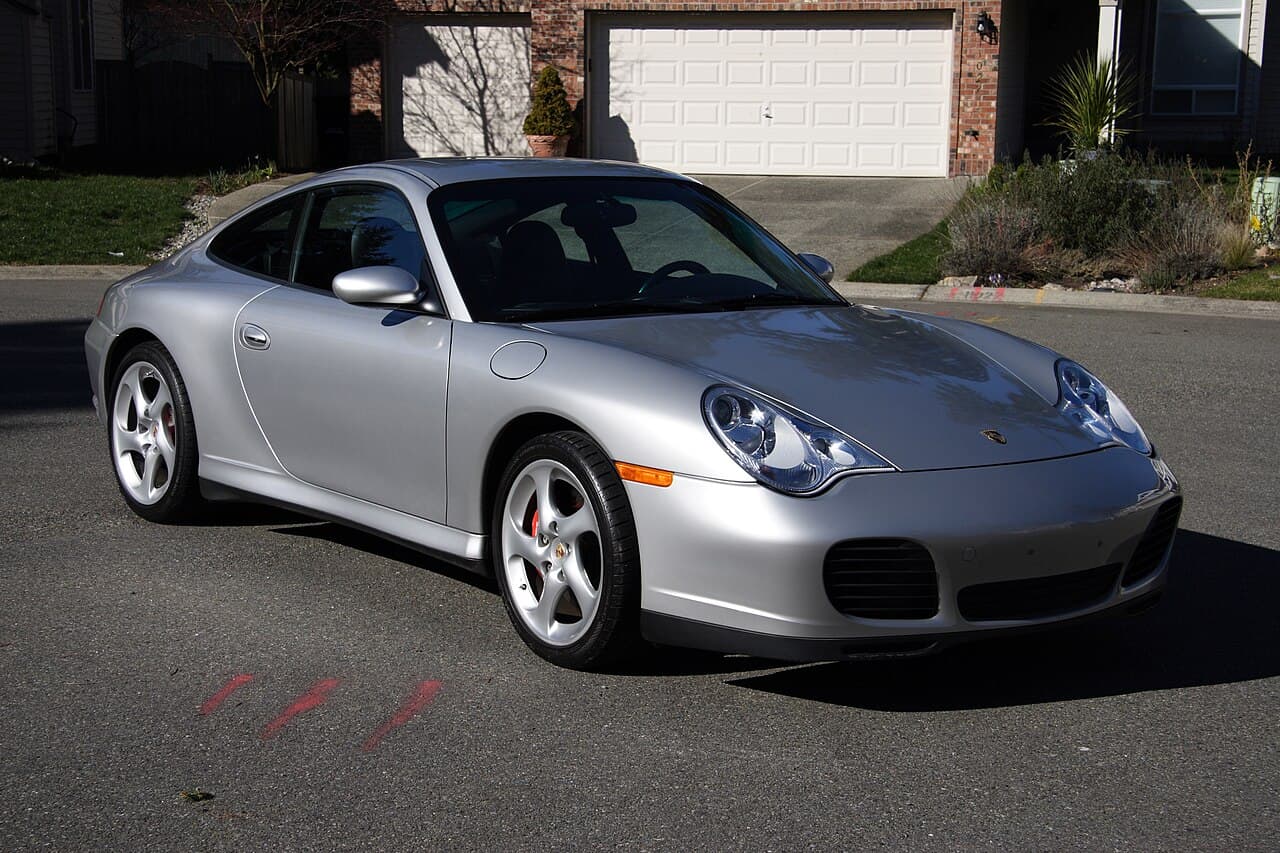 1997–2005996996Engine not documented for this generationEngine not documentedSee faults & what to checkPhoto: Wistar Rinearson, Landmark Extra via Wikimedia Commons, Public domain.
Now narrow it to the engine
Start your free check on this Porsche 911
Porsche 911Engine not picked yet
Pick the engine above first: the 911 came with 4, and without it the report has to show all of their faults. Pick the engine
Can't confirm for this car
Porsche 911
Nothing has been narrowed yet, so nothing below is a claim about a particular car. Pick a year and an engine to see which faults apply.
Tell us the engine, or check the engine code on the car, before relying on this.
matched on no vehicle context
What to look out for
Serious issue
Confirm whether LN Engineering IMS retrofit or factory dual-row bearing upgrade has been fitted — require workshop receipt.
M96/M97 Intermediate Shaft (IMS) Bearing Failure
The M96 and M97 flat-six engines fitted to 996 and 997 generation 911s use a single-row (M96) or dual-row (M97) intermediate shaft bearing pressed into the rear main housing. The bearing is lightly loaded but subject to marginal lubrication at low-rev oil pressure. Failure is typically catastrophic and without warning — the bearing collapses, the intermediate shaft sheds, and debris destroys the engine internals. LN Engineering documented failure rates above 10% in field studies. Porsche faced class-action litigation in the USA and Australia over this design. Preventive replacement with an LN Engineering IMS Pro bearing or complete engine-out rebuild is strongly advised on pre-purchase. The 997.2 Carrera from 2009 uses the 9A1 engine with no IMS bearing, and Turbo, GT2 and GT3 models use the Mezger engine, which never had this bearing. The 997.2 Carrera from 2009 uses the 9A1 engine with no IMS bearing, and Turbo, GT2 and GT3 models use the Mezger engine, which never had this bearing. The 997.2 Carrera from 2009 uses the 9A1 engine with no IMS bearing, and Turbo, GT2 and GT3 models use the Mezger engine, which never had this bearing. The 997.2 Carrera from 2009 uses the 9A1 engine with no IMS bearing, and Turbo, GT2 and GT3 models use the Mezger engine, which never had this bearing. The 997.2 Carrera from 2009 uses the 9A1 engine with no IMS bearing, and Turbo, GT2 and GT3 models use the Mezger engine, which never had this bearing. The 997.2 Carrera from 2009 uses the 9A1 engine with no IMS bearing, and Turbo, GT2 and GT3 models use the Mezger engine, which never had this bearing.
What you would notice
Serious issue
Ask for the invoice for an IMS retrofit (LN Engineering ceramic or equivalent) and check the oil filter cutting report from the last service.
IMS bearing failure (996/997.1 M96/M97 flat-6)
The sealed intermediate shaft (IMS) bearing that drives the camshafts has no oil feed; its grease breaks down and the bearing can disintegrate, throwing the cam timing and destroying the engine. Single-row bearings fitted roughly 2001-2005 are the worst (about 8% failure claimed in the US Eisen class action), dual-row pre-2001 cars around 1%, and the larger non-serviceable bearing in 2006-2008 997.1s fails rarely but cannot be retrofitted without splitting the engine. 997.2 (2009-on), GT3 and Turbo models use a different design and are not affected. A documented ceramic/roller retrofit done with a clutch job largely removes the risk; an actual failure means a full engine rebuild or replacement.
What you would notice
Serious issue
Start the car stone cold and listen at the rear for ticking.
Cylinder bore scoring (996/997.1 M96/M97, worst on 3.8)
The Lokasil cylinder walls in the M96/M97 engine can score vertically, especially bank 2 (cylinders 4-6) which runs hotter, and the 3.8-litre 997.1 Carrera S is the highest-risk variant. Scoring starts as a cold-start tick and progresses to heavy oil use, soot and ultimately a seized piston; the only proper fix is a rebuild with new liners or a replacement engine. UK specialists Hartech and US specialist Flat 6 Innovations have documented the failure mode extensively. 997.2 cars (2009-on) with the 9A1 direct-injection engine are largely free of the problem.
What you would notice
Serious issue
Request a full compression and leakdown test on all six cylinders.
M97 Cylinder Bore Scoring (997 3.8 S / Early DFI Engines)
The 997 Carrera S and 4S models with the 3.8-litre M97/76 engine suffered bore scoring — cylinder wall damage from insufficient lubrication caused by direct fuel injection washing the bore walls during cold-start enrichment. Scored bores cause progressive oil consumption, reduced compression, and ultimately require engine rebuild or replacement. Jake Raby and Flat Six Innovations documented this extensively across 997 production. Most prevalent in 3.8 S variants but also found in some 3.6 engines.
What you would notice
Serious issue
Confirm build date and whether the car is a pre-MY2002 model.
M96 Cylinder Head Bolt Pull-Out (Early 996)
Early production M96 engines in 996 models built 1997-2001 used a head bolt pattern carried over from the air-cooled 993. The bolt torque specification and thread engagement depth were insufficient for the water-cooled M96 under thermal cycling at load. Bolts can pull out of the aluminium block, causing head gasket failure, coolant ingestion, and overheating. Most surviving early 996s will have had this addressed, but unverified cars need investigation. Later M96 production revised the bolt specification.
What you would notice
Costly issue
Confirm the PASM button toggles between Normal and Sport modes and that a change in ride firmness is felt.
PASM Active Damper Actuator Failure (997)
Porsche Active Suspension Management (PASM) uses electronically controlled dampers that adjust stiffness in real time. The solenoid actuators inside each strut are a documented failure point on 997 models, particularly in NZ/AU operating conditions. Failure triggers a PASM warning light and defaults the suspension to a fixed damping state. Individual strut replacement is the only repair — OEM units are expensive, though aftermarket PASM-compatible alternatives exist. High-mileage 997s over 10 years old commonly present with at least one failed actuator.
What you would notice
See all 18 documented issues
Depends on which engine this Porsche 911 has — 18
Engine, transmission & cooling
01IMS bearing failure (996/997.1 M96/M97 flat-6)
Can't confirm for this car
OccasionalEngine $4,000–$45,000 to fix
Can't confirm for this car
The sealed intermediate shaft (IMS) bearing that drives the camshafts has no oil feed; its grease breaks down and the bearing can disintegrate, throwing the cam timing and destroying the engine. Single-row bearings fitted roughly 2001-2005 are the worst (about 8% failure claimed in the US Eisen class action), dual-row pre-2001 cars around 1%, and the larger non-serviceable bearing in 2006-2008 997.1s fails rarely but cannot be retrofitted without splitting the engine. 997.2 (2009-on), GT3 and Turbo models use a different design and are not affected. A documented ceramic/roller retrofit done with a clutch job largely removes the risk; an actual failure means a full engine rebuild or replacement.
Symptoms to notice
What to check
Ask the seller
02Cylinder bore scoring (996/997.1 M96/M97, worst on 3.8)
Can't confirm for this car
OccasionalEngine $20,000–$45,000 to fix
Can't confirm for this car
The Lokasil cylinder walls in the M96/M97 engine can score vertically, especially bank 2 (cylinders 4-6) which runs hotter, and the 3.8-litre 997.1 Carrera S is the highest-risk variant. Scoring starts as a cold-start tick and progresses to heavy oil use, soot and ultimately a seized piston; the only proper fix is a rebuild with new liners or a replacement engine. UK specialists Hartech and US specialist Flat 6 Innovations have documented the failure mode extensively. 997.2 cars (2009-on) with the 9A1 direct-injection engine are largely free of the problem.
Symptoms to notice
What to check
Ask the seller
03M97 Cylinder Bore Scoring (997 3.8 S / Early DFI Engines)
Can't confirm for this car
OccasionalEngine $14,000–$35,000 to fix
Can't confirm for this car
The 997 Carrera S and 4S models with the 3.8-litre M97/76 engine suffered bore scoring — cylinder wall damage from insufficient lubrication caused by direct fuel injection washing the bore walls during cold-start enrichment. Scored bores cause progressive oil consumption, reduced compression, and ultimately require engine rebuild or replacement. Jake Raby and Flat Six Innovations documented this extensively across 997 production. Most prevalent in 3.8 S variants but also found in some 3.6 engines.
Symptoms to notice
What to check
Ask the seller
04M96/M97 Intermediate Shaft (IMS) Bearing Failure
Can't confirm for this car
CommonEngine $8,000–$28,000 to fix
Can't confirm for this car
The M96 and M97 flat-six engines fitted to 996 and 997 generation 911s use a single-row (M96) or dual-row (M97) intermediate shaft bearing pressed into the rear main housing. The bearing is lightly loaded but subject to marginal lubrication at low-rev oil pressure. Failure is typically catastrophic and without warning — the bearing collapses, the intermediate shaft sheds, and debris destroys the engine internals. LN Engineering documented failure rates above 10% in field studies. Porsche faced class-action litigation in the USA and Australia over this design. Preventive replacement with an LN Engineering IMS Pro bearing or complete engine-out rebuild is strongly advised on pre-purchase. The 997.2 Carrera from 2009 uses the 9A1 engine with no IMS bearing, and Turbo, GT2 and GT3 models use the Mezger engine, which never had this bearing. The 997.2 Carrera from 2009 uses the 9A1 engine with no IMS bearing, and Turbo, GT2 and GT3 models use the Mezger engine, which never had this bearing. The 997.2 Carrera from 2009 uses the 9A1 engine with no IMS bearing, and Turbo, GT2 and GT3 models use the Mezger engine, which never had this bearing. The 997.2 Carrera from 2009 uses the 9A1 engine with no IMS bearing, and Turbo, GT2 and GT3 models use the Mezger engine, which never had this bearing. The 997.2 Carrera from 2009 uses the 9A1 engine with no IMS bearing, and Turbo, GT2 and GT3 models use the Mezger engine, which never had this bearing. The 997.2 Carrera from 2009 uses the 9A1 engine with no IMS bearing, and Turbo, GT2 and GT3 models use the Mezger engine, which never had this bearing.
Symptoms to notice
What to check
Ask the seller
05M96 Cylinder Head Bolt Pull-Out (Early 996)
Can't confirm for this car
OccasionalEngine $4,000–$10,000 to fix
Can't confirm for this car
Early production M96 engines in 996 models built 1997-2001 used a head bolt pattern carried over from the air-cooled 993. The bolt torque specification and thread engagement depth were insufficient for the water-cooled M96 under thermal cycling at load. Bolts can pull out of the aluminium block, causing head gasket failure, coolant ingestion, and overheating. Most surviving early 996s will have had this addressed, but unverified cars need investigation. Later M96 production revised the bolt specification.
 Example of the part — not this vehicle
A six-cylinder diesel head off the engine, valve-gear side up. Cracks run between the valve seats on the face beneath.
Symptoms to notice
What to check
Ask the seller
06PDK Dual-Clutch Solenoid and Mechatronic Wear
Can't confirm for this car
OccasionalTransmission $2,500–$8,000 to fix
Can't confirm for this car
The 7-speed PDK fitted to 997.2 onwards is generally robust but develops solenoid wear and mechatronic unit faults with age and high mileage. Worn solenoids cause incorrect gear engagement, harsh downshifts, or refusal to engage a specific ratio. Porsche specifies PDK fluid changes every 4 years or 60,000 km, but many cars arrive at workshops with original fluid at far higher mileage, accelerating internal wear. Mechatronic unit replacement is the most common major repair.
Symptoms to notice
What to check
Ask the seller
07MA1 Timing Chain Tensioner Failure on Cold Start (991.1)
Can't confirm for this car
OccasionalEngine $2,000–$6,000 to fix
Can't confirm for this car
The 991.1 MA1 engine uses hydraulic timing chain tensioners dependent on oil pressure. On cold starts, particularly in cool ambient temperatures, oil pressure takes a moment to build and the tensioner cannot immediately maintain chain tension. This produces a brief rattle on startup and in severe or prolonged low-oil-pressure events can cause timing chain wear or tensioner failure. Documented on PCA and Rennlist forums. Porsche issued updated tensioner parts. The concern is most relevant on high-mileage 991.1 cars with degraded oil or infrequent oil changes.
 Example of the part — not this vehicle
The front of a twin-cam engine with the timing cover off — chain, sprockets and guides.
Symptoms to notice
What to check
Ask the seller
08Front radiator/condenser corrosion and road-debris damage (991/992)
Can't confirm for this car
CommonCooling $2,000–$5,000 to fix
Can't confirm for this car
The front-mounted radiators and air-conditioning condensers sit low in the nose intakes where leaves, road salt and stones collect; trapped debris rots the cores from the outside in. It is one of the most common out-of-warranty bills on modern 911s, and replacement means front bumper removal plus new cores and a re-gas. Mesh grille protection and periodic cleaning largely prevent it.
Symptoms to notice
What to check
Ask the seller
09Water pump and coolant line leak at pump housing (991.2 3.0 turbo)
Can't confirm for this car
OccasionalCooling $1,500–$3,200 to fix
Can't confirm for this car
On 991.2 Carreras, particularly 2017-2018 model years, the plastic coolant line where it meets the water pump housing is a known failure point that weeps and then leaks coolant. Porsche extended the warranty on the water pump and valve block to 10 years in North America, which signals how widespread it was; NZ/AU cars carry no such extension so buyers wear the cost. Caught early it is a straightforward pump/line replacement; ignored it risks overheating the engine.
Symptoms to notice
What to check
Ask the seller
10Direct Injection Carbon Buildup on Intake Valves (991/992)
Can't confirm for this car11Air-oil separator (AOS) failure (M96/M97)
Can't confirm for this car
CommonEngine $900–$1,800 to fix
Can't confirm for this car
The plastic air-oil separator that scavenges oil mist from crankcase vapours fails with age, letting the engine pull oil into the intake. A failed AOS produces a spectacular cloud of white-blue smoke, usually on start-up, and can foul plugs and catalytic converters; in bad cases the engine can hydro-lock on oil. It is a service item on these cars and moderately labour-intensive to reach.
Symptoms to notice
What to check
Ask the seller
12Coolant expansion tank cracking and leaking caps (996/997)
Can't confirm for this car13Cooling-circuit changeover/switching valve failures (991.1 9A1)
Can't confirm for this car
CommonCooling $500–$1,800 to fix
Can't confirm for this car
The 991.1 uses several plastic vacuum-operated valves to manage the cooling circuit and intake flaps; the plastic housings crack with age and heat, throwing sporadic 'Cooling system fault' messages and sometimes causing slow coolant loss. Porsche fixed many under warranty in period, but out-of-warranty cars now pay for parts and diagnosis. It is a nuisance fault rather than an engine-killer if attended to promptly.
Symptoms to notice
What to check
Ask the seller
14Ignition coil cracking and misfires (992 MA2 3.0/3.8)
Can't confirm for this car
CommonEngine $800–$1,800 to fix
Can't confirm for this car
The original ignition coils on the 992's MA2 twin-turbo flat-6 were prone to cracking, causing misfires; Porsche has revised the coil design multiple times. A rough idle or misfire count under load on an early 992 is very often coils rather than anything sinister, and many cars had them replaced under warranty. Out of warranty, a full set of six with labour is a moderate bill at an independent Porsche specialist.
 Example of the part — not this vehicle
A coil-on-plug ignition rail, removed. One coil per cylinder.
Symptoms to notice
What to check
Ask the seller
Body, brakes, suspension & interior
01PASM Active Damper Actuator Failure (997)
Can't confirm for this car02Front-axle lift system faults — 'Lift system fault — service necessary' warning (992)
Can't confirm for this car
OccasionalSuspension $400–$7,000 to fix
Can't confirm for this car
On 992s fitted with the optional hydraulic front-axle lift, owners report the white 'Lift system fault — service necessary' warning appearing and the lift refusing to work. Porsche's own Technical Information 40/21 (ENU 4381) covers the fault: the system logs a vehicle-height measuring fault (code 000302) and it can be triggered simply by parking the car with the nose raised, which Porsche says not to do because the raised position cannot be held long-term with the engine off. Many cases clear with a ride-height recalibration, but genuine hydraulic pump, sensor or line failures out of warranty are expensive. On a car with the lift option, the system's behaviour is worth five minutes of the viewing.
Symptoms to notice
What to check
Ask the seller
03Windscreen seal 'melting trim': adhesive reaction turns the glass surround sticky (992)
Can't confirm for this car
OccasionalBody & Rust $2,500–$5,500 to fix
Can't confirm for this car
Porsche's Advanced Technical Information bulletin 2401.3 documents windscreen (and rear window) seals on 992s built between 2020 and 2023 turning soft, sticky and 'melted'-looking. The cause is a chemical incompatibility between the seal material and the glass bonding adhesive; sunlight and heat make it worse, so it shows up earliest on cars that live outside. The trade nicknames it Melting Trim Syndrome, and it affects several Porsche models of this era. It is cosmetic rather than dangerous, but the proper fix under the bulletin is a replacement windscreen with revised seal materials — real money once out of warranty — so check it and use it in negotiation.
Symptoms to notice
What to check
Ask the seller
Porsche 911 faults in detail
What these repairs cost on other cars
Some of the Porsche 911’s documented faults are repairs other models share. Each page lists the documented NZ cost for every model it affects.
Other Porsche models
Porsche 911 buyer questions
Is the Porsche 911 reliable?
Like any used car, it depends on the specific example and its service history. Across the 18 documented faults for the Porsche 911, the recurring problem areas are engine, transmission, and suspension. A Porsche 911 with a full service history and no signs of the issues listed on this page can be a sound buy but each one needs to be checked individually before you commit.
What are the most common problems with a used Porsche 911?
We've catalogued 18 known faults for the Porsche 911, covering engine, transmission, and suspension. All 18 are written out in full on this page, with the symptoms to notice, what to inspect, and typical repair costs for each. Free to read, no account needed.
How much do repairs cost on a Porsche 911?
Most single repairs on the Porsche 911 fall between $1,500–$5,500 at NZ independent-workshop rates. Some of the 18 documented faults cost less and a few cost considerably more, and no one car needs them all. Knowing which ones to look for before you view is what lets you negotiate the price down or walk away.
Should I get a pre-purchase inspection on a Porsche 911?
Yes. A Porsche 911 inspection focused on its known weak points is the single best way to avoid an expensive mistake. KickTyres gives you a guided, model-specific inspection plus a market valuation and negotiation figure for $24.90 far less than the cost of missing one of the faults on this page.