How Chinese brands took a quarter of the market in four years
In 2022 the joke was that nobody would buy one. In 2026 BYD is Australia's second-biggest brand, Chinese marques hold 25.8 per cent of the market, and the first big wave of them is landing in the used listings. Here is how it happened, and what it means second-hand.
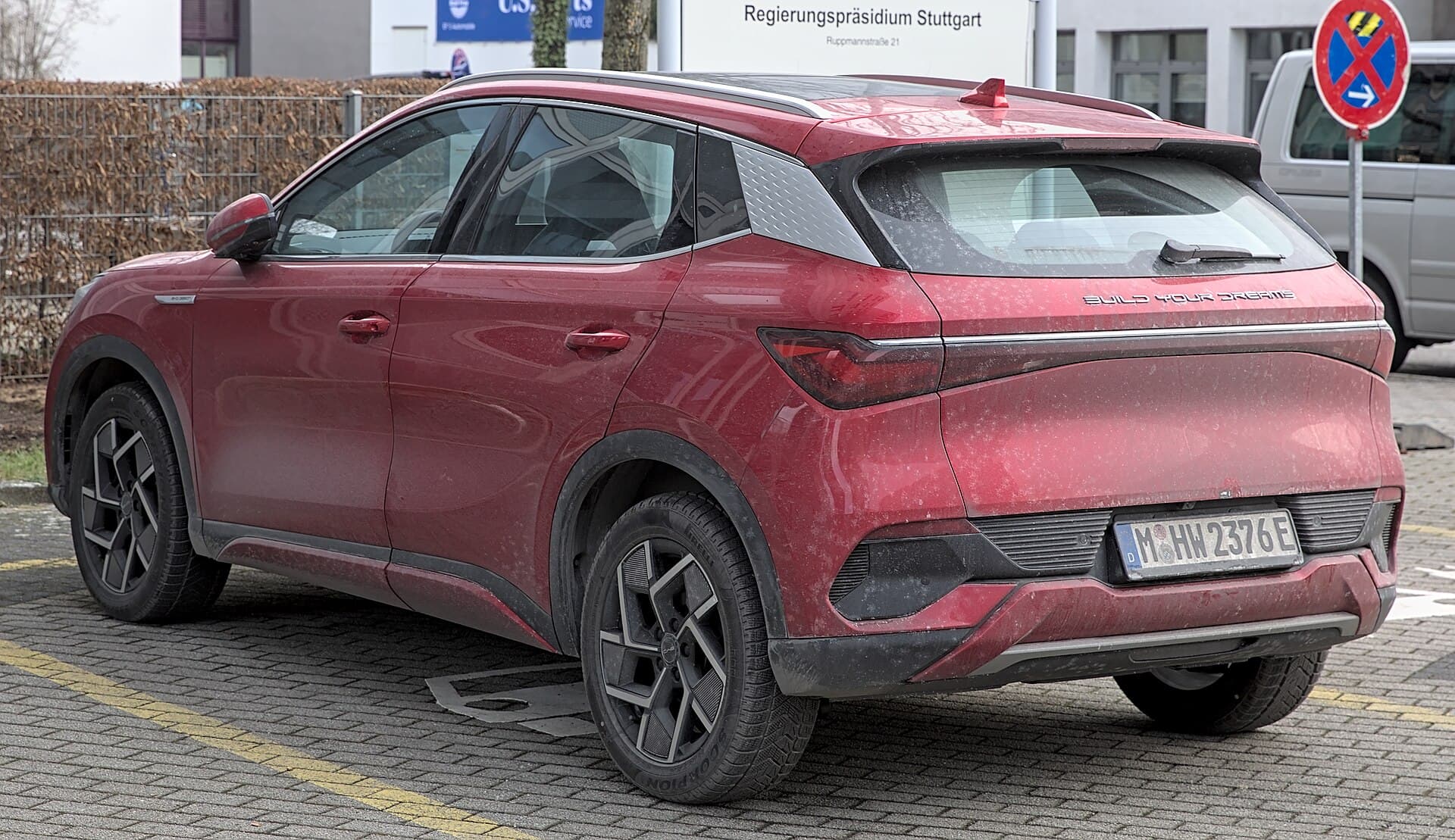
Four years ago, the standard line at a barbecue was that you would never see one of those on a real road. Resale would be nothing, the dealer would be gone by Tuesday, and anyway, have you seen what happens in a crash test.
Chinese brands were 9.0 per cent of the Australian new-vehicle market then. They are 25.8 per cent now. Count Tesla and Polestar, which are also built in China, and 39.6 per cent of every new vehicle delivered in Australia in June 2026 came off a Chinese production line. One in four, or two in five, depending how you count. Either way the barbecue line has stopped being funny.
The scoreboard, because it is genuinely startling
BYD is the second-best-selling brand in the country, up 110.8 per cent year on year. GWM is up 26.8 per cent and sits comfortably in the top ten alongside Chery and MG. Geely grew 842.8 per cent. Zeekr, which most people could not pronounce in 2024, grew 955 per cent.
New Zealand is on the same road, a couple of years back down it. Chinese-owned brands are about 13.5 per cent of the market, with BYD fifth, MG sixth and GWM eighth in the year-to-date sales table. Every one of those cars becomes a used car eventually.
The one asterisk is MG, the flag-bearer, which has slipped 1.6 per cent while its compatriots surged. Being the first Chinese brand people trusted turns out not to be a permanent advantage once the others turn up.
How they did it, in three unglamorous moves
- 1.They priced at the segment below and specified at the segment above. A seven-year warranty, a big screen, adaptive cruise and heated seats, on a car that undercut the obvious Japanese rival by five thousand dollars. Buyers are not sentimental about badges when the maths is that loud.
- 2.They arrived exactly as the emissions rules turned. Australia and New Zealand both now reward efficient vehicles and penalise thirsty ones, and a brand whose lineup is mostly hybrid and electric walks into that with a structural advantage over one built on large petrol engines.
- 3.They fixed the thing that killed the last attempt. The Chinese cars that flopped here in 2010 flopped on safety and quality. This generation arrives with five-star ANCAP ratings, from factories that supply much of the world with batteries. Same flag, different product.
What a used one is really asking you to accept
Three risks, and they are not the ones people argue about online.
The first is depreciation, which is the bill for the discount that got you in. A brand competing hard on new-car price is also, mechanically, pushing down what its own three-year-old examples are worth. That is a bruise if you were the first owner and a bargain if you are the second.
The second is parts and servicing. Far better than it was, still thinner than Toyota. Before you buy, ring an independent workshop in your town and ask whether they will touch one. The answer takes ninety seconds to get and tells you more than any review.
The third is the quiet one. There is simply less documented fault history for a model that has only existed for four years. Nobody has a twelve-year picture of an Atto 3 or a Haval H6, because a twelve-year-old one does not exist. That is not the same as the car being reliable. It means the evidence is thin, and thin evidence earns a more careful inspection, not a more relaxed one.
The ones already in the used listings
The MG ZS and MG3 have been here longest and have the deepest local record. The LDV T60 has been quietly doing trade work for years. The GWM Cannon and Haval H6 are the volume newcomers. Each has its own documented pattern, and they resemble each other no more than a Corolla resembles a HiLux.
Which is the real lesson of the last four years. "Chinese car" stopped being a category that tells you anything useful, at roughly the same point "Japanese car" did, some time around 1985. There are good ones, and there are ones with a known gearbox problem, and the only way to tell them apart is to look up the specific model, engine and year.
Check the model, not the flag on the badge
Every documented fault for that exact model, engine and year, free and without an account.
Check the model before you view
Every documented fault for these models, with the years and engines each one applies to.
Frequently asked questions
Are Chinese cars reliable enough to buy used?
It depends on the model, exactly as it does for any other country of origin. The current generation arrives with five-star ANCAP ratings and is nothing like the cars that failed here in 2010. The honest caveat is that a model launched four years ago has only four years of failure history behind it, so the evidence is thinner than for a long-running Japanese nameplate. Thin evidence is a reason to inspect more carefully, not a verdict on the car.
Do Chinese cars hold their value in Australia and New Zealand?
Generally less well than the established Japanese and Korean brands, and the reason is the same thing that makes them attractive new. A brand competing hard on new-car price is continuously pushing down what its own three-year-old stock is worth. That hurts the first owner and helps the second, which is why a used one can be a strong buy when the specific car checks out.
How much of the market do Chinese brands actually have?
In Australia they have gone from 9.0 per cent to 25.8 per cent of new sales in four years, and Chinese-built vehicles including Tesla and Polestar accounted for 39.6 per cent of new deliveries in June 2026. BYD is the second-best-selling brand overall. In New Zealand, Chinese-owned brands are around 13.5 per cent of the market, with BYD, MG and GWM all inside the top ten year to date.
Keep reading