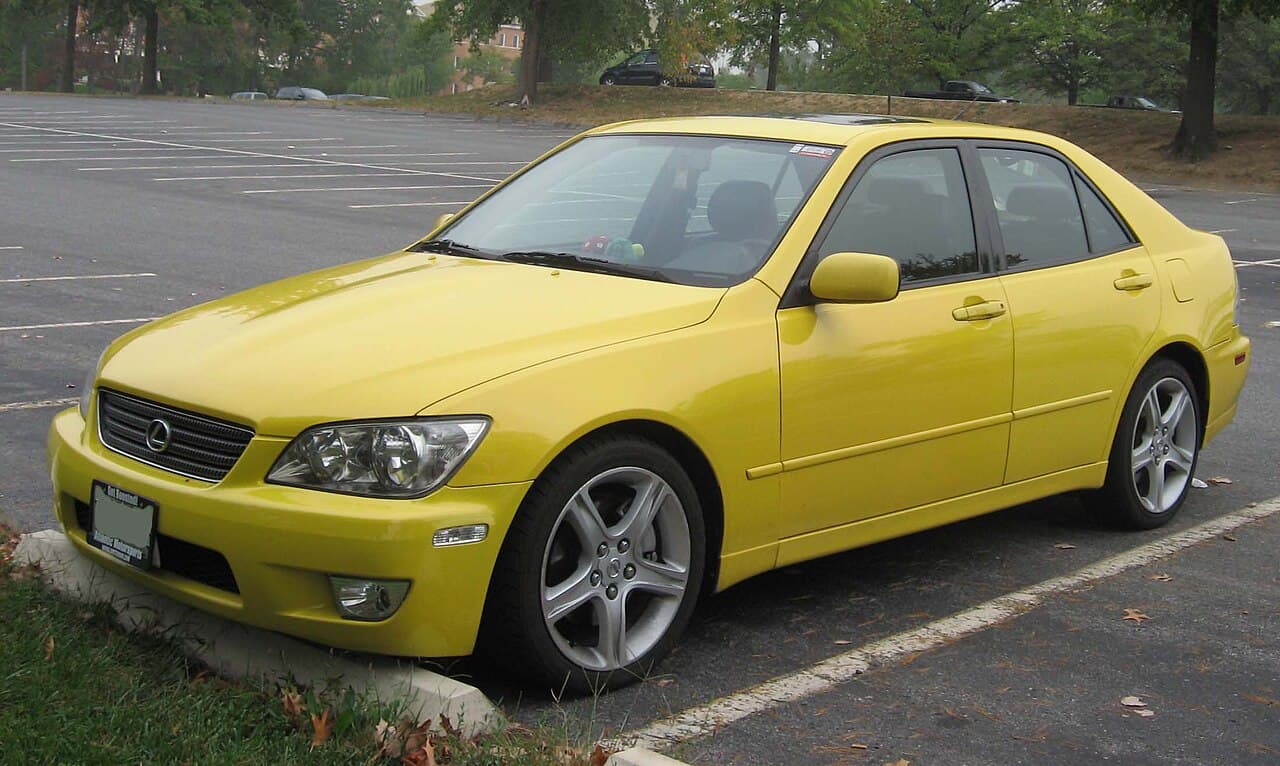
 1998–2006XE10XE10Engine not documented for this generationEngine not documentedSee faults & what to checkPhoto: IFCAR via Wikimedia Commons, Public domain.
Lexus1999–2020 Critical issues documented
Lexus Altezza: common faults & what to check
Thinking about buying a used Lexus Altezza (1999–2020) in New Zealand? We've documented 11 known faults for this model spanning engine, body & rust, transmission, and suspension. Each researched and verified before it's published. The most serious issues here are rated critical. Every one is listed below with its symptoms and repair cost, and each has its own page with where to look and what to ask the seller. Free, no account needed.
Check this exact Lexus Altezza
- Odometer history
- Money owing
- Reported stolen
- Ownership history
11
Critical
$700–$1,500
5
Which Lexus Altezza are you looking at?
Engine not documented
1998–2006XE10XE10Engine not documented for this generationEngine not documentedSee faults & what to checkPhoto: IFCAR via Wikimedia Commons, Public domain.Now narrow it to the engine
Start your free check on this Lexus Altezza
Lexus AltezzaEngine not picked yet
Pick the engine above first: the Altezza came with 4, and without it the report has to show all of their faults. Pick the engine
Can't confirm for this car
Lexus Altezza
Nothing has been narrowed yet, so nothing below is a claim about a particular car. Pick a year and an engine to see which faults apply.
Tell us the engine, or check the engine code on the car, before relying on this.
matched on no vehicle context
What to look out for
Serious issue
Ask for documented belt replacement history with receipts.
1G-FE Timing Belt Failure (Interference Engine)
The IS200's 1G-FE 2.0L inline-six is a belt-driven interference engine with a factory-recommended replacement interval of approximately 90,000 km. Many JDM imports arrive in NZ with unknown belt history. Belt failure at speed causes piston-to-valve contact, resulting in bent valves and severe cylinder head damage. This is the single highest-risk mechanical item on any XE10 IS200.
What you would notice
Serious issue
Check oil level carefully before test drive.
XE10 IS200 1G-FE Cast Aluminium Oil Sump Cracking
The IS200 XE10 uses a cast aluminium oil sump that sits relatively low and exposed beneath the engine. The sump is vulnerable to cracking from stone strikes or grounding impacts on kerbs and speed bumps, which are common in New Zealand and Australian driving conditions. The aluminium casting can develop hairline cracks that worsen over time. Low-speed impacts that would cause no visible damage to the underbody panels can fracture the sump casting. Oil loss can be slow and go unnoticed until severe engine damage results from oil starvation.
What you would notice
Costly issue
Ask for service history showing intake valve cleaning.
FSE Direct Injection Intake Valve Carbon Buildup
The 4GR-FSE (IS250) and 2GR-FSE (IS350) use port-less direct injection, meaning fuel never washes the back of the intake valves. Over time, oily vapour from the PCV system deposits carbon on valve stems and seats, restricting airflow. Deposits accumulate progressively and typically become symptomatic between 80,000–150,000 km. The only effective remedy is physical removal via walnut-shell blasting through the intake ports with the manifold removed.
What you would notice
Costly issue
With wheels off the ground, grasp each front wheel at 6 and 12 o'clock and attempt to rock it — play indicates worn ball joints or wheel bearings.
Front Lower Control Arm Ball Joint Wear and Failure
The front lower control arm ball joints on XE20 and XE30 IS models wear progressively. The ball joint is not separately replaceable on earlier XE20 variants — the full lower arm must be replaced. XE30 arms allow joint-only replacement on some specifications. Worn joints cause vague steering, clunking, and eventually dangerous handling instability. Common in NZ/AU imports with higher km.
What you would notice
Costly issue
Probe the inner sill seam below the door aperture with a small screwdriver — solid metal should resist firm pressure.
Inner Sill and Rear Quarter Panel Rust
NZ-climate XE10 IS200 and IS300 examples — particularly those that spent years in coastal or high-rainfall areas — develop corrosion inside the inner sill cavity and along the lower rear quarter panel seam. Rust typically begins from the inside out, so outer paint bubbling indicates significant structural rust already present. JDM imports with clean body panels can still have compromised inner sill sections.
What you would notice
Costly issue
Check oil level and look for blue smoke during a prolonged overrun (decelerate from 80 km/h in gear without braking).
1G-FE Oil Consumption and Valve Stem Seal Wear (IS200)
The 1G-FE 2.0L inline-six in the XE10 IS200 develops oil consumption through worn valve stem seals and piston rings as the engine ages past 150,000 km. The valve stem seals harden and shrink with age, allowing oil to be drawn past the guides under intake vacuum, particularly on the overrun (deceleration). Oil consumption of 0.5–1.0 L per 1,000 km is reported in high-mileage examples. Stem seal replacement is achievable with the head on the engine using a valve spring compressor and compressed air, keeping repair costs moderate if caught before ring wear sets in.
What you would notice
See all 11 documented issues
Depends on which engine this Lexus Altezza has — 11
Engine, transmission & cooling
01XE10 IS200 1G-FE Cast Aluminium Oil Sump Cracking
Can't confirm for this car
OccasionalEngine $700–$1,400 to fix
Can't confirm for this car
The IS200 XE10 uses a cast aluminium oil sump that sits relatively low and exposed beneath the engine. The sump is vulnerable to cracking from stone strikes or grounding impacts on kerbs and speed bumps, which are common in New Zealand and Australian driving conditions. The aluminium casting can develop hairline cracks that worsen over time. Low-speed impacts that would cause no visible damage to the underbody panels can fracture the sump casting. Oil loss can be slow and go unnoticed until severe engine damage results from oil starvation.
Symptoms to notice
What to check
Ask the seller
021G-FE Timing Belt Failure (Interference Engine)
Can't confirm for this car
CommonEngine $700–$1,300 to fix
Can't confirm for this car
The IS200's 1G-FE 2.0L inline-six is a belt-driven interference engine with a factory-recommended replacement interval of approximately 90,000 km. Many JDM imports arrive in NZ with unknown belt history. Belt failure at speed causes piston-to-valve contact, resulting in bent valves and severe cylinder head damage. This is the single highest-risk mechanical item on any XE10 IS200.
Symptoms to notice
What to check
Ask the seller
031G-FE Oil Consumption and Valve Stem Seal Wear (IS200)
Can't confirm for this car
OccasionalEngine $600–$2,500 to fix
Can't confirm for this car
The 1G-FE 2.0L inline-six in the XE10 IS200 develops oil consumption through worn valve stem seals and piston rings as the engine ages past 150,000 km. The valve stem seals harden and shrink with age, allowing oil to be drawn past the guides under intake vacuum, particularly on the overrun (deceleration). Oil consumption of 0.5–1.0 L per 1,000 km is reported in high-mileage examples. Stem seal replacement is achievable with the head on the engine using a valve spring compressor and compressed air, keeping repair costs moderate if caught before ring wear sets in.
Symptoms to notice
What to check
Ask the seller
04Rear Differential Bearing Noise
Can't confirm for this car
OccasionalTransmission $900–$2,000 to fix
Can't confirm for this car
High-mileage XE10 IS200 and IS300 rear differentials develop worn carrier or pinion bearings, producing a rhythmic whine or howl that changes pitch with vehicle speed but not engine speed. The diff is robust but bearing lubrication degrades over time and the oil is rarely changed on used imports. Noise is first noticeable on light throttle at 80–100 km/h.
Symptoms to notice
What to check
Ask the seller
05FSE Direct Injection Intake Valve Carbon Buildup
Can't confirm for this car
CommonEngine $800–$2,000 to fix
Can't confirm for this car
The 4GR-FSE (IS250) and 2GR-FSE (IS350) use port-less direct injection, meaning fuel never washes the back of the intake valves. Over time, oily vapour from the PCV system deposits carbon on valve stems and seats, restricting airflow. Deposits accumulate progressively and typically become symptomatic between 80,000–150,000 km. The only effective remedy is physical removal via walnut-shell blasting through the intake ports with the manifold removed.
Symptoms to notice
What to check
Ask the seller
06A650E Automatic Transmission Shift Solenoid Wear
Can't confirm for this car
OccasionalTransmission $550–$1,400 to fix
Can't confirm for this car
The A650E 6-speed automatic in the IS300 (and some IS200 variants) develops shift solenoid wear at higher mileages, causing delayed, harsh, or hunting gear changes. The transmission is generally robust but solenoid degradation causes erratic behaviour most noticeable in cold conditions or when downshifting. Fluid contamination from neglected service intervals accelerates solenoid wear.
Symptoms to notice
What to check
Ask the seller
071G-FE Throttle Body and Intake Carbon Buildup
Can't confirm for this car
CommonEngine $150–$380 to fix
Can't confirm for this car
The 1G-FE's EGR system routes exhaust gases back through the intake, depositing carbon on the throttle body plate and intake ports. At higher mileages (120,000 km+) the buildup restricts airflow enough to cause rough idle, hesitation on light throttle, and an elevated idle that hunts. Cleaning is straightforward but commonly overlooked on budget-price imports.
Symptoms to notice
What to check
Ask the seller
Body, brakes, suspension & interior
01Inner Sill and Rear Quarter Panel Rust
Can't confirm for this car
OccasionalBody & Rust $900–$3,500 to fix
Can't confirm for this car
NZ-climate XE10 IS200 and IS300 examples — particularly those that spent years in coastal or high-rainfall areas — develop corrosion inside the inner sill cavity and along the lower rear quarter panel seam. Rust typically begins from the inside out, so outer paint bubbling indicates significant structural rust already present. JDM imports with clean body panels can still have compromised inner sill sections.
Symptoms to notice
What to check
Ask the seller
02Front Lower Control Arm Ball Joint Wear and Failure
Can't confirm for this car
CommonSuspension $500–$1,100 to fix
Can't confirm for this car
The front lower control arm ball joints on XE20 and XE30 IS models wear progressively. The ball joint is not separately replaceable on earlier XE20 variants — the full lower arm must be replaced. XE30 arms allow joint-only replacement on some specifications. Worn joints cause vague steering, clunking, and eventually dangerous handling instability. Common in NZ/AU imports with higher km.
 Example of the part — not this vehicle
A separated lower ball joint: the control arm has dropped and the wheel has splayed out under the guard.
Symptoms to notice
What to check
Ask the seller
Fluid leaks
01Power Steering Rack Seal Leak
Can't confirm for this car
CommonFluid Leaks $850–$2,000 to fix
Can't confirm for this car
The hydraulic rack-and-pinion steering unit on the GSE20 IS250 and IS350 develops seal wear at the rack ends, causing power steering fluid to seep from the boots or drip from the rack housing. Higher-mileage examples and those with degraded fluid are most affected. Leaking fluid can contaminate the subframe and boots. Rack resealing is possible but many workshops recommend rack replacement at this price point.
Symptoms to notice
What to check
Ask the seller
02XE10 Power Steering Rack and Pump Seal Leaks
Can't confirm for this car
CommonFluid Leaks $400–$1,500 to fix
Can't confirm for this car
The hydraulic power steering rack and pump on the XE10 IS200 and IS300 develop seal leaks as the rubber hardens past 15 years of age. Leaks originate from rack end seals, pump shaft seal, or high-pressure hose crimps. Power steering fluid weeps onto subframe components and can cause rack stiffness or growling. While rarely a safety-critical failure, a neglected leak eventually leads to pump cavitation and accelerated wear. Replacement racks and pumps are becoming harder to source new, pushing costs toward reconditioned units.
Symptoms to notice
What to check
Ask the seller
What these repairs cost on other cars
Some of the Lexus Altezza’s documented faults are repairs other models share. Each page lists the documented NZ cost for every model it affects.
Other Lexus models
Lexus Altezza buyer questions
Is the Lexus Altezza reliable?
Like any used car, it depends on the specific example and its service history. Across the 11 documented faults for the Lexus Altezza, the recurring problem areas are engine, body & rust, and transmission. A Lexus Altezza with a full service history and no signs of the issues listed on this page can be a sound buy but each one needs to be checked individually before you commit.
What are the most common problems with a used Lexus Altezza?
We've catalogued 11 known faults for the Lexus Altezza, covering engine, body & rust, and transmission. All 11 are written out in full on this page, with the symptoms to notice, what to inspect, and typical repair costs for each. Free to read, no account needed.
How much do repairs cost on a Lexus Altezza?
Most single repairs on the Lexus Altezza fall between $700–$1,500 at NZ independent-workshop rates. Some of the 11 documented faults cost less and a few cost considerably more, and no one car needs them all. Knowing which ones to look for before you view is what lets you negotiate the price down or walk away.
Should I get a pre-purchase inspection on a Lexus Altezza?
Yes. A Lexus Altezza inspection focused on its known weak points is the single best way to avoid an expensive mistake. KickTyres gives you a guided, model-specific inspection plus a market valuation and negotiation figure for $24.90 far less than the cost of missing one of the faults on this page.