 2000–2007UCF30UCF30Engine not documented for this generationEngine not documentedSee faults & what to checkPhoto: Vauxford via Wikimedia Commons, CC BY-SA 4.0.
Lexus2006–2023 Major issues documented
Lexus Celsior: common faults & what to check
Thinking about buying a used Lexus Celsior (2006–2023) in New Zealand? We've documented 5 known faults for this model spanning engine, suspension, transmission, and fluid leaks. Each researched and verified before it's published. The most serious issues here are rated major. Every one is listed below with its symptoms and repair cost, and each has its own page with where to look and what to ask the seller. Free, no account needed.
Check this exact Lexus Celsior
- Odometer history
- Money owing
- Reported stolen
- Ownership history
5
Major
$1,800–$4,500
4
Which Lexus Celsior are you looking at?
Engine not documented
2000–2007UCF30UCF30Engine not documented for this generationEngine not documentedSee faults & what to checkPhoto: Vauxford via Wikimedia Commons, CC BY-SA 4.0.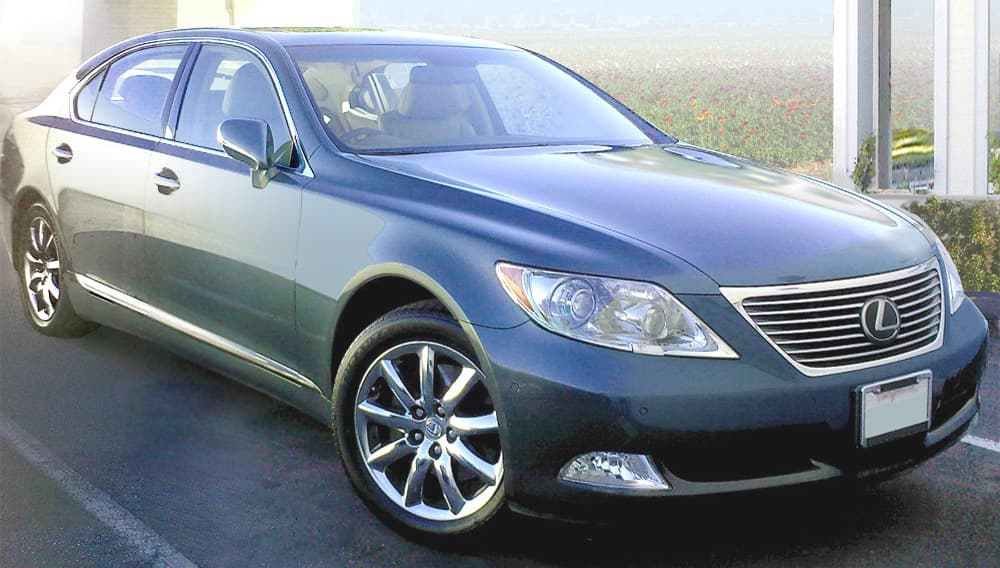 2006–2018USF40USF40Engine not documented for this generationEngine not documentedSee faults & what to checkPhoto: Altair78 via Wikimedia Commons, CC BY-SA 4.0.
 2017–nowVXFA50VXFA50Engine not documented for this generationEngine not documentedSee faults & what to checkPhoto: Kevauto via Wikimedia Commons, CC BY-SA 4.0.
Now narrow it to the engine
Start your free check on this Lexus Celsior
Lexus CelsiorEngine not picked yet
Pick the engine above first: the Celsior came with 2, and without it the report has to show all of their faults. Pick the engine
Can't confirm for this car
Lexus Celsior
Nothing has been narrowed yet, so nothing below is a claim about a particular car. Pick a year and an engine to see which faults apply.
Tell us the engine, or check the engine code on the car, before relying on this.
matched on no vehicle context
What to look out for
Costly issue
Observe vehicle ride height at all four corners before and after test drive.
Front Air Suspension Strut Failure (LS460 and LS500)
Both the USF40 LS460 and VXFA50 LS500 use electronically controlled air suspension. The front air struts develop bladder leaks, causing the vehicle to sag at the front overnight or to trigger height-sensor warnings. Replacement struts are expensive OEM items; aftermarket coilover conversion kits are an alternative that sacrifices ride height adjustment. Failure rate increases significantly with age and in NZ's damp climate.
What you would notice
Costly issue
Cold start only — rattle is absent once oil pressure builds.
1UR-FSE 4.6 V8 Secondary Timing Chain Tensioner Rattle (LS460 USF40)
The 1UR-FSE 4.6L V8 in the LS460 uses secondary timing chains to drive each bank's VVTI sprockets. The plastic tensioner ratchet pawls wear and the hydraulic tensioners lose hold after cold soaks, causing a characteristic cold-start rattle lasting 5–30 seconds. The pattern is well-documented on the LS460 platform and mirrors the same issue on Crown URS, GS460, and IS-F with related engines. Full secondary chain replacement is labour-intensive on this RWD V8.
What you would notice
Costly issue
Insist on a cold start — do not allow engine to be warmed before inspection.
V35A-FTS 3.5 Twin-Turbo Cold-Start Timing Chain Tensioner Rattle (LS500)
The V35A-FTS 3.5L twin-turbocharged V6 shared with Land Cruiser 300 and Crown Sedan exhibits a documented cold-start timing chain rattle on some units. Hydraulic tensioners do not retain full oil pressure during extended cold soaks, allowing chain slack for several seconds until the oil system pressurises. The pattern has been reported on LS500 and cross-platform on the V35A family. Extended oil drain intervals and use of incorrect viscosity oil worsen frequency.
What you would notice
Costly issue
Test drive from cold — note shift quality through all lower gears.
8-Speed Automatic Solenoid Wear and Shift Quality Degradation (LS460)
The AA80E 8-speed automatic in the LS460 develops solenoid wear leading to delayed or rough gear changes, particularly when cold. Hard shifts between 1st–2nd and 2nd–3rd, shudder on light throttle torque-converter engagement, and hesitation during kickdown are the most reported patterns. Fluid condition is critical — LS460s with neglected ATF changes accelerate solenoid wear significantly. Full solenoid body replacement or valve body rebuild is the documented repair.
What you would notice
Costly issue
Inspect the power steering rack boots from beneath the vehicle for oil staining or wetness.
Power Steering Rack Inner Seal Leak (LS460 USF40)
The hydraulic power steering rack on LS460 models develops inner seal leaks with age and mileage. Symptoms begin as minor weeping at the rack boots but progress to measurable fluid loss. NZ and AU humidity and temperature cycling accelerate seal degradation. Remanufactured rack units are available; OEM replacement is a multi-hour job requiring subframe drop on this platform.
What you would notice
See all 5 documented issues
Depends on which engine this Lexus Celsior has — 5
Engine, transmission & cooling
01V35A-FTS 3.5 Twin-Turbo Cold-Start Timing Chain Tensioner Rattle (LS500)
Can't confirm for this car
OccasionalEngine $2,800–$6,000 to fix
Can't confirm for this car
The V35A-FTS 3.5L twin-turbocharged V6 shared with Land Cruiser 300 and Crown Sedan exhibits a documented cold-start timing chain rattle on some units. Hydraulic tensioners do not retain full oil pressure during extended cold soaks, allowing chain slack for several seconds until the oil system pressurises. The pattern has been reported on LS500 and cross-platform on the V35A family. Extended oil drain intervals and use of incorrect viscosity oil worsen frequency.
 Example of the part — not this vehicle
The front of a twin-cam engine with the timing cover off — chain, sprockets and guides.
Symptoms to notice
What to check
Ask the seller
021UR-FSE 4.6 V8 Secondary Timing Chain Tensioner Rattle (LS460 USF40)
Can't confirm for this car
CommonEngine $2,800–$5,500 to fix
Can't confirm for this car
The 1UR-FSE 4.6L V8 in the LS460 uses secondary timing chains to drive each bank's VVTI sprockets. The plastic tensioner ratchet pawls wear and the hydraulic tensioners lose hold after cold soaks, causing a characteristic cold-start rattle lasting 5–30 seconds. The pattern is well-documented on the LS460 platform and mirrors the same issue on Crown URS, GS460, and IS-F with related engines. Full secondary chain replacement is labour-intensive on this RWD V8.
Example of the part — not this vehicleThe front of a twin-cam engine with the timing cover off — chain, sprockets and guides.
Symptoms to notice
What to check
Ask the seller
038-Speed Automatic Solenoid Wear and Shift Quality Degradation (LS460)
Can't confirm for this car
OccasionalTransmission $1,800–$4,500 to fix
Can't confirm for this car
The AA80E 8-speed automatic in the LS460 develops solenoid wear leading to delayed or rough gear changes, particularly when cold. Hard shifts between 1st–2nd and 2nd–3rd, shudder on light throttle torque-converter engagement, and hesitation during kickdown are the most reported patterns. Fluid condition is critical — LS460s with neglected ATF changes accelerate solenoid wear significantly. Full solenoid body replacement or valve body rebuild is the documented repair.
Symptoms to notice
What to check
Ask the seller
Body, brakes, suspension & interior
01Front Air Suspension Strut Failure (LS460 and LS500)
Can't confirm for this car
Very commonSuspension $1,500–$4,500 to fix
Can't confirm for this car
Both the USF40 LS460 and VXFA50 LS500 use electronically controlled air suspension. The front air struts develop bladder leaks, causing the vehicle to sag at the front overnight or to trigger height-sensor warnings. Replacement struts are expensive OEM items; aftermarket coilover conversion kits are an alternative that sacrifices ride height adjustment. Failure rate increases significantly with age and in NZ's damp climate.
Symptoms to notice
What to check
Ask the seller
Fluid leaks
01Power Steering Rack Inner Seal Leak (LS460 USF40)
Can't confirm for this car
OccasionalFluid Leaks $900–$2,200 to fix
Can't confirm for this car
The hydraulic power steering rack on LS460 models develops inner seal leaks with age and mileage. Symptoms begin as minor weeping at the rack boots but progress to measurable fluid loss. NZ and AU humidity and temperature cycling accelerate seal degradation. Remanufactured rack units are available; OEM replacement is a multi-hour job requiring subframe drop on this platform.
Symptoms to notice
What to check
Ask the seller
What these repairs cost on other cars
Some of the Lexus Celsior’s documented faults are repairs other models share. Each page lists the documented NZ cost for every model it affects.
Other Lexus models
Lexus Celsior buyer questions
Is the Lexus Celsior reliable?
Like any used car, it depends on the specific example and its service history. Across the 5 documented faults for the Lexus Celsior, the recurring problem areas are engine, suspension, and transmission. A Lexus Celsior with a full service history and no signs of the issues listed on this page can be a sound buy but each one needs to be checked individually before you commit.
What are the most common problems with a used Lexus Celsior?
We've catalogued 5 known faults for the Lexus Celsior, covering engine, suspension, and transmission. All 5 are written out in full on this page, with the symptoms to notice, what to inspect, and typical repair costs for each. Free to read, no account needed.
How much do repairs cost on a Lexus Celsior?
Most single repairs on the Lexus Celsior fall between $1,800–$4,500 at NZ independent-workshop rates. Some of the 5 documented faults cost less and a few cost considerably more, and no one car needs them all. Knowing which ones to look for before you view is what lets you negotiate the price down or walk away.
Should I get a pre-purchase inspection on a Lexus Celsior?
Yes. A Lexus Celsior inspection focused on its known weak points is the single best way to avoid an expensive mistake. KickTyres gives you a guided, model-specific inspection plus a market valuation and negotiation figure for $24.90 far less than the cost of missing one of the faults on this page.