Nissan Altima: common faults & what to check
Thinking about buying a used Nissan Altima (2003–2014) in New Zealand? We've documented 8 known faults for this model spanning transmission, engine, electrical, and suspension. Each researched and verified before it's published. The most serious issues here are rated critical. Every one is listed below with its symptoms and repair cost, and each has its own page with where to look and what to ask the seller. Free, no account needed.
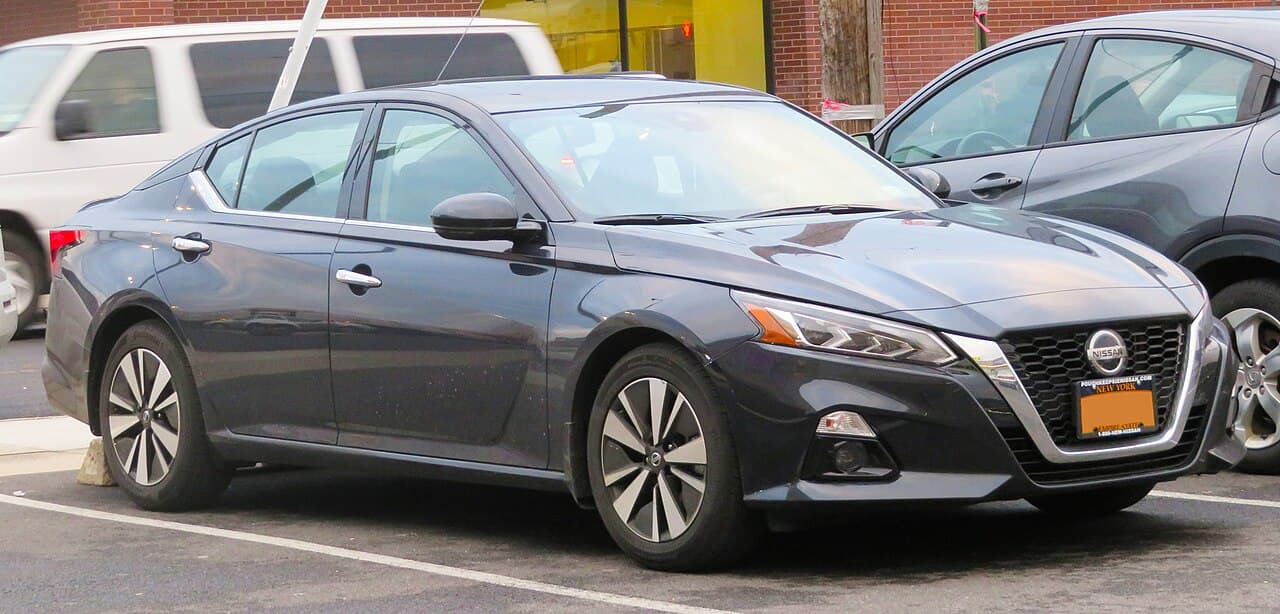
Check this exact Nissan Altima
- Odometer history
- Money owing
- Reported stolen
- Ownership history
8
Critical
$400–$1,500
5
Which Nissan Altima are you looking at?
Start your free check on this Nissan Altima
Pick the engine above first: the Altima came with 3, and without it the report has to show all of their faults. Pick the engine
Can't confirm for this car
Nissan Altima
Nothing has been narrowed yet, so nothing below is a claim about a particular car. Pick a year and an engine to see which faults apply.
Tell us the engine, or check the engine code on the car, before relying on this.
matched on no vehicle context
What to look out for
Serious issue
Drive at light throttle between 40–80 km/h and feel for shudder or vibration through the drivetrain.
QR25DE CVT Failure and Shudder
The Jatco CVT paired with the QR25DE 2.5-litre four-cylinder is the most significant known fault on 4-cylinder Teana variants across J31 and L33 generations. Early J31 units (2003–2008) suffer outright CVT failure from belt and pulley wear, particularly on high-mileage JDM imports without transmission service records. L33 units (2013–2022) exhibit CVT shudder at light throttle and overheating under sustained load — a pattern specifically warned about by NRMA and Australian consumer groups. Use of non-Nissan NS-3 CVT fluid or delayed fluid changes greatly accelerates failure. Replacement units from Japan are common but carry their own mileage risk.
What you would notice
Serious issue
Cold-start the engine immediately and listen for chain rattle from the cam cover area.
VQ35DE Secondary Timing Chain Tensioner Rattle
The VQ35DE 3.5-litre V6 fitted to J31, J32, and L33 Teana models shares the well-documented secondary timing chain tensioner failure pattern common across Nissan VQ-series engines. The secondary chain on the driver-side bank loses tensioner pressure as the hydraulic tensioner fatigues, causing a pronounced metallic rattle on cold start that typically clears within 30–60 seconds as oil pressure builds. Continued use risks chain skip and catastrophic valve damage. Oil maintenance history is critical — sludged oil from infrequent changes accelerates tensioner wear and blocks the feed galleries. At the mileages common on NZ JDM imports this fault is frequently already present.
What you would notice
Costly issue
Test drive and feel for vibration at 20-60 km/h under light throttle.
CVT RE0F09A Belt Judder
The Teana CVT develops shudder from belt and pulley wear. Very common on examples used for urban short trips. Nissan NS-2 CVT fluid is critical — incorrect fluid accelerates belt damage.
What you would notice
Costly issue
Check for cracked or split ball joint boots leaking grease.
Front Lower Control Arm Ball Joint Failure
Front lower control arm ball joints on J31 and J32 Teana models wear prematurely, particularly on JDM import examples that have accumulated 80,000–150,000 km before NZ or AU registration. The original ball joints are not independently serviceable on some variants, requiring full lower arm replacement. Failed ball joints produce clunking over bumps and compromise steering geometry, leading to tyre wear and handling instability. NZ road conditions and the age of these imports make this a near-universal WOF advisory finding.
What you would notice
Costly issue
Check for pulling under braking.
Brake Caliper Guide Pin Seizure
Front brake caliper guide pins seize from corrosion causing uneven pad wear.
What you would notice
Costly issue
Scan for EPS fault codes.
Electric Power Steering Failure
EPS system can develop a fault causing loss of power assistance.
What you would notice
See all 8 documented issues
Depends on which engine this Nissan Altima has — 8
Engine, transmission & cooling
01QR25DE CVT Failure and Shudder
Can't confirm for this car
Can't confirm for this car
The Jatco CVT paired with the QR25DE 2.5-litre four-cylinder is the most significant known fault on 4-cylinder Teana variants across J31 and L33 generations. Early J31 units (2003–2008) suffer outright CVT failure from belt and pulley wear, particularly on high-mileage JDM imports without transmission service records. L33 units (2013–2022) exhibit CVT shudder at light throttle and overheating under sustained load — a pattern specifically warned about by NRMA and Australian consumer groups. Use of non-Nissan NS-3 CVT fluid or delayed fluid changes greatly accelerates failure. Replacement units from Japan are common but carry their own mileage risk.
Symptoms to notice
What to check
Ask the seller
02VQ35DE Secondary Timing Chain Tensioner Rattle
Can't confirm for this car
Can't confirm for this car
The VQ35DE 3.5-litre V6 fitted to J31, J32, and L33 Teana models shares the well-documented secondary timing chain tensioner failure pattern common across Nissan VQ-series engines. The secondary chain on the driver-side bank loses tensioner pressure as the hydraulic tensioner fatigues, causing a pronounced metallic rattle on cold start that typically clears within 30–60 seconds as oil pressure builds. Continued use risks chain skip and catastrophic valve damage. Oil maintenance history is critical — sludged oil from infrequent changes accelerates tensioner wear and blocks the feed galleries. At the mileages common on NZ JDM imports this fault is frequently already present.
 Example of the part — not this vehicle
The front of a twin-cam engine with the timing cover off — chain, sprockets and guides.
Symptoms to notice
What to check
Ask the seller
03CVT RE0F09A Belt Judder
Can't confirm for this car
Can't confirm for this car
The Teana CVT develops shudder from belt and pulley wear. Very common on examples used for urban short trips. Nissan NS-2 CVT fluid is critical — incorrect fluid accelerates belt damage.
Symptoms to notice
What to check
Ask the seller
Electrical
01Electric Power Steering Failure
Can't confirm for this car
Can't confirm for this car
EPS system can develop a fault causing loss of power assistance.
Symptoms to notice
What to check
Ask the seller
02Air Conditioning Compressor Clutch Bearing Failure
Can't confirm for this car
Can't confirm for this car
AC compressor clutch bearing wears causing squealing when AC is engaged.
Symptoms to notice
What to check
Ask the seller
Body, brakes, suspension & interior
01Front Lower Control Arm Ball Joint Failure
Can't confirm for this car
Can't confirm for this car
Front lower control arm ball joints on J31 and J32 Teana models wear prematurely, particularly on JDM import examples that have accumulated 80,000–150,000 km before NZ or AU registration. The original ball joints are not independently serviceable on some variants, requiring full lower arm replacement. Failed ball joints produce clunking over bumps and compromise steering geometry, leading to tyre wear and handling instability. NZ road conditions and the age of these imports make this a near-universal WOF advisory finding.
 Example of the part — not this vehicle
A separated lower ball joint: the control arm has dropped and the wheel has splayed out under the guard.
Symptoms to notice
What to check
Ask the seller
02Brake Caliper Guide Pin Seizure
Can't confirm for this car
Can't confirm for this car
Front brake caliper guide pins seize from corrosion causing uneven pad wear.
Symptoms to notice
What to check
Ask the seller
03Rear Suspension Multi-Link Bush Collapse
Can't confirm for this car
Can't confirm for this car
Rear multi-link suspension arm bushes harden and collapse causing rear knocking and handling imprecision.
Symptoms to notice
What to check
Ask the seller
What these repairs cost on other cars
Some of the Nissan Altima’s documented faults are repairs other models share. Each page lists the documented NZ cost for every model it affects.
Other Nissan models
Nissan Altima buyer questions
Is the Nissan Altima reliable?
Like any used car, it depends on the specific example and its service history. Across the 8 documented faults for the Nissan Altima, the recurring problem areas are transmission, engine, and electrical. A Nissan Altima with a full service history and no signs of the issues listed on this page can be a sound buy but each one needs to be checked individually before you commit.
What are the most common problems with a used Nissan Altima?
We've catalogued 8 known faults for the Nissan Altima, covering transmission, engine, and electrical. All 8 are written out in full on this page, with the symptoms to notice, what to inspect, and typical repair costs for each. Free to read, no account needed.
How much do repairs cost on a Nissan Altima?
Most single repairs on the Nissan Altima fall between $400–$1,500 at NZ independent-workshop rates. Some of the 8 documented faults cost less and a few cost considerably more, and no one car needs them all. Knowing which ones to look for before you view is what lets you negotiate the price down or walk away.
Should I get a pre-purchase inspection on a Nissan Altima?
Yes. A Nissan Altima inspection focused on its known weak points is the single best way to avoid an expensive mistake. KickTyres gives you a guided, model-specific inspection plus a market valuation and negotiation figure for $24.90 far less than the cost of missing one of the faults on this page.