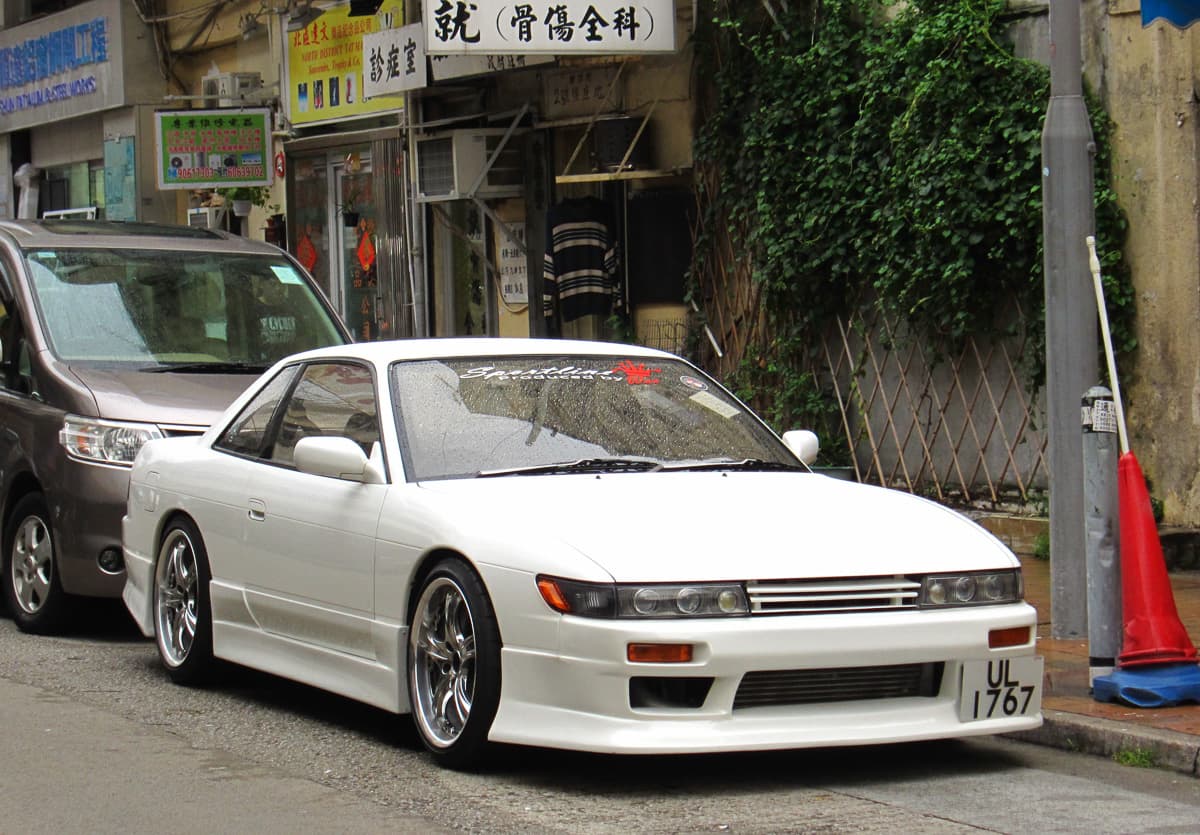
 1993–1999S14S142.0 petrolPetrolSee faults & what to checkPhoto: Tokumeigakarinoaoshima via Wikimedia Commons, CC BY-SA 4.0.
Nissan1988–2002 Critical issues documented
Nissan Silvia: common faults & what to check
Thinking about buying a used Nissan Silvia (1988–2002) in New Zealand? We've documented 10 known faults for this model spanning engine, body & rust, transmission, and suspension. Each researched and verified before it's published. The most serious issues here are rated critical. Every one is listed below with its symptoms and repair cost, and each has its own page with where to look and what to ask the seller. Free, no account needed.
Check this exact Nissan Silvia
- Odometer history
- Money owing
- Reported stolen
- Ownership history
10
Critical
$800–$3,500
4
Which Nissan Silvia are you looking at?
Petrol
1993–1999S14S142.0 petrolPetrolSee faults & what to checkPhoto: Tokumeigakarinoaoshima via Wikimedia Commons, CC BY-SA 4.0.1993–1999S14S142.0 turbo petrolPetrolSee faults & what to checkPhoto: Tokumeigakarinoaoshima via Wikimedia Commons, CC BY-SA 4.0. 1999–2002S15S152.0 petrolPetrolSee faults & what to checkPhoto: Charlie from United Kingdom via Wikimedia Commons, CC BY 2.0.1999–2002S15S152.0 turbo petrolPetrolSee faults & what to checkPhoto: Charlie from United Kingdom via Wikimedia Commons, CC BY 2.0.
Engine not documented
Now narrow it to the engine
Start your free check on this Nissan Silvia
Nissan Silvia
Can't confirm for this car
Nissan Silvia
Nothing has been narrowed yet, so nothing below is a claim about a particular car. Pick a year and an engine to see which faults apply.
Tell us the engine, or check the engine code on the car, before relying on this.
matched on no vehicle context
What to look out for
Serious issue
Insist on a compression and leak-down test before purchase and confirm even cylinder figures.
Tired or blown SR20DET from boost/tuning abuse and past overheating
The SR20DET turbo four is mechanically strong and will pass 200,000 km when looked after, but the Silvia/200SX is an enthusiast drift car and the large majority of surviving imports have been boosted, tuned, tracked or drifted. The stock head gasket is a known weak point above roughly 1.2 bar on the standard fuel system, and a lean tune or a single overheating event in traffic can crack the head or warp the block - frequently an engine-ending failure. Buyers should treat any modified or hard-driven example as guilty until proven innocent: check for coil-pack misfire and lean knock under boost, cold-start timing-chain rattle from a worn tensioner (neglect indicator), low hot-idle oil pressure suggesting bearing wear, and blue smoke or coolant loss. A compression and leak-down test is the single best protection, and a boost/oil-pressure gauge with an aftermarket ECU is a sign the car has been pushed.
What you would notice
Serious issue
Ask what oil is used and how often, and ask for invoices rather than a stamped book — this fault is almost entirely about oil discipline.
CA18DET turbo oil feed line — the S13 turbo's one real weakness
The CA18DET is a tough engine when it is left standard and serviced, and its known weak point is the factory turbo oil feed line rather than anything in the block. The line runs close to heat, and it silts up or restricts with age and with oil that has been left in too long. Starve the turbo bearing of oil and the turbo goes, usually announcing itself with blue smoke on start-up or under load and a whine that was not there before. On a car this age the line is a cheap part; the turbo it protects is not, and neither is the engine if debris travels. Any S13 with a service history that skips oil changes should be assumed to have a tired feed line.
What you would notice
Costly issue
Press firmly along both sills behind the front wheel and ahead of the rear wheel; soft or crunching areas indicate rust perforation.
Rear Wheel Arch and Sill Rust
The S13, S14, and S15 Silvia are well documented for rust initiation at the rear wheel arch lips, lower sills, and boot floor seams. NZ coastal and high-humidity conditions accelerate this significantly on Japanese imports that had no underbody treatment when new. Rust can be hidden by filler, paint, or arch liner. Structurally compromised sills may cause WOF refusal.
What you would notice
Costly issue
Rock each front wheel at the 12 and 6 o'clock positions for play.
Front Wheel Bearing Failure
Front wheel bearings on the S13, S14, and S15 Silvia wear from age, hard driving, and wider aftermarket tyres. Failure is very common past 120 000 km. Cars that have been lowered on coilovers with increased camber accelerate bearing wear significantly. Replacement requires hub removal and pressing.
What you would notice
Costly issue
Scan for ECU fault codes — NVCS-related codes point directly to this fault.
SR20DET NVCS Oil Control Valve Blockage
S14 and S15 SR20DET engines use Nissan Variable Cam System (NVCS) to advance the intake camshaft at higher RPM. The oil control solenoid (OCV) that actuates this system blocks with sludge when oil maintenance is poor, causing rough idle, flat mid-range power, and persistent check engine lights. Cleaning or replacing the solenoid restores function; blocked units are common on engines with irregular oil changes.
What you would notice
See all 10 documented issues
Depends on which engine this Nissan Silvia has — 10
Engine, transmission & cooling
01Tired or blown SR20DET from boost/tuning abuse and past overheating
Can't confirm for this car02SR20DET rod bearing wear — tight clearances that do not forgive neglected oil or added boost
Can't confirm for this car03CA18DET turbo oil feed line — the S13 turbo's one real weakness
Can't confirm for this car04S15 6-speed gearbox circlip/layshaft failure and clutch worn by drifting
Can't confirm for this car05SR20 camshaft oil spray bar blockage — the top end quietly stops being oiled
Can't confirm for this car06SR20DET NVCS Oil Control Valve Blockage
Can't confirm for this carBody, brakes, suspension & interior
01Modified, drifted or repaired — check the car is the car it says it is
Can't confirm for this car02Structural rust and hidden crash/drift repair in the S-body shell
Can't confirm for this car03Rear Wheel Arch and Sill Rust
Can't confirm for this car
CommonBody & Rust $800–$3,500 to fix
Can't confirm for this car
The S13, S14, and S15 Silvia are well documented for rust initiation at the rear wheel arch lips, lower sills, and boot floor seams. NZ coastal and high-humidity conditions accelerate this significantly on Japanese imports that had no underbody treatment when new. Rust can be hidden by filler, paint, or arch liner. Structurally compromised sills may cause WOF refusal.
Symptoms to notice
What to check
Ask the seller
04Front Wheel Bearing Failure
Can't confirm for this car
CommonSuspension $350–$750 to fix
Can't confirm for this car
Front wheel bearings on the S13, S14, and S15 Silvia wear from age, hard driving, and wider aftermarket tyres. Failure is very common past 120 000 km. Cars that have been lowered on coilovers with increased camber accelerate bearing wear significantly. Replacement requires hub removal and pressing.
Symptoms to notice
What to check
Ask the seller
Nissan Silvia faults in detail
CA18DET turbo oil feed line — the S13 turbo's one real weaknessModified, drifted or repaired — check the car is the car it says it isS15 6-speed gearbox circlip/layshaft failure and clutch worn by driftingSR20 camshaft oil spray bar blockage — the top end quietly stops being oiledSR20DET NVCS Oil Control Valve BlockageSR20DET rod bearing wear — tight clearances that do not forgive neglected oil or added boostStructural rust and hidden crash/drift repair in the S-body shellTired or blown SR20DET from boost/tuning abuse and past overheating
What these repairs cost on other cars
Some of the Nissan Silvia’s documented faults are repairs other models share. Each page lists the documented NZ cost for every model it affects.
Other Nissan models
Nissan Silvia buyer questions
Is the Nissan Silvia reliable?
Like any used car, it depends on the specific example and its service history. Across the 10 documented faults for the Nissan Silvia, the recurring problem areas are engine, body & rust, and transmission. A Nissan Silvia with a full service history and no signs of the issues listed on this page can be a sound buy but each one needs to be checked individually before you commit.
What are the most common problems with a used Nissan Silvia?
We've catalogued 10 known faults for the Nissan Silvia, covering engine, body & rust, and transmission. All 10 are written out in full on this page, with the symptoms to notice, what to inspect, and typical repair costs for each. Free to read, no account needed.
How much do repairs cost on a Nissan Silvia?
Most single repairs on the Nissan Silvia fall between $800–$3,500 at NZ independent-workshop rates. Some of the 10 documented faults cost less and a few cost considerably more, and no one car needs them all. Knowing which ones to look for before you view is what lets you negotiate the price down or walk away.
Should I get a pre-purchase inspection on a Nissan Silvia?
Yes. A Nissan Silvia inspection focused on its known weak points is the single best way to avoid an expensive mistake. KickTyres gives you a guided, model-specific inspection plus a market valuation and negotiation figure for $24.90 far less than the cost of missing one of the faults on this page.