Toyota Corolla Fielder: common faults & what to check
Thinking about buying a used Toyota Corolla Fielder (2000–2012) in New Zealand? We've documented 14 known faults for this model spanning suspension, transmission, engine, and electrical. Each researched and verified before it's published. The most serious issues here are rated critical. Every one is listed below with its symptoms and repair cost, and each has its own page with where to look and what to ask the seller. Free, no account needed.

Check this exact Toyota Corolla Fielder
- Odometer history
- Money owing
- Reported stolen
- Ownership history
14
Critical
$280–$750
5
Which Toyota Corolla Fielder are you looking at?
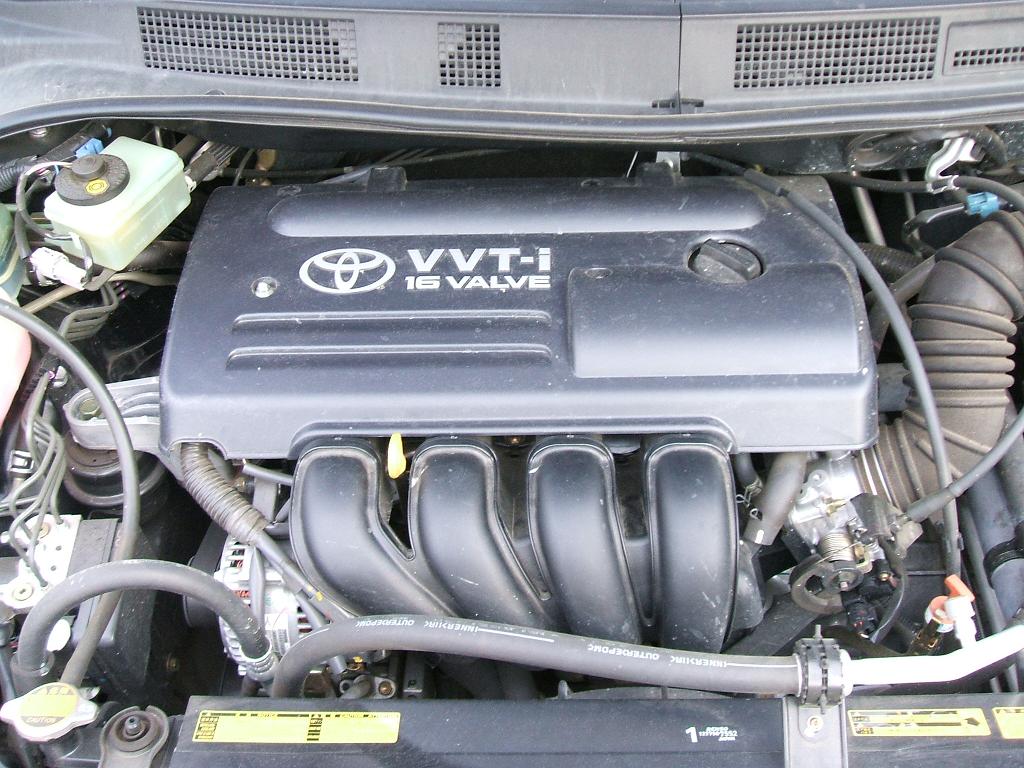 Example of the 1ZZ-FE family, not this car's engine
Start your free check on this Toyota Corolla Fielder
Applies to this engine
Toyota Corolla Fielder · 1.8L petrol (1ZZ-FE)
Narrowed to the 1ZZ-FE. Faults documented for a different engine in this model are not shown.
matched on engine code 1ZZ-FE
What to look out for
Serious issue
Grasp the wheel at 12 and 6 o'clock and attempt to rock it — any knock or movement indicates ball joint wear.
Front Lower Control Arm Ball Joint Wear
The front lower control arm ball joints on the NZE141 and NZE164 are a pressed-in design that wears progressively with mileage and NZ road conditions. Worn ball joints develop axial and radial play, causing a clunking noise over bumps and vague, imprecise steering. A failed ball joint can dislocate entirely, collapsing the suspension and causing loss of vehicle control — this is a WOF failure item in New Zealand.
What you would notice
Costly issue
Compare oil dipstick level against the date of last service to estimate consumption rate.
1ZZ-FE Piston Ring Oil Consumption
The 1ZZ-FE engine uses narrow low-tension piston oil control rings that are prone to carbon buildup causing ring stiction in their grooves. The rings progressively lose radial tension against the cylinder wall, allowing oil to migrate into the combustion chamber and burn off. Oil consumption can reach 1 litre per 1,000 km in severely affected engines. Toyota issued a Technical Service Bulletin acknowledging the defect and offered a piston ring replacement remedy within warranty. The same fault appears across all 1ZZ-FE-equipped Toyota models of the era including Wish, Caldina, and Premio. Most NZ grey imports of this model will not have had the TSB remedy applied.
What you would notice
Costly issue
Test the parking brake on a gradient — it should hold firmly within 4 to 6 clicks.
Rear Drum Adjuster Corrosion — Ineffective Handbrake
The rear drum brake self-adjuster on the ZZE122 Corolla Fielder consists of a threaded star-wheel strut assembly housed inside the drum. Moisture infiltration through worn drum lip seals, combined with brake dust and road contamination, creates a corrosive environment that attacks the adjuster threads. Once the threads corrode and seize, the adjuster can no longer extend to compensate for brake shoe wear. As the shoes wear down and the adjuster fails to follow, both pedal travel and parking brake lever travel increase progressively. NZ grey imports frequently arrive with this corrosion already established from Japanese winter road service. This is among the most commonly cited WoF failures on ZZE122 imports and typically requires full drum brake rebuild with new adjuster struts.
What you would notice
Costly issue
Start the engine from cold and listen for a metallic rattling from the front-left of the engine lasting more than 3 seconds before quietening.
1NZ-FE / 1ZZ-FE Timing Chain Tensioner Cold-Start Rattle
Both the 1NZ-FE and 1ZZ-FE engines use a hydraulic timing chain tensioner that relies on oil pressure to maintain chain tension. When the engine sits for extended periods, oil drains from the tensioner galleries, and on cold start the tensioner takes several seconds to pressurise, during which the timing chain contacts the guide rail and produces a distinctive metallic rattle. Repeated cold-start rattle accelerates wear on the chain, tensioner shoe, and guide rails, and if the tensioner body itself fails or the check valve sticks, chain slack can become permanent, risking jumped timing and catastrophic valve-to-piston contact.
What you would notice
Costly issue
Look for cracking, splitting, or separation of the rubber from the outer metal sleeve.
Rear Trailing Arm Bush Collapse
The NZE/ZZE Fielder uses a multi-link rear suspension where the trailing arm is located by large rubber bushes at its forward mounting point to the body. These natural rubber bushes are vulnerable to deterioration from road grime, oil contamination, and heat cycling, causing the rubber to crack, delaminate from the metal sleeve, and ultimately collapse. Collapsed bushes allow the rear axle to move rearward under braking and forward under acceleration, causing toe-out instability on braking and toe-in understeer on acceleration, and they also introduce a pronounced clunking noise from the rear.
What you would notice
Costly issue
Attempt to slide the caliper by hand along the guide pins; it should move freely with light hand pressure.
Front Brake Caliper Guide Pin Seizure
The front brake calipers use two sliding guide pins (upper and lower) coated in rubber boots to retain grease. In New Zealand conditions, moisture ingress through deteriorated boots causes the steel pins to corrode and seize inside the aluminium caliper bracket, preventing the caliper from sliding freely. A seized guide pin holds one brake pad in partial contact with the disc, causing that pad to wear to metal while the opposite pad remains thick, generating brake pull and disc scoring.
What you would notice
All 11 issues for this one
1 rated criticalEngine, transmission & cooling
Electrical
03Electric Power Steering Rack Rattle and Stiction
Later NZE124/ZZE124 Fielder models fitted with electric power steering (EPS) use a column-assist or rack-and-pinion EPS unit where the electric motor drives through a worm gear onto the steering column or rack. Wear in the worm gear mesh and the intermediate shaft universal joints allows backlash to develop, producing a rattle or clunk when the steering is at or near the straight-ahead position over rough surfaces. Additionally, the EPS torque sensor can drift, causing the motor to apply inconsistent assist and creating a stiction or jerky feel when manoeuvring at low speed.
Example of the part — not this vehicleA Toyota VVT-i 16-valve four of this family, transverse, with its four-branch intake manifold below the cover.
Symptoms to notice
What to check
Ask the seller
Body, brakes, suspension & interior1 critical
04Front Lower Control Arm Ball Joint Wear
The front lower control arm ball joints on the NZE141 and NZE164 are a pressed-in design that wears progressively with mileage and NZ road conditions. Worn ball joints develop axial and radial play, causing a clunking noise over bumps and vague, imprecise steering. A failed ball joint can dislocate entirely, collapsing the suspension and causing loss of vehicle control — this is a WOF failure item in New Zealand.
Example of the part — not this vehicleA Toyota VVT-i 16-valve four of this family, transverse, with its four-branch intake manifold below the cover.
Symptoms to notice
What to check
Ask the seller
05Rear Trailing Arm Bush Collapse
The NZE/ZZE Fielder uses a multi-link rear suspension where the trailing arm is located by large rubber bushes at its forward mounting point to the body. These natural rubber bushes are vulnerable to deterioration from road grime, oil contamination, and heat cycling, causing the rubber to crack, delaminate from the metal sleeve, and ultimately collapse. Collapsed bushes allow the rear axle to move rearward under braking and forward under acceleration, causing toe-out instability on braking and toe-in understeer on acceleration, and they also introduce a pronounced clunking noise from the rear.
Example of the part — not this vehicleA Toyota VVT-i 16-valve four of this family, transverse, with its four-branch intake manifold below the cover.
Symptoms to notice
What to check
Ask the seller
06Front Brake Caliper Guide Pin Seizure
The front brake calipers use two sliding guide pins (upper and lower) coated in rubber boots to retain grease. In New Zealand conditions, moisture ingress through deteriorated boots causes the steel pins to corrode and seize inside the aluminium caliper bracket, preventing the caliper from sliding freely. A seized guide pin holds one brake pad in partial contact with the disc, causing that pad to wear to metal while the opposite pad remains thick, generating brake pull and disc scoring.
Example of the part — not this vehicleA Toyota VVT-i 16-valve four of this family, transverse, with its four-branch intake manifold below the cover.
Symptoms to notice
What to check
Ask the seller
07Rear Drum Adjuster Corrosion — Ineffective Handbrake
The rear drum brake self-adjuster on the ZZE122 Corolla Fielder consists of a threaded star-wheel strut assembly housed inside the drum. Moisture infiltration through worn drum lip seals, combined with brake dust and road contamination, creates a corrosive environment that attacks the adjuster threads. Once the threads corrode and seize, the adjuster can no longer extend to compensate for brake shoe wear. As the shoes wear down and the adjuster fails to follow, both pedal travel and parking brake lever travel increase progressively. NZ grey imports frequently arrive with this corrosion already established from Japanese winter road service. This is among the most commonly cited WoF failures on ZZE122 imports and typically requires full drum brake rebuild with new adjuster struts.
Example of the part — not this vehicleA Toyota VVT-i 16-valve four of this family, transverse, with its four-branch intake manifold below the cover.
Symptoms to notice
What to check
Ask the seller
08Electric Power Steering Rack Internal Rattle
The NZE164 Corolla Fielder uses a column-assist electric power steering (EPS) system with a rack-and-pinion gear. The rack develops an internal rattle or clunk at low speeds and during parking manoeuvres, caused by worn rack yoke preload settings or degraded rack bush liners allowing the rack bar to knock against the housing. In some cases the EPS motor coupling or worm gear develops backlash, transmitting noise directly to the steering wheel.
Example of the part — not this vehicleA Toyota VVT-i 16-valve four of this family, transverse, with its four-branch intake manifold below the cover.
Symptoms to notice
What to check
Ask the seller
09Rear Torsion Beam Lateral Link Bush Collapse
The NZE141 and NZE164 use a torsion-beam rear axle with rubber bushings at the lateral link and trailing arm mounting points. These bushings degrade with age and UV exposure, hardening and cracking, which allows the rear axle to shift under cornering and braking loads. Collapsed bushings cause rear-end instability on lane changes, a thumping noise over sharp bumps, and accelerated inner rear tyre wear.
Example of the part — not this vehicleA Toyota VVT-i 16-valve four of this family, transverse, with its four-branch intake manifold below the cover.
Symptoms to notice
What to check
Ask the seller
Only with a certain gearbox: 2 issues
Engine, transmission & cooling
01CVT K112/K113 Push-Belt Judder at Low Speed
Can't confirm for this car
Can't confirm for this car
The Aisin K112 (NZE141) and K113 (NZE164) continuously variable transmissions are prone to a juddering or shuddering sensation when pulling away from rest, typically between 10–30 km/h. The root cause is degraded CVT fluid losing its friction modifier properties, causing the steel push-belt to micro-slip against the primary and secondary pulleys. Continued operation on degraded fluid accelerates belt and pulley face scoring, escalating to a full CVT replacement costing NZD 4,000–8,000.
Symptoms to notice
What to check
Ask the seller
02CVT K310 / Super CVT Belt Judder Under Load
Can't confirm for this car
Can't confirm for this car
The NZE121/NZE124 Fielder fitted with the K310 or Super CVT-i transmission relies on a steel push-belt clamped between two variable-diameter pulleys lubricated by dedicated CVT fluid. As the fluid degrades or becomes contaminated, its friction modifier additives deplete, causing the belt to micro-slip against the pulley faces rather than transmitting torque smoothly. This manifests as a shudder or judder felt through the drivetrain during light throttle acceleration from low speed, and in advanced cases the belt and pulley faces sustain surface damage that requires transmission replacement rather than fluid service alone.
Symptoms to notice
What to check
Ask the seller
Other Toyota Corolla Fielder engines and years
Engine, transmission & cooling
011NZ-FE Timing Chain Tensioner Cold-Start Rattle
Does not apply
Does not apply
The 1NZ-FE uses a hydraulic timing chain tensioner that bleeds down when the engine sits overnight. On cold starts, particularly in ambient temperatures below 15°C, the chain rattles audibly for 2–8 seconds until oil pressure re-primes the tensioner. Prolonged neglect accelerates chain and guide wear, and in severe cases the chain can jump a tooth, causing misfire or catastrophic valve-to-piston contact.
 Example of the part — not this vehicle
The front of a twin-cam engine with the timing cover off — chain, sprockets and guides.
Symptoms to notice
What to check
Ask the seller
021NZ-FE Idle Hunting from IAC Valve Carbon Buildup
Does not apply
Does not apply
The 1NZ-FE engine in the NZE121 Corolla Fielder uses a stepper-motor idle air control (IAC) valve integrated into the throttle body to bypass a calibrated volume of air around the closed throttle plate and maintain stable idle speed. Crankcase blow-by vapours carried through the PCV system deposit oily carbon residue on the IAC pintle and within its bypass passage over time. Carbon buildup restricts the IAC valve's ability to modulate airflow, causing the ECU to continuously hunt the valve position as it attempts to stabilise idle. The result is a characteristic oscillating or surging idle between approximately 500 and 1,200 rpm. The fault is worsened by short-trip driving, infrequent oil changes, and extended idling with air conditioning. It is distinct from a vacuum leak and confirmed by cleaning or replacing the IAC valve.
Symptoms to notice
What to check
Ask the seller
03Throttle Body Carbon Fouling (Drive-by-Wire)
Does not apply
Does not apply
The 1NZ-FE uses an electronic throttle body (DBW/ETV) that has no intake air wash from a PCV system, allowing oil vapour from the crankcase breather to deposit carbon on the throttle blade and bore. Carbon accumulation reduces the effective bore diameter, causing the ECU to lose accurate idle control. Symptoms worsen progressively: the ECU compensates for some time, but eventually the idle becomes rough, the engine stalls, and throttle response becomes hesitant.
Symptoms to notice
What to check
Ask the seller
Looking at a Toyota Corolla Fielder for sale?
- Odometer history
- Money owing
- Reported stolen
- Ownership history
Toyota Corolla Fielder faults in detail
What these repairs cost on other cars
Some of the Toyota Corolla Fielder’s documented faults are repairs other models share. Each page lists the documented NZ cost for every model it affects.
Other Toyota models
Toyota Corolla Fielder buyer questions
Is the Toyota Corolla Fielder reliable?
Like any used car, it depends on the specific example and its service history. Across the 14 documented faults for the Toyota Corolla Fielder, the recurring problem areas are suspension, transmission, and engine. A Toyota Corolla Fielder with a full service history and no signs of the issues listed on this page can be a sound buy but each one needs to be checked individually before you commit.
What are the most common problems with a used Toyota Corolla Fielder?
We've catalogued 14 known faults for the Toyota Corolla Fielder, covering suspension, transmission, and engine. All 14 are written out in full on this page, with the symptoms to notice, what to inspect, and typical repair costs for each. Free to read, no account needed.
How much do repairs cost on a Toyota Corolla Fielder?
Most single repairs on the Toyota Corolla Fielder fall between $280–$750 at NZ independent-workshop rates. Some of the 14 documented faults cost less and a few cost considerably more, and no one car needs them all. Knowing which ones to look for before you view is what lets you negotiate the price down or walk away.
Should I get a pre-purchase inspection on a Toyota Corolla Fielder?
Yes. A Toyota Corolla Fielder inspection focused on its known weak points is the single best way to avoid an expensive mistake. KickTyres gives you a guided, model-specific inspection plus a market valuation and negotiation figure for $24.90 far less than the cost of missing one of the faults on this page.