 2000–2007W30W301.8 petrolPetrolSee faults & what to checkPhoto: Vauxford via Wikimedia Commons, CC BY-SA 4.0.
Toyota1989–2007 Critical issues documented
Toyota MR2: common faults & what to check
Thinking about buying a used Toyota MR2 (1989–2007) in New Zealand? We've documented 14 known faults for this model spanning engine, cooling, transmission, and brakes. Each researched and verified before it's published. The most serious issues here are rated critical. Every one is listed below with its symptoms and repair cost, and each has its own page with where to look and what to ask the seller. Free, no account needed.
Check this exact Toyota MR2
- Odometer history
- Money owing
- Reported stolen
- Ownership history
14
Critical
$400–$2,000
7
Which Toyota MR2 are you looking at?
Petrol
2000–2007W30W301.8 petrolPetrolSee faults & what to checkPhoto: Vauxford via Wikimedia Commons, CC BY-SA 4.0.Now narrow it to the engine
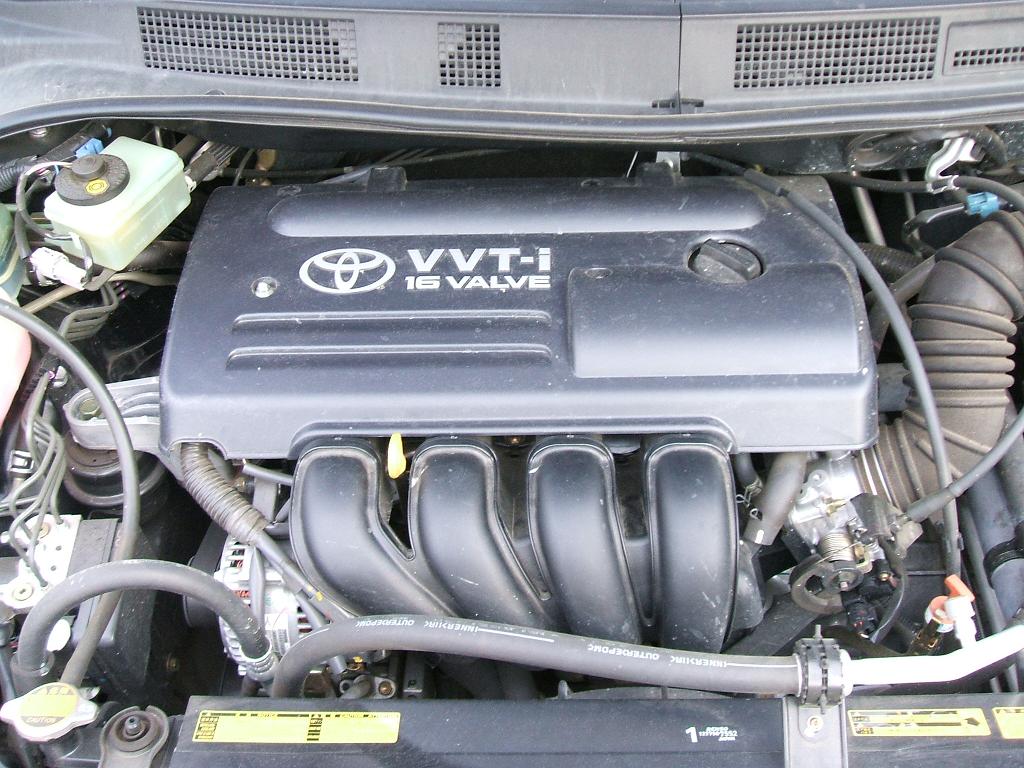 Example of the 1ZZ-FE family, not this car's engine
Start your free check on this Toyota MR2
Toyota MR2 1.8L petrol (1ZZ-FE)
Applies to this engine
Toyota MR2 · 1.8L petrol (1ZZ-FE)
Narrowed to the 1ZZ-FE. Faults documented for a different engine in this model are not shown.
matched on engine code 1ZZ-FE
What to look out for
Serious issue
Squeeze all coolant hoses with the engine cold — they should feel pliable.
Coolant hose deterioration — mid-engine routing past exhaust
The W20 MR2 routes coolant hoses from the front-mounted radiator through the firewall and past the mid-mounted exhaust components before reaching the engine. This extended routing exposes multiple hoses and the coolant expansion tank to sustained heat cycling. Original rubber hoses become hard, brittle and prone to cracking after 15–20 years. A burst hose can cause rapid coolant loss leading to overheating and head gasket or engine damage within minutes — especially dangerous in traffic. The steel coolant pipes that run through the sill/firewall area also corrode from the outside.
What you would notice
Serious issue
Perform a cold-start and watch exhaust colour — white smoke that persists beyond warm-up is a key indicator.
1ZZ-FE head gasket failure — coolant loss & white smoke
The mid-mounted 1ZZ-FE in the ZZW30 MR2 Spyder is prone to head gasket failure caused by difficulty fully bleeding air from the cooling system and hot spots created by the engine's rear mid-ship location and restricted cooling airflow. The cylinder head gasket degrades under repeated heat cycles, allowing combustion gases to enter the coolant circuit or coolant to enter the combustion chamber. White sweet-smelling exhaust smoke, unexplained coolant loss, and rising coolant temperature are the primary indicators. Engine removal is required for repair in this chassis, making this a significant and expensive repair.
What you would notice
Serious issue
Test drive covering all paddle-shift changes both up and down.
SMT sequential manual transmission actuator and solenoid failure
The W30 MR2 Spyder was offered with Toyota's Sequential Manual Transmission (SMT), a robotised single-clutch automated manual gearbox. The hydraulic actuator that operates the clutch and shift forks relies on solenoid valves which fail with age. Failure modes include: clutch slipping under load, inability to engage a gear, harsh or refused downshifts, and complete loss of drive. The SMT control unit can also develop faults. Parts are now difficult to source through Toyota dealers and specialist rebuilders charge significant labour for diagnosis and repair. Many owners have converted to standard manual transmissions.
What you would notice
Serious issue
Inspect the pre-cat/manifold for broken substrate, listen for a rattling cat, and check for signs of debris ingestion and rising oil consumption.
Pre-catalytic converter breakdown ingesting debris into engine
The MR2's factory pre-cat can break apart and, on the 1ZZ, ceramic debris can be drawn back past worn valve guides into the cylinders during overrun, scoring bores and accelerating oil burning. A known catastrophic failure path on these engines.
What you would notice
Serious issue
Open the front luggage compartment and locate the remote brake fluid reservoir.
Brake master cylinder remote reservoir hose cracking
The W20 MR2 uses a remote brake fluid reservoir mounted in the front luggage compartment, connected to the master cylinder by a rubber hose. This hose ages and cracks, causing air ingestion into the brake circuit. Because the hose is flexible and may only leak under vacuum (when the pedal is released), the failure can be intermittent and hard to diagnose. The result is a spongy or sinking brake pedal. On cars with ABS the hydraulic modulator O-rings also deteriorate, contributing to brake fluid loss from the ABS unit.
What you would notice
Costly issue
Check oil level and ask when it was last topped up.
1ZZ-FE excessive oil consumption from piston ring wear
The 1ZZ-FE engine fitted to base W30 MR2 Spyders shares the well-documented piston ring design flaw found across the Corolla/Matrix/MR2 1ZZ family. Piston oil control rings wear prematurely and lose tension, allowing oil to pass into the combustion chamber. Consumption rates of 1 litre per 1,000 km are common and can exceed that in neglected examples. This is distinct from head gasket or valve stem seal failure. Toyota issued a Technical Service Bulletin (TSB TC002-04) for the Corolla/Matrix and the same rings are used in the MR2 Spyder application.
What you would notice
All 11 issues for this one
5 rated criticalEngine, transmission & cooling3 critical
01Pre-catalytic converter breakdown ingesting debris into engine
OccasionalEngine $500–$6,000 to fix
The MR2's factory pre-cat can break apart and, on the 1ZZ, ceramic debris can be drawn back past worn valve guides into the cylinders during overrun, scoring bores and accelerating oil burning. A known catastrophic failure path on these engines.
Example of the part — not this vehicleA Toyota VVT-i 16-valve four of this family, transverse, with its four-branch intake manifold below the cover.
Symptoms to notice
What to check
Ask the seller
021ZZ-FE head gasket failure — coolant loss & white smoke
03Coolant hose deterioration — mid-engine routing past exhaust
Very commonCooling $400–$1,200 to fix
Unconfirmed. This entry does not match our record of which engines and years this model was sold with, and is awaiting review. Confirm it against the car before acting on it.
The W20 MR2 routes coolant hoses from the front-mounted radiator through the firewall and past the mid-mounted exhaust components before reaching the engine. This extended routing exposes multiple hoses and the coolant expansion tank to sustained heat cycling. Original rubber hoses become hard, brittle and prone to cracking after 15–20 years. A burst hose can cause rapid coolant loss leading to overheating and head gasket or engine damage within minutes — especially dangerous in traffic. The steel coolant pipes that run through the sill/firewall area also corrode from the outside.
Example of the part — not this vehicleA Toyota VVT-i 16-valve four of this family, transverse, with its four-branch intake manifold below the cover.
Symptoms to notice
What to check
Ask the seller
041ZZ-FE excessive oil consumption from piston ring wear
051ZZ-FE oil consumption from stuck piston rings
Very commonEngine $500–$4,000 to fix
The MR2 Spyder's 1ZZ-FE is notorious for high oil consumption as the oil-control piston rings clog and stick, burning oil and risking running low unnoticed in the mid-mounted engine. Severe cases need a short-block or ring replacement.
Example of the part — not this vehicleA Toyota VVT-i 16-valve four of this family, transverse, with its four-branch intake manifold below the cover.
Symptoms to notice
What to check
Ask the seller
Electrical
06Throttle position sensor and drive-by-wire faults
OccasionalElectrical $150–$800 to fix
The MR2's throttle position sensor and electronic throttle can develop faults causing surging, flat spots or limp mode, and SMT-equipped cars add gearbox actuator gremlins. TPS issues are a common cause of erratic idle and CELs.
Example of the part — not this vehicleA Toyota VVT-i 16-valve four of this family, transverse, with its four-branch intake manifold below the cover.
Symptoms to notice
What to check
Ask the seller
Body, brakes, suspension & interior1 critical
07Brake master cylinder remote reservoir hose cracking
OccasionalBrakes $150–$600 to fix
Unconfirmed. This entry does not match our record of which engines and years this model was sold with, and is awaiting review. Confirm it against the car before acting on it.
The W20 MR2 uses a remote brake fluid reservoir mounted in the front luggage compartment, connected to the master cylinder by a rubber hose. This hose ages and cracks, causing air ingestion into the brake circuit. Because the hose is flexible and may only leak under vacuum (when the pedal is released), the failure can be intermittent and hard to diagnose. The result is a spongy or sinking brake pedal. On cars with ABS the hydraulic modulator O-rings also deteriorate, contributing to brake fluid loss from the ABS unit.
Example of the part — not this vehicleA Toyota VVT-i 16-valve four of this family, transverse, with its four-branch intake manifold below the cover.
Symptoms to notice
What to check
Ask the seller
08Soft-top hydraulic pump motor failure (Spyder convertible)
09Water ingress from blocked soft-top drain tubes
10Convertible soft-top water leaks and cabin damp
CommonInterior $200–$2,500 to fix
The MR2 Spyder's soft-top seals and rear window perish and leak, letting water into the low cabin and pooling in the footwells, causing musty smells, corroded seat rails and electrical faults in the low-mounted wiring.
Example of the part — not this vehicleA Toyota VVT-i 16-valve four of this family, transverse, with its four-branch intake manifold below the cover.
Symptoms to notice
What to check
Ask the seller
Only with a certain gearbox: 1 issue
Engine, transmission & cooling
Other Toyota MR2 engines and years
Engine, transmission & cooling
01Turbo oil feed line blockage and oil starvation (3S-GTE)
Does not apply
CommonEngine $1,800–$4,500 to fix
Does not apply
Unconfirmed. This entry does not match our record of which engines and years this model was sold with, and is awaiting review. Confirm it against the car before acting on it.
The turbo oil feed banjo bolt on the W20 3S-GTE is prone to sludge accumulation and partial blockage, starving the turbocharger centre section of adequate lubrication. This causes accelerated bearing wear and eventual turbo failure. The problem is compounded by the mid-engine layout routing oil lines near exhaust heat, which accelerates oil breakdown. Owners who extend oil change intervals beyond 5,000 km see dramatically higher rates of failure. Replacing the turbo without cleaning/replacing the oil feed line and banjo bolt results in rapid re-failure of the new unit.
Symptoms to notice
What to check
Ask the seller
02T-VIS intake manifold butterfly valves sticking (3S-GE/3S-GTE)
Does not apply
CommonEngine $350–$1,800 to fix
Does not apply
Unconfirmed. This entry does not match our record of which engines and years this model was sold with, and is awaiting review. Confirm it against the car before acting on it.
The Toyota Variable Induction System (T-VIS) on the 3S-GE and 3S-GTE uses butterfly valves in the intake manifold to improve low-rpm torque. The actuator vacuum diaphragm deteriorates with age and the valve shafts accumulate carbon deposits, causing valves to stick open or closed. A stuck-closed valve reduces mid-range torque; a stuck-open valve can allow a butterfly to contact a piston if the retaining clip fails, causing catastrophic engine damage. The plastic actuator housings also crack, allowing vacuum leaks.
Symptoms to notice
What to check
Ask the seller
03Intercooler pipe and boost hose cracking (3S-GTE Turbo)
Does not apply
CommonEngine $200–$700 to fix
Does not apply
Unconfirmed. This entry does not match our record of which engines and years this model was sold with, and is awaiting review. Confirm it against the car before acting on it.
The intercooler pipework on the W20 Turbo MR2 consists of multiple short silicone/rubber hoses and aluminium pipes connecting the turbo, front-mounted intercooler and throttle body. With age, the original rubber hoses harden and crack at the couplings, especially the hose on the compressor outlet side which sees the highest pressure. Boost leaks cause reduced power and rich running as the ECU sees lower load than actual. Cracked pipes also allow unfiltered air ingestion past the MAF sensor, causing lean misfire.
Symptoms to notice
What to check
Ask the seller
Looking at a Toyota MR2 for sale?
- Odometer history
- Money owing
- Reported stolen
- Ownership history
Toyota MR2 faults in detail
What these repairs cost on other cars
Some of the Toyota MR2’s documented faults are repairs other models share. Each page lists the documented NZ cost for every model it affects.
Other Toyota models
Toyota MR2 buyer questions
Is the Toyota MR2 reliable?
Like any used car, it depends on the specific example and its service history. Across the 14 documented faults for the Toyota MR2, the recurring problem areas are engine, cooling, and transmission. A Toyota MR2 with a full service history and no signs of the issues listed on this page can be a sound buy but each one needs to be checked individually before you commit.
What are the most common problems with a used Toyota MR2?
We've catalogued 14 known faults for the Toyota MR2, covering engine, cooling, and transmission. All 14 are written out in full on this page, with the symptoms to notice, what to inspect, and typical repair costs for each. Free to read, no account needed.
How much do repairs cost on a Toyota MR2?
Most single repairs on the Toyota MR2 fall between $400–$2,000 at NZ independent-workshop rates. Some of the 14 documented faults cost less and a few cost considerably more, and no one car needs them all. Knowing which ones to look for before you view is what lets you negotiate the price down or walk away.
Should I get a pre-purchase inspection on a Toyota MR2?
Yes. A Toyota MR2 inspection focused on its known weak points is the single best way to avoid an expensive mistake. KickTyres gives you a guided, model-specific inspection plus a market valuation and negotiation figure for $24.90 far less than the cost of missing one of the faults on this page.