Skip to content
Nissan1989–2024 Critical issues documented

Nissan GT-R R32: common faults & what to check

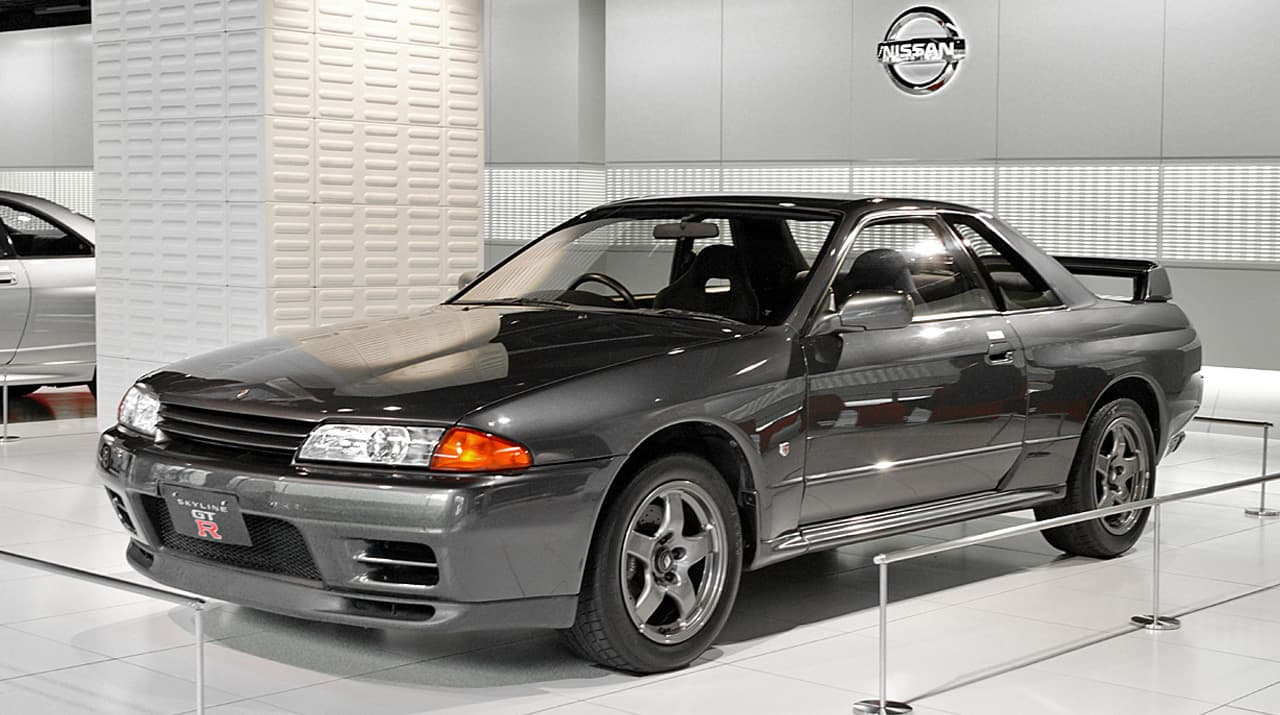
The R32 is the Nissan GT-R built 1989–1995. Of the 12 faults documented for the GT-R, 6 apply to this generation, each with its symptoms, what to inspect and a typical repair cost. Free, no account needed.

Check this exact Nissan GT-R

  • Odometer history
  • Money owing
  • Reported stolen
  • Ownership history
  • Official NZ vehicle register data
  • NZ owned and operated

Type the plate for the free basics. The full record is a paid check from $13.49, one car at a time, no subscription.

No NZ plate yet, or buying in Australia? Pick the generation and engine and start a free check below. New to KickTyres? How the check works →

12

Documented faults

Critical

Most serious

$500–$2,800

Typical repair

5

Systems covered

You're looking at the R32

Everything below is narrowed to this variant. Pick a different one to change it.

Choose a different generation

Now narrow it to the engine

A 1.8 and a 2.4 of the same car do not fail the same way, so the faults below narrow to the engine as well as the year. Free, no account needed.

Which engine is in it? These cover every year of this model.

A 1989 Nissan GT-R is the R32 generation (1989 to 1995).

We cannot narrow the engine list to this year, so every engine this model was sold with is offered.

Start your free check on this Nissan GT-R

No plate needed. You get the risk score, the buyer's checklist and the guided inspection for the exact car you picked above — not the whole nameplate.

Nissan GT-R R32Engine not picked yet

Pick the engine above first: the GT-R came with 2, and without it the report has to show all of their faults. Pick the engine

Free. The paid plate check is separate, and stays optional.

Can't confirm for this car

Nissan GT-R · 1989

Narrowed to the year. No engine is recorded for this vehicle. Pick an engine to see which faults apply.

Tell us the engine, or check the engine code on the car, before relying on this.

  • No engine is recorded for this vehicle.

matched on year only

What to look out for

The checks worth doing on a Nissan GT-R before you hand over any money. Every documented fault is listed below, each with its own page.

  • Costly issue

    Rock each wheel at top and bottom to check for bearing play.

    See why

    Front Wheel Bearing Failure Under AWD Load

    The ATTESA ET-S AWD system places torque through the front hubs under hard acceleration, accelerating wear on the front wheel bearings beyond what a typical RWD car would experience. Bearing failure is common from 100 000 km onwards, and more so on cars that have been driven hard or run wider tyres.

    What you would notice

    • Rumbling or grinding noise from front wheels that changes with speed
    • Noise changes when steering wheel is turned left or right
    • Vibration felt through steering wheel at highway speeds
    • Play detectable when rocking tyre at 12 and 6 o'clock

    Typically $500–$1,000 to put right.

  • Costly issue

    Check the transfer case oil level if a drain/fill plug is accessible.

    See why

    ATTESA Transfer Case Oil Seal Leak

    The ATTESA ET-S transfer case has input and output seals that harden and leak with age. Transfer case oil loss leads to ATTESA AWD system malfunction and, if ignored, transfer case bearing and gear damage. Seal replacement requires transfer case removal and is a specialist job on these vehicles.

    What you would notice

    • Oil drips or puddle under centre of vehicle
    • ATTESA warning light illuminated
    • Inconsistent AWD engagement or front wheel spin under acceleration
    • Burning oil smell from transmission tunnel area

    Typically $900–$2,000 to put right.

See all 6 issues for this oneDocumented for the exact year and engine you picked, including 2 rated critical.
Body, brakes, suspension & interior1

01Front Wheel Bearing Failure Under AWD Load

Rock each wheel at top and bottom to check for bearing play.petrol1989–1998Suspension
CommonSuspension $500–$1,000 to fix

The ATTESA ET-S AWD system places torque through the front hubs under hard acceleration, accelerating wear on the front wheel bearings beyond what a typical RWD car would experience. Bearing failure is common from 100 000 km onwards, and more so on cars that have been driven hard or run wider tyres.

Symptoms to notice

  • Rumbling or grinding noise from front wheels that changes with speed
  • Noise changes when steering wheel is turned left or right
  • Vibration felt through steering wheel at highway speeds
  • Play detectable when rocking tyre at 12 and 6 o'clock

What to check

Rock each wheel at top and bottom to check for bearing play. During test drive, note any speed-dependent rumble from the front that alters when changing lanes. If a workshop inspection is possible: With car on a hoist, spin each front hub by hand and listen for roughness or grinding.

Where to look: Front wheel hub assemblies, both sides

Parts involved: Wheel bearing.

Ask the seller

  • “Have the front wheel bearings been replaced, and when?”
  • “Has the car been tracked or driven competitively?”
Fluid leaks1

02ATTESA Transfer Case Oil Seal Leak

Check the transfer case oil level if a drain/fill plug is accessible.petrol1989–1998Fluid Leaks
OccasionalFluid Leaks $900–$2,000 to fix

The ATTESA ET-S transfer case has input and output seals that harden and leak with age. Transfer case oil loss leads to ATTESA AWD system malfunction and, if ignored, transfer case bearing and gear damage. Seal replacement requires transfer case removal and is a specialist job on these vehicles.

Symptoms to notice

  • Oil drips or puddle under centre of vehicle
  • ATTESA warning light illuminated
  • Inconsistent AWD engagement or front wheel spin under acceleration
  • Burning oil smell from transmission tunnel area

What to check

  1. Check the transfer case oil level if a drain/fill plug is accessible.
  2. Look for oil staining on the tunnel underside and driveshaft.
  3. If a workshop inspection is possible: With vehicle on a hoist, inspect the transfer case housing and both driveshaft output flanges for oil seepage.

Where to look: ATTESA transfer case, mounted to rear of gearbox on transmission tunnel

Parts involved: Transfer case.

Ask the seller

  • “Has the ATTESA transfer case been serviced and seals inspected?”
  • “Is the ATTESA system functioning correctly with no warning lights?”
Depends on the exact engine — 4 moreDocumented for a specific engine we could not confirm from what you picked. Check the engine code on the car.
Engine, transmission & cooling2

01RB26DETT Oil Pump Drive Gear Failure

Check oil pressure gauge response during test drive.petrol1989–1993Engine
OccasionalEngine $4,000–$9,000 to fix

Can't confirm for this car

The RB26DETT oil pump is driven by a gear meshing directly off the crankshaft. Under sustained high-RPM use the drive gear and mating oil-pump gear teeth can strip or shear, causing immediate catastrophic loss of oil pressure and engine seizure within seconds. Documented extensively by Skyline specialists; more common on engines that have seen boost or RPM increases without gear upgrades.

Symptoms to notice

  • Sudden oil pressure warning light
  • Engine knock or seizure at high RPM
  • Metallic debris visible in oil on drain
  • Oil pressure drops to zero under acceleration

What to check

  1. Check oil pressure gauge response during test drive.
  2. Inspect drain plug for metallic particles when oil is dropped.
  3. Ask for oil change history and whether any oil pump gear upgrade (e.g. billet gear set) has been fitted.
  4. Low oil pressure at idle after warm-up is a red flag.

Where to look: Front of engine, oil pump driven off crankshaft snout behind front cover

Ask the seller

  • “Has the oil pump drive gear been upgraded to a billet or reinforced set?”
  • “What is the oil change interval and which oil grade is used?”
  • “Has the engine been run above stock boost or RPM limits?”

02Intercooler Piping Clamp Boost Leak

Inspect all intercooler piping joiners and clamps, paying attention to the pipes between turbos, intercooler, and throttle body.petrol1989–1998Engine
CommonEngine $200–$700 to fix

Can't confirm for this car

The factory intercooler piping on both R32 and R33 GT-R uses spring-type band clamps that fatigue and lose clamping force over time. Silicone joiners crack with age. Boost leaks result in reduced power, spool lag, and may trigger lean running. Particularly common on cars where pipes have been removed for servicing and not re-clamped correctly.

Symptoms to notice

  • Loud whooshing or hissing under boost
  • Sluggish or inconsistent power delivery
  • Poor boost gauge readings relative to wastegate setting
  • Boost falling away at high RPM

What to check

  1. Inspect all intercooler piping joiners and clamps, paying attention to the pipes between turbos, intercooler, and throttle body.
  2. Look for cracked silicone, loose worm-drive or spring clamps, and oil residue at joints indicating weeping.
  3. A smoke test by a specialist will confirm leaks not visible by eye.

Where to look: Intake piping system between twin turbos, front-mount intercooler, and throttle body

Ask the seller

  • “Have the intercooler pipes and clamps been replaced or upgraded?”
  • “Has a boost leak test been performed recently?”
Body, brakes, suspension & interior1

01Front Lower Control Arm Ball Joint Wear

Inspect rubber boot for cracking or grease loss.petrol1989–1998Suspension
CommonSuspension $400–$900 to fix

Can't confirm for this car

The front lower control arm ball joints on both R32 and R33 GT-R wear under the vehicle weight and handling loads. Failed or loose ball joints cause vague steering, tyre wear, and at extremes can separate causing a catastrophic loss of steering control. The arms are a multi-link design and replacement requires alignment afterwards.

The front wheel of a car splayed outward with the lower control arm hanging down after a ball joint separation.Example of the part — not this vehicle

A separated lower ball joint: the control arm has dropped and the wheel has splayed out under the guard.

Elfix · CC0 · Wikimedia Commons

Symptoms to notice

  • Clunking from front suspension over bumps
  • Vague or wandering steering
  • Uneven or accelerated front tyre wear
  • Squeaking from front when turning at low speed

What to check

  1. Inspect rubber boot for cracking or grease loss.
  2. Check for wear in the bush and joint at the arm-to-knuckle connection.
  3. If a workshop inspection is possible: With vehicle on a hoist, grip each front lower arm and attempt to move the ball joint; any detectable movement indicates replacement needed.

Where to look: Front lower control arm, ball joint at outboard end connecting to steering knuckle

Parts involved: Ball joint.

Ask the seller

  • “Have the front lower control arm ball joints been replaced?”
  • “When was the last wheel alignment performed?”
Fluid leaks1

01RB26DETT Front Cover Cam Sensor Seal Oil Leak

With engine warm, inspect the cam angle sensor housing at the front of the engine for oil seeping around the housing base and retaining bolt area.petrol1989–1998Fluid Leaks
CommonFluid Leaks $400–$900 to fix

Can't confirm for this car

The RB26DETT uses a secondary front-cover housing to drive the cam angle sensor (CAS). The O-ring and gasket sealing this housing and the front main seal behind it are known to weep or leak oil, particularly on engines with 80 000+ km. The CAS housing seal failure is one of the most common oil leaks reported by GT-R owners globally.

Symptoms to notice

  • Oil weep or staining around front of engine below cam angle sensor housing
  • Oil smell from engine bay at operating temperature
  • Oil residue on front timing cover and chassis underside

What to check

With engine warm, inspect the cam angle sensor housing at the front of the engine for oil seeping around the housing base and retaining bolt area. Also check the front main seal for wetness. Look for fresh oil on the undertray and chassis rails forward of the engine.

Where to look: Front of engine, cam angle sensor housing on passenger side of front timing cover; front main crankshaft seal

Ask the seller

  • “Has the cam angle sensor housing seal and front main seal been replaced?”
  • “When was the last time the front cover was off the engine?”
Other Nissan GT-R engines and years6 documented issues that do not apply to the one you picked.
Engine, transmission & cooling3

01GR6 dual-clutch transaxle complete failure from heat during track use

Drive the car firmly through multiple gear changes and feel for any shudder or harshness.petrol2007 onwardTransmission
OccasionalTransmission $18,000–$40,000 to fix

Does not apply

The Nissan GT-R uses a GR6 dual-clutch transaxle mounted at the rear. While exceptional for road use, sustained track driving generates heat that overwhelms the factory cooling capacity, leading to clutch pack overheating, solenoid failure and ultimately complete gearbox destruction. This is extensively documented in track-day communities and by Nissan-authorised GT-R specialists. A GR6 rebuild or replacement is one of the most expensive repairs in the enthusiast car market. Many used R35s in NZ/AU carry unknown track history, making pre-purchase gearbox inspection essential.

Symptoms to notice

  • Shudder or harsh engagement under gentle acceleration
  • Gearbox warning light (ATF temp or transmission fault)
  • Inability to engage a gear or gear slippage under power
  • Burning smell from rear of the vehicle after spirited driving
  • Delayed or clunky shifts that worsen as the gearbox warms up

What to check

  1. Drive the car firmly through multiple gear changes and feel for any shudder or harshness.
  2. Check for any fault codes stored in the transmission ECU.
  3. Ask whether a gearbox oil cooler has been fitted and when the transmission fluid was last changed.
  4. Look for evidence of track use.

Where to look: GR6 dual-clutch transaxle mounted at the rear of the vehicle as part of the transaxle/rear differential assembly

Parts involved: Clutch.

Ask the seller

  • “Has the car been driven on a circuit or racetrack?”
  • “Has an aftermarket gearbox oil cooler been fitted?”
  • “When was the transmission fluid last changed, and what fluid was used?”
  • “Has the gearbox ever shown a warning light or been diagnosed by a specialist?”

02VR38DETT connecting rod bearing failure from cold-launch abuse

Have the oil drained and checked for metallic contamination before purchase.petrol2007 onwardEngine
OccasionalEngine $10,000–$25,000 to fix

Does not apply

The Nissan GT-R R35 VR38DETT engine is extremely sensitive to cold-start high-RPM launches. Nissan's own warranty policy explicitly voids coverage for engine damage resulting from launching the car before oil reaches operating temperature. The connecting rod bearings rely on full oil film for protection; a cold launch (oil below ~80°C) strips this film and spins or destroys a bearing within seconds. This failure pattern is extensively documented by Nissan-authorised workshops, specialist tuners and motorsport engineers. Many used R35s in NZ/AU have been launched cold, making bearing condition a critical pre-purchase check. Damage is internal and often gives no warning until a catastrophic knock develops.

Symptoms to notice

  • Deep rhythmic knock from the engine that worsens under load
  • Low oil pressure warning light
  • Metallic particles in the engine oil
  • Sudden power loss combined with a knock
  • Engine may start cleanly but knock appears on hard acceleration

What to check

  1. Have the oil drained and checked for metallic contamination before purchase.
  2. Listen for any ticking or knocking at idle that changes with RPM.
  3. Ask for proof of oil temperature monitoring device (a responsible GT-R owner monitors oil temp).
  4. Check if a track prep record or data-log exists.
  5. If a workshop inspection is possible: Perform a compression and oil pressure test.

Where to look: Connecting rod big-end bearings inside the VR38DETT 3.8-litre twin-turbo V6 engine block

Ask the seller

  • “Has the car ever been launched from a standstill in cold conditions?”
  • “Is there a data-logger or oil temperature gauge fitted?”
  • “Has the oil ever been tested for metallic particles?”
  • “Has the car been on a track, and if so, was it fully warmed up first?”

03Bellhousing rattle — worn output shaft bearings, the R35's most common fault

Listen with the car stationary and running before you drive anywhere.petrol2007–2024Transmission
Read the full fault: symptoms, where to look, what to ask the seller
Body, brakes, suspension & interior3

01R35 GT-R steering column recall: upper bearing can break (built October 2007 to May 2008)

Check the chassis number on the compliance plate or the import papers: R35-000001 to R35-100078 is inside the recall range.petrol2007–2008Suspension
RareSuspension $0–$5,000 to fix

Does not apply

Early R35 GT-Rs built from October 2007 to May 2008 were recalled in Japan (recall 3507, chassis R35-000001 to R35-100078) and in the US (recall 15V054) because the steering column outer tube could be made out of round. That overloads the upper column bearing, which can break and leave the steering wheel with too much up and down play; in an extreme case the column can come apart. The fix is a complete new steering column, done free by Nissan under the recall. On an import, there is often no record of whether the recall was done in Japan, so it needs checking.

Symptoms to notice

  • Steering wheel moves up and down or feels loose in the column
  • Grinding or knocking from the steering column when turning
  • Steering wheel position does not stay put after adjusting reach or height

What to check

  1. Check the chassis number on the compliance plate or the import papers: R35-000001 to R35-100078 is inside the recall range.
  2. With the car stopped, hold the steering wheel at the top and gently push it up and down and in and out: there should be no clunk or free play.
  3. Turn the wheel lock to lock and listen for grinding from the column.
  4. Ask for proof that recall 3507 (Japan) or the steering column replacement has been done.
  5. If a workshop inspection is possible: ask a Nissan dealer to check the chassis number against outstanding recalls and confirm whether the column has been replaced.

Where to look: Steering column behind the dashboard, upper bearing near the steering wheel

Ask the seller

  • “What is the chassis number, and is it between R35-000001 and R35-100078?”
  • “Has the steering column recall been done, and is there paperwork from Japan or a Nissan dealer?”
  • “Has the steering ever felt loose or clunky?”

02Brake rotor wear and high replacement cost

The R35's large factory brakes (and optional carbon-ceramics) wear discs and pads quickly under spirited use, and replacements are very expensive.petrol2007–2021Brakes
CommonBrakes $2,000–$15,000 to fix

Does not apply

The R35's large factory brakes (and optional carbon-ceramics) wear discs and pads quickly under spirited use, and replacements are very expensive. Warped or cracked rotors are common on tracked examples.

Symptoms to notice

  • Brake pedal pulsation under braking
  • Squeal or grinding
  • Visible scoring or cracks on rotors
  • Reduced braking performance

What to check

Inspect rotor thickness, surface cracks and scoring, pad life, and confirm whether the car has steel or carbon-ceramic brakes and their replacement history.

Where to look: Front and rear brake rotors and calipers

Parts involved: Brake disc and pads.

Ask the seller

  • “What is the remaining life on the discs and pads?”
  • “Are the brakes steel or carbon-ceramic?”

03HICAS Rear Steering Hydraulic Leak and Malfunction (R33)

Check power steering fluid reservoir level and condition.petrol1993–1998Suspension
Read the full fault: symptoms, where to look, what to ask the seller

What these repairs cost on other cars

Some of the Nissan GT-R’s documented faults are repairs other models share. Each page lists the documented NZ cost for every model it affects.

Other Nissan models

Nissan GT-R buyer questions

Is the Nissan GT-R reliable?

Like any used car, it depends on the specific example and its service history. Across the 12 documented faults for the Nissan GT-R, the recurring problem areas are transmission, engine, and suspension. A Nissan GT-R with a full service history and no signs of the issues listed on this page can be a sound buy but each one needs to be checked individually before you commit.

What are the most common problems with a used Nissan GT-R?

We've catalogued 12 known faults for the Nissan GT-R, covering transmission, engine, and suspension. All 12 are written out in full on this page, with the symptoms to notice, what to inspect, and typical repair costs for each. Free to read, no account needed.

How much do repairs cost on a Nissan GT-R?

Most single repairs on the Nissan GT-R fall between $500–$2,800 at NZ independent-workshop rates. Some of the 12 documented faults cost less and a few cost considerably more, and no one car needs them all. Knowing which ones to look for before you view is what lets you negotiate the price down or walk away.

Should I get a pre-purchase inspection on a Nissan GT-R?

Yes. A Nissan GT-R inspection focused on its known weak points is the single best way to avoid an expensive mistake. KickTyres gives you a guided, model-specific inspection plus a market valuation and negotiation figure for $24.90 far less than the cost of missing one of the faults on this page.