 1992–2003K11K11Engine not documented for this generationEngine not documentedSee faults & what to checkPhoto: User 3204 via Wikimedia Commons, CC BY-SA 4.0.
Nissan1992–2021 Critical issues documented
Nissan March: common faults & what to check
Thinking about buying a used Nissan March (1992–2021) in New Zealand? We've documented 13 known faults for this model spanning engine, interior, transmission, and electrical. Each researched and verified before it's published. The most serious issues here are rated critical. Every one is listed below with its symptoms and repair cost, and each has its own page with where to look and what to ask the seller. Free, no account needed.
Check this exact Nissan March
- Odometer history
- Money owing
- Reported stolen
- Ownership history
13
Critical
$400–$1,800
6
Which Nissan March are you looking at?
Engine not documented
1992–2003K11K11Engine not documented for this generationEngine not documentedSee faults & what to checkPhoto: User 3204 via Wikimedia Commons, CC BY-SA 4.0.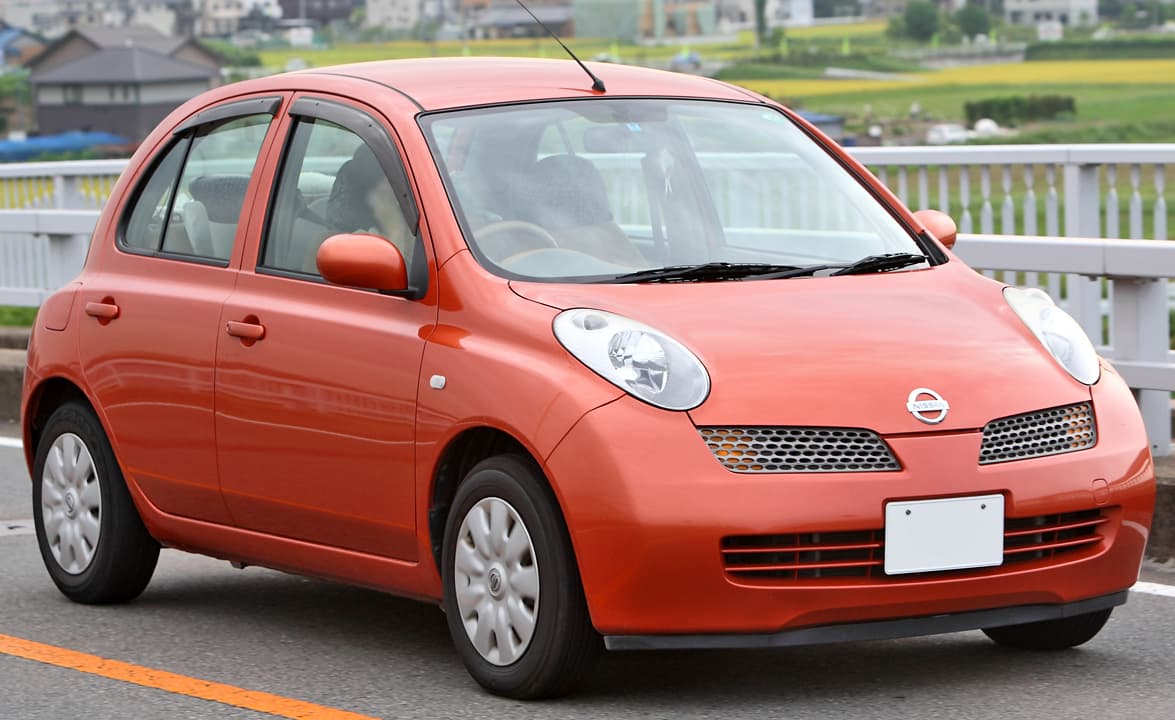 2002–2011K12K12Engine not documented for this generationEngine not documentedSee faults & what to checkPhoto: Tennen-Gas via Wikimedia Commons, CC BY-SA 3.0.
 2010–2018K13K13Engine not documented for this generationEngine not documentedSee faults & what to checkKickTyres illustration, not a photograph.
 2017–nowK14K14Engine not documented for this generationEngine not documentedSee faults & what to checkKickTyres illustration, not a photograph.
Now narrow it to the engine
Start your free check on this Nissan March
Nissan MarchEngine not picked yet
Pick the engine above first: the March came with 2, and without it the report has to show all of their faults. Pick the engine
Can't confirm for this car
Nissan March
Nothing has been narrowed yet, so nothing below is a claim about a particular car. Pick a year and an engine to see which faults apply.
Tell us the engine, or check the engine code on the car, before relying on this.
matched on no vehicle context
What to look out for
Serious issue
Listen carefully during cold start for metallic chain rattle from the cam cover area.
CG10DE/CG13DE Timing Chain Stretch and Guide Wear
The 1.0-litre CG10DE and 1.3-litre CG13DE engines in K11 Micras use a simplex timing chain with a plastic-ramp tensioner guide. With age and infrequent oil changes, the guide wears through to metal, chain stretch causes timing retard, and eventually the chain jumps a tooth causing valve damage. Particularly prevalent in high-mileage K11 imports from Japan. The repair is straightforward but seldom done proactively, so many K11s arrive in NZ with worn chains.
What you would notice
Costly issue
Drive it in the conditions that expose a CVT rather than the ones that flatter it.
Xtronic CVT judder and overheating on the K14
The Xtronic CVT offered in this Micra is shared across the Renault-Nissan range and carries the same reputation. It shows as a shudder or judder under gentle acceleration, most often as the belt moves between ratio ranges or as the converter locks up, and in stop-start traffic it can flag a transmission-temperature warning and reduce power to protect itself. The underlying causes are belt and pulley surface wear and degraded fluid. The important point for a buyer is that Nissan markets the fluid as sealed for life, which many owners take at face value; in practice it wants changing around every 60,000 km, and a car with no record of that is on borrowed time. A fluid service is a few hundred dollars, but a replacement unit is several thousand — on a car of this value that is the difference between a repair and writing it off.
What you would notice
Costly issue
Test drive on flat road at light throttle between 20–50 km/h and feel for judder through seat and steering.
K12 CVT Judder and Belt Slip (Hyper-CVT)
The K12 Micra with automatic transmission uses Nissan's Hyper-CVT unit. Fluid degradation causes shudder under acceleration between 15 and 50 km/h. The unit is sensitive to the correct NS1 or NS2 fluid and fails early when serviced with generic ATF. Repairs in NZ are complicated by limited parts availability for this small CVT, often meaning unit replacement. Well-documented in UK Micra forums and confirmed by NZ independent workshops.
What you would notice
Costly issue
Check oil level frequency — consumption of more than 500ml per 5000km is abnormal.
CR12DE Valve Stem Seal Oil Consumption
CR12DE 1.2 valve stem seals harden and shrink allowing oil to enter the combustion chamber, causing blue smoke on startup and increased oil consumption between services.
What you would notice
Costly issue
Cold-start from overnight cold and listen for metallic rattle from the engine front.
CR10DE/CR12DE Timing Chain Tensioner Rattle
The Nissan March K12 CR10DE 1.0 and CR12DE 1.2 timing chain tensioners rattle on cold start from oil pressure lag. The small oil capacity of these engines means tensioner condition is highly sensitive to oil change intervals. Rattle beyond 10 seconds at operating temperature indicates worn tensioner or guides.
What you would notice
Costly issue
With vehicle stationary, turn steering wheel slowly lock to lock and listen for clunking from each strut top.
Front Strut Top Bearing Collapse and Mount Failure
K12 Micra front strut top mounts and bearings deteriorate with age, resulting in clunking and knocking over bumps and during steering lock-to-lock movement. The plastic bearing race cracks and the rubber mount loses compliance. Common on NZ/AU examples due to unsealed road exposure and age. Continued use causes strut instability and imprecise steering. Inexpensive to fix but frequently overlooked as an age-related noise rather than a safety item.
What you would notice
See all 13 documented issues
Depends on which engine this Nissan March has — 13
Engine, transmission & cooling
01CG10DE/CG13DE Timing Chain Stretch and Guide Wear
Can't confirm for this car
CommonEngine $800–$2,200 to fix
Can't confirm for this car
The 1.0-litre CG10DE and 1.3-litre CG13DE engines in K11 Micras use a simplex timing chain with a plastic-ramp tensioner guide. With age and infrequent oil changes, the guide wears through to metal, chain stretch causes timing retard, and eventually the chain jumps a tooth causing valve damage. Particularly prevalent in high-mileage K11 imports from Japan. The repair is straightforward but seldom done proactively, so many K11s arrive in NZ with worn chains.
 Example of the part — not this vehicle
The front of a twin-cam engine with the timing cover off — chain, sprockets and guides.
Symptoms to notice
What to check
Ask the seller
02Xtronic CVT judder and overheating on the K14
Can't confirm for this car
CommonTransmission $400–$7,000 to fix
Can't confirm for this car
The Xtronic CVT offered in this Micra is shared across the Renault-Nissan range and carries the same reputation. It shows as a shudder or judder under gentle acceleration, most often as the belt moves between ratio ranges or as the converter locks up, and in stop-start traffic it can flag a transmission-temperature warning and reduce power to protect itself. The underlying causes are belt and pulley surface wear and degraded fluid. The important point for a buyer is that Nissan markets the fluid as sealed for life, which many owners take at face value; in practice it wants changing around every 60,000 km, and a car with no record of that is on borrowed time. A fluid service is a few hundred dollars, but a replacement unit is several thousand — on a car of this value that is the difference between a repair and writing it off.
Symptoms to notice
What to check
Ask the seller
03K12 CVT Judder and Belt Slip (Hyper-CVT)
Can't confirm for this car
CommonTransmission $2,000–$5,500 to fix
Can't confirm for this car
The K12 Micra with automatic transmission uses Nissan's Hyper-CVT unit. Fluid degradation causes shudder under acceleration between 15 and 50 km/h. The unit is sensitive to the correct NS1 or NS2 fluid and fails early when serviced with generic ATF. Repairs in NZ are complicated by limited parts availability for this small CVT, often meaning unit replacement. Well-documented in UK Micra forums and confirmed by NZ independent workshops.
Symptoms to notice
What to check
Ask the seller
04Timing chain and intake cam phaser rattle on the 0.9/1.0 turbo
Can't confirm for this car
OccasionalEngine $900–$3,200 to fix
Can't confirm for this car
The K14 Micra uses Renault's small turbo petrol engines rather than the Nissan units in earlier Micras, and they are chain-driven. Two separate noises come from the same end of the engine and are easy to confuse. The first is timing chain rattle, which needs watching on any of these engines. The second is wear inside the intake camshaft phaser — the variable valve timing actuator — which gives a ticking or rattling that is distinct from chain noise and is typically reported beyond about 120,000 km. Neither is an immediate failure, but both are noises that get worse and both are best found before you buy rather than after. As with all chain-driven small turbos, the strongest predictor is oil change history: this engine is unforgiving of long intervals and cheap oil.
Example of the part — not this vehicleThe front of a twin-cam engine with the timing cover off — chain, sprockets and guides.
Symptoms to notice
What to check
Ask the seller
05CR12DE Valve Stem Seal Oil Consumption
Can't confirm for this car
CommonEngine $600–$1,800 to fix
Can't confirm for this car
CR12DE 1.2 valve stem seals harden and shrink allowing oil to enter the combustion chamber, causing blue smoke on startup and increased oil consumption between services.
Symptoms to notice
What to check
Ask the seller
06CR10DE/CR12DE Timing Chain Tensioner Rattle
Can't confirm for this car
CommonEngine $500–$1,800 to fix
Can't confirm for this car
The Nissan March K12 CR10DE 1.0 and CR12DE 1.2 timing chain tensioners rattle on cold start from oil pressure lag. The small oil capacity of these engines means tensioner condition is highly sensitive to oil change intervals. Rattle beyond 10 seconds at operating temperature indicates worn tensioner or guides.
Example of the part — not this vehicleThe front of a twin-cam engine with the timing cover off — chain, sprockets and guides.
Symptoms to notice
What to check
Ask the seller
07Throttle Body Carbon Fouling Causing Rough Idle
Can't confirm for this car
CommonEngine $100–$350 to fix
Can't confirm for this car
Throttle body butterfly and bore accumulate carbon deposits from crankcase vapour causing rough idle, hesitation at low speed, and occasional stalling.
Symptoms to notice
What to check
Ask the seller
Electrical
01Electric Power Steering Motor or Sensor Failure
Can't confirm for this car
OccasionalElectrical $600–$2,000 to fix
Can't confirm for this car
The K12 March EPS system can develop a fault in the column-mounted motor or torque sensor causing sudden or gradual loss of power assistance.
Symptoms to notice
What to check
Ask the seller
Body, brakes, suspension & interior
01Driver's seat rail stopper recall — the seat can slide out of position
Can't confirm for this car
OccasionalInterior $0–$1,200 to fix
Can't confirm for this car
Nissan recall R22D6 covers 285,515 Micras built between 5 December 2016 and 5 October 2021 — effectively the whole K14 run. Where the driver's seat is set at a position that lines up with a design feature in the upper rail, the stress limits of the rail material can be exceeded and the rear stopper on the lower rail can break under heavy continuous load. If it does, the driver's seat can slide out of its set position, and because the seat belt anchorage is tied to the seat, the belt may then not restrain the driver as intended in a crash. The dealer fix is a seat rail replacement taking about fifty minutes and it is free. This is worth checking on any imported example, because the original recall notice went to an owner overseas.
Symptoms to notice
What to check
Ask the seller
02Front Strut Top Bearing Collapse and Mount Failure
Can't confirm for this car
CommonSuspension $350–$950 to fix
Can't confirm for this car
K12 Micra front strut top mounts and bearings deteriorate with age, resulting in clunking and knocking over bumps and during steering lock-to-lock movement. The plastic bearing race cracks and the rubber mount loses compliance. Common on NZ/AU examples due to unsealed road exposure and age. Continued use causes strut instability and imprecise steering. Inexpensive to fix but frequently overlooked as an age-related noise rather than a safety item.
Symptoms to notice
What to check
Ask the seller
03Front Lower Arm Ball Joint Wear
Can't confirm for this car
CommonSuspension $250–$600 to fix
Can't confirm for this car
Front lower arm ball joints wear causing clunking and handling imprecision.
 Example of the part — not this vehicle
A separated lower ball joint: the control arm has dropped and the wheel has splayed out under the guard.
Symptoms to notice
What to check
Ask the seller
04Brake Caliper Slide Pin Seizure from Corrosion
Can't confirm for this car
CommonBrakes $150–$500 to fix
Can't confirm for this car
Front brake caliper guide pins seize from corrosion causing uneven pad wear and brake pull.
Symptoms to notice
What to check
Ask the seller
05Rear Torsion Beam Axle Bush Collapse
Can't confirm for this car
CommonSuspension $200–$500 to fix
Can't confirm for this car
Rear beam axle rubber bushes harden and collapse causing rear suspension knocking and imprecision. Very common at 10+ years on NZ examples.
Symptoms to notice
What to check
Ask the seller
What these repairs cost on other cars
Some of the Nissan March’s documented faults are repairs other models share. Each page lists the documented NZ cost for every model it affects.
Other Nissan models
Nissan March buyer questions
Is the Nissan March reliable?
Like any used car, it depends on the specific example and its service history. Across the 13 documented faults for the Nissan March, the recurring problem areas are engine, interior, and transmission. A Nissan March with a full service history and no signs of the issues listed on this page can be a sound buy but each one needs to be checked individually before you commit.
What are the most common problems with a used Nissan March?
We've catalogued 13 known faults for the Nissan March, covering engine, interior, and transmission. All 13 are written out in full on this page, with the symptoms to notice, what to inspect, and typical repair costs for each. Free to read, no account needed.
How much do repairs cost on a Nissan March?
Most single repairs on the Nissan March fall between $400–$1,800 at NZ independent-workshop rates. Some of the 13 documented faults cost less and a few cost considerably more, and no one car needs them all. Knowing which ones to look for before you view is what lets you negotiate the price down or walk away.
Should I get a pre-purchase inspection on a Nissan March?
Yes. A Nissan March inspection focused on its known weak points is the single best way to avoid an expensive mistake. KickTyres gives you a guided, model-specific inspection plus a market valuation and negotiation figure for $24.90 far less than the cost of missing one of the faults on this page.