 2000–2007N16N161.6 petrolPetrolSee faults & what to checkPhoto: OSX via Wikimedia Commons, Public domain.
Nissan1990–2018 Critical issues documented
Nissan Pulsar: common faults & what to check
Thinking about buying a used Nissan Pulsar (1990–2018) in New Zealand? We've documented 21 known faults for this model spanning transmission, electrical, engine, and suspension. Each researched and verified before it's published. The most serious issues here are rated critical. Every one is listed below with its symptoms and repair cost, and each has its own page with where to look and what to ask the seller. Free, no account needed.
Check this exact Nissan Pulsar
- Odometer history
- Money owing
- Reported stolen
- Ownership history
21
Critical
$245–$700
4
Which Nissan Pulsar are you looking at?
Petrol
2000–2007N16N161.6 petrolPetrolSee faults & what to checkPhoto: OSX via Wikimedia Commons, Public domain.2000–2007N16N161.8 petrolPetrolSee faults & what to checkPhoto: OSX via Wikimedia Commons, Public domain.Engine not documented
 1990–1996N14N14Engine not documented for this generationEngine not documentedSee faults & what to checkPhoto: OSX via Wikimedia Commons, Public domain.
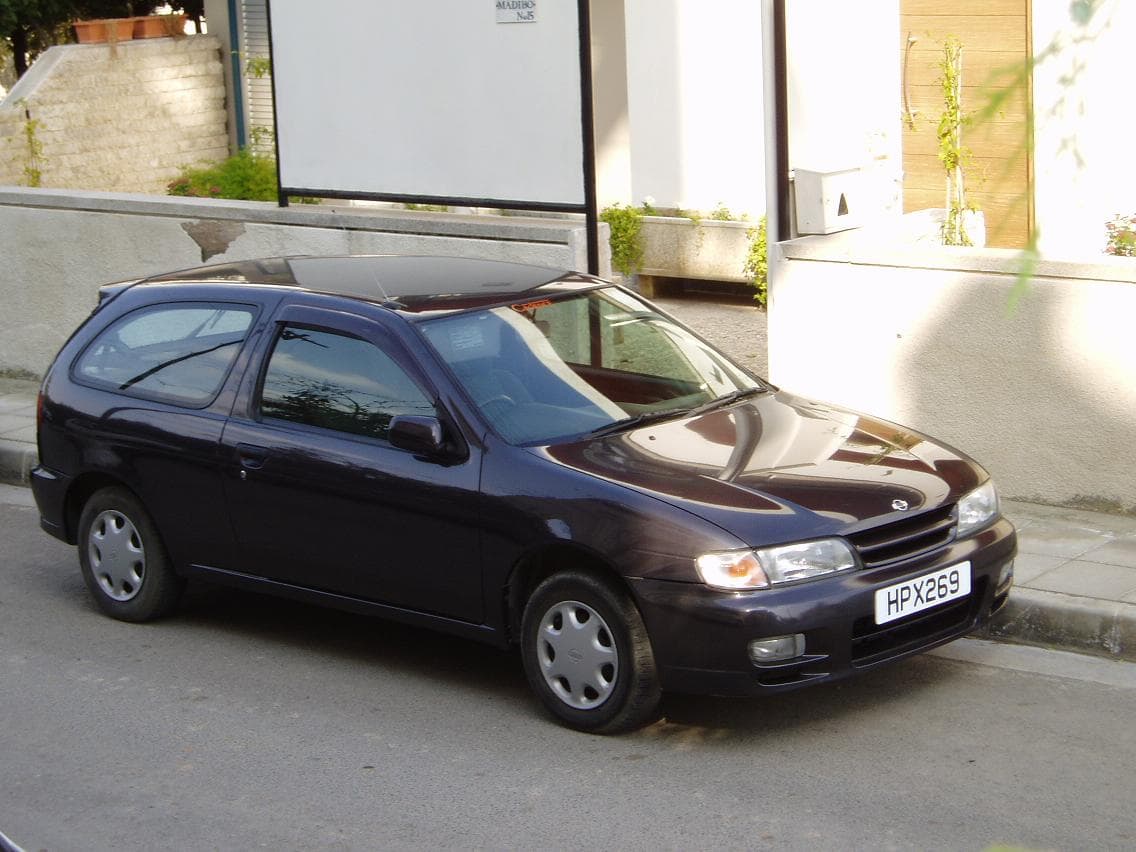 1995–2001N15N15Engine not documented for this generationEngine not documentedSee faults & what to checkPhoto: Fitos via Wikimedia Commons, Public domain.
 2012–2020B17B17Engine not documented for this generationEngine not documentedSee faults & what to checkKickTyres illustration, not a photograph.
Now narrow it to the engine
Start your free check on this Nissan Pulsar
Nissan PulsarEngine not picked yet
Pick the engine above first: the Pulsar came with 5, and without it the report has to show all of their faults. Pick the engine
Can't confirm for this car
Nissan Pulsar
Nothing has been narrowed yet, so nothing below is a claim about a particular car. Pick a year and an engine to see which faults apply.
Tell us the engine, or check the engine code on the car, before relying on this.
matched on no vehicle context
What to look out for
Serious issue
Test drive from cold through stop-start traffic: feel for shudder taking off, clunks at low speed, and rev flare on the motorway on-ramp.
CVT shudder, belt slip and failure (B17 sedan / C12 hatch)
The dominant fault on 2013-2017 Pulsars is the Jatco CVT: shaking and violent jerking on acceleration, clunks at low speed, rattling from early belt/pulley wear, and outright failure - frequently around 100,000 km, just out of warranty. Nissan's own TSB attributed symptoms to the steel belt slipping and wearing, and Nissan Australia ran a May 2013 service campaign covering 9,272 B17 1.8 CVT sedans. Replacement costs run to several thousand dollars; manual versions avoid the issue entirely.
What you would notice
Serious issue
This fault only shows itself hot, so a proper test drive of fifteen to twenty minutes matters far more here than a lap of the block.
Crank position sensor solder joints break down with heat — engine cuts out without warning
The N16 Pulsar's crank position sensor has a small circuit board inside it, and the solder joints on that board deform under engine heat, made worse by flux residue left behind in manufacture. As the joints break down the sensor loses its signal and the engine simply stops, almost always once everything is hot and usually at low speed or idling. Many of these cars are now on their second or third sensor. The real danger is not the repair bill, which is modest, but a stall in traffic — when the engine cuts, the power steering assistance goes with it.
What you would notice
Costly issue
Perform a hill start under moderate throttle and check carefully for shudder through the floor.
RE0F10B/JF015E CVT Judder and Belt Slip Under Load
The N17 Pulsar and Note E12 use the Jatco JF015E (RE0F10B) compact CVT. Unlike the RE0F10A this unit uses a dry launch clutch pack in place of a torque converter, making it more sensitive to fluid condition and driving technique. Under moderate to heavy throttle load on hills or during merging manoeuvres the launch clutch exhibits judder as the friction material loses its calibrated slip characteristics when fluid degrades. Many owners follow an incorrect lifetime-fill interpretation of service intervals, but Jatco specifies 40,000km changes under severe duty conditions. Premature wear of the launch clutch pack and belt pulleys results, with replacement costs on higher mileage examples approaching new vehicle value.
What you would notice
Costly issue
Cold-start from an overnight park and immediately listen at the front of the engine for chain rattle.
HR16DE Timing Chain Stretch and Tensioner Wear
The HR16DE 1.6L engine in the N17 Pulsar uses the same hydraulic chain tensioner design philosophy as the HR15DE but with a longer stroke. The tensioner loses hydraulic preload after extended cold soaks and the timing chain is prone to stretching beyond specification from approximately 120,000km onward, particularly when oil changes have been extended beyond factory intervals. Chain stretch causes the VTC system to operate outside its calibrated range triggering cam timing fault codes. The N17's tighter engine bay increases labour time for chain replacement compared to the Note E11, pushing repair costs higher. Grey-import N17s from Japan often lack a verifiable service history.
What you would notice
Costly issue
Check for oil leaks around valve covers, sump and gaskets.
SR16VE Neo VVL Timing Chain Stretch
The SR16VE variable valve lift engine uses a timing chain that is known to stretch on high-mileage or oil-neglected examples. Chain stretch retards cam timing, reducing power and increasing fuel consumption, and eventually triggers the check-engine light. The Neo VVL lift changeover solenoids are also wear items and can stick, causing a pronounced flat spot in the power band around 6000 rpm.
What you would notice
Costly issue
Cold-start from fully cold and listen immediately for chain rattle from the top of the engine.
QG18DE Timing Chain Tensioner Wear and Rattle
The QG18DE 1.8-litre petrol engine in N16 Pulsars has a timing chain tensioner that weakens with age and mileage, leading to cold-start chain rattle. While not typically as catastrophic as the YD25 diesel tensioner failure, severe stretch can retard cam timing enough to cause misfires and rough running. High-mileage examples with infrequent oil changes are most affected. The tensioner ratchet mechanism can fail at extreme mileage, causing rapid chain slackening.
What you would notice
See all 21 documented issues
Depends on which engine this Nissan Pulsar has — 21
Engine, transmission & cooling
01CVT shudder, belt slip and failure (B17 sedan / C12 hatch)
Can't confirm for this car02Fuel pressure sensor works loose on the fuel rail — petrol leak and fire risk (2014 recall)
Can't confirm for this car
RareEngine $0–$450 to fix
Can't confirm for this car
Nissan Australia recalled early-build C12 Pulsars in December 2014 because the fuel pressure sensor threaded into the fuel rail had not been tightened enough at the factory. Engine heat and vibration let it back off further over time, and petrol can weep out of the joint on top of a hot engine, which is why this went out as a safety recall rather than a quiet service campaign. The affected VIN range is narrow — MNTFCAC12A0000033 to MNTFCAC12A0003200 — so the first job is finding out whether the car in front of you is one of them and whether the work was actually done. Independent teardown notes on the MR16DDT direct-injection turbo engine used in the ST-S and SSS flag leaks under the fuel pressure sensor as a known weak point on this engine family more generally.
Symptoms to notice
What to check
Ask the seller
03RE0F10B/JF015E CVT Judder and Belt Slip Under Load
Can't confirm for this car04MR16DDT (SSS/ST-S 1.6 turbo) oil consumption and timing chain rattle
Can't confirm for this car
OccasionalEngine $800–$4,500 to fix
Can't confirm for this car
The direct-injection 1.6 turbo in the Pulsar SSS/ST-S shares the Juke's MR16DDT and its documented habits: oil consumption on hard-driven examples, timing chain/tensioner rattle, and carbon build-up on the intake valves from direct injection. Turbo hardware is generally sound, but these engines punish skipped oil changes and cheap fuel. A tidy, serviced SSS is a good car; a thrashed ex-boy-racer one can need chains, a clean-out and rings.
 Example of the part — not this vehicle
The front of a twin-cam engine with the timing cover off — chain, sprockets and guides.
Symptoms to notice
What to check
Ask the seller
05HR16DE Timing Chain Stretch and Tensioner Wear
Can't confirm for this car06SR16VE Neo VVL Timing Chain Stretch
Can't confirm for this car
CommonEngine $1,120–$2,240 to fix
Can't confirm for this car
The SR16VE variable valve lift engine uses a timing chain that is known to stretch on high-mileage or oil-neglected examples. Chain stretch retards cam timing, reducing power and increasing fuel consumption, and eventually triggers the check-engine light. The Neo VVL lift changeover solenoids are also wear items and can stick, causing a pronounced flat spot in the power band around 6000 rpm.
Example of the part — not this vehicleThe front of a twin-cam engine with the timing cover off — chain, sprockets and guides.
Symptoms to notice
What to check
07QG18DE Timing Chain Tensioner Wear and Rattle
Can't confirm for this car08GA16DE Head Gasket Failure
Can't confirm for this car
CommonEngine $980–$1,960 to fix
Can't confirm for this car
The GA16DE is sensitive to overheating and the head gasket fails between adjacent cylinders or at the water jacket. A blown gasket here typically presents as inter-cylinder combustion gas contamination of the cooling system (bubbling, sweet exhaust smell) before external leakage is visible. Head resurfacing is mandatory; re-torquing the original gasket is not a valid repair.
 Example of the part — not this vehicle
A used multi-layer head gasket. Discolouration between a cylinder and a water gallery is the tell.
Symptoms to notice
What to check
09N15 Rear Wheel Bearing Failure
Can't confirm for this car
CommonEngine $350–$700 to fix
Can't confirm for this car
The pressed-in rear wheel bearings on the N15 wear out from mid-life onward, producing a cyclic droning noise that changes pitch with speed and load. The bearing is integral to the hub on most variants and requires a hub press to replace. Bearings deteriorate faster in vehicles used frequently on wet NZ roads. Failure at an advanced stage affects ABS sensor accuracy.
Symptoms to notice
What to check
10GA14DE / GA16DE Thermostat Housing Crack
Can't confirm for this car
CommonEngine $245–$490 to fix
Can't confirm for this car
The plastic thermostat housing on GA-series engines develops hairline cracks at the coolant outlet flange, producing a slow coolant weep that worsens as the engine cycles through heat. The crack is often hidden by accumulated grime. Failure to replace the housing leads to coolant loss and overheating. Aluminium aftermarket housings are available and preferred.
 Example of the part — not this vehicle
A double-valve engine thermostat, labelled: the wax capsule is what sticks.
Symptoms to notice
What to check
11MRA8DE 1.8 stalls or hesitates when pulling away or coming to a stop (B17 sedan, ECM reflash and PCV valve bulletins)
Can't confirm for this car
OccasionalEngine $100–$450 to fix
Can't confirm for this car
Early B17 sedans with the 1.8 MRA8DE engine have a documented habit of the revs dipping, hesitating or the engine cutting out at very low speed: as the car rolls to a stop, when shifting into Drive or Reverse, or when pulling away from a standstill. Nissan's bulletin NTB13-001 fixed early 2013 CVT and manual cars with new engine and gearbox software, a later service campaign (NTB13-022) re-flashed about 31,000 2013 cars for cold-idle behaviour, and NTB16-086 (August 2016) covers 2013-2015 cars that stall or hesitate pulling away in hot weather, replacing an early orange PCV valve with a revised black one on 2013 and 2014 cars as well as re-flashing the ECM. These are US bulletins and NZ and Australian calibrations can differ, so the question is whether a Nissan dealer has checked for updated software. The engine always restarts, but a stall in an intersection or on a roundabout is a real hazard.
Symptoms to notice
What to check
Ask the seller
12EVAP canister vent hose lets water in - check engine light with code P0448 (B17 sedan MRA8DE)
Can't confirm for this car
OccasionalEngine $150–$1,200 to fix
Can't confirm for this car
The evaporative emissions (EVAP) system on the B17 sedan vents the charcoal canister through a hose that ends in a small drain behind the right-hand rear bumper. Road spray and standing water can get up that hose into the canister filter, the canister and the vent control valve, which then sticks and turns on the check engine light with code P0448. Nissan bulletin NTB14-044 (latest revision February 2019) covers all 2013-2018 B17 Sentras: the fix is a redesigned hose with the old drain discarded, and if water has already reached the canister, the canister, filter, vent control valve and EVAP pressure sensor are all replaced. It does not stop the car, but a warning light that keeps returning can hide other faults and a waterlogged canister can make refuelling difficult.
Symptoms to notice
What to check
Ask the seller
13Dirty throttle body / idle air control valve - rough idle (N16)
Can't confirm for this car
CommonEngine $150–$600 to fix
Can't confirm for this car
N16 Pulsars commonly develop shuddering, hunting or stalling idle from carbon buildup in the throttle body and idle air control valve. It is a cheap clean-up job, but sellers often trade the car on instead of fixing it, and an untreated case can stall in traffic. After cleaning, the idle needs a relearn procedure to settle. Combined with an ageing crank angle sensor, this makes 'idles rough and sometimes stalls' the standard tired-N16 complaint.
Symptoms to notice
What to check
Ask the seller
14GA-Series Idle Air Control Valve Carbon Fouling
Can't confirm for this car
CommonEngine $175–$350 to fix
Can't confirm for this car
The idle air control valve (IACV) on GA14DE and GA16DE engines accumulates carbon deposits from blow-by gases, causing erratic idle, stalling at traffic lights, and rough cold starts. The valve is serviceable with carburettor cleaner but often needs full replacement on high-mileage engines. A dirty throttle body is usually present at the same time and should be cleaned simultaneously.
Symptoms to notice
What to check
Electrical
01Takata passenger airbag inflator — can throw metal fragments into the cabin (safety recall)
Can't confirm for this car
OccasionalElectrical $0–$800 to fix
Can't confirm for this car
N16 Pulsars built from about April 2001 onwards are caught by the Takata airbag recall. The propellant wafers in the passenger airbag inflator were made to the wrong density, so with age and humidity the inflator can burn too fast, burst its metal housing and fire fragments at whoever is sitting there when it goes off. Nissan issued the first recall in April 2013 and widened it in June 2014 and twice more in June 2015 as further build ranges were caught up. A car this old has usually changed hands several times, and plenty were never presented for the free fix. An unrepaired Takata inflator is worse than having no airbag at all, and New Zealand's humid climate is exactly the condition that makes them degrade.
Symptoms to notice
What to check
Ask the seller
02Crank position sensor solder joints break down with heat — engine cuts out without warning
Can't confirm for this car03Side curtain airbag B-pillar satellite sensor may be fitted incorrectly (B17 Pulsar sedan, October 2013 recall)
Can't confirm for this car
RareElectrical $0–$400 to fix
Can't confirm for this car
On some early B17 Pulsar sedans the crash sensor for the side curtain airbag, which sits inside the B-pillar between the front and rear doors, was not installed correctly at the factory. Nissan Australia recalled the cars in October 2013 (PRA 2013/13810) because in a side impact the curtain airbag may not deploy as designed, leaving occupants' heads less protected. The same campaign covered C12 Pulsar hatches and N17 Almeras, about 15,900 cars in total, and the dealer fix was an inspection and re-fit of about 30 minutes, free of charge. The recall has no expiry, so an outstanding car can still be done at a Nissan dealer, but ex-Australian imports and cars that have changed hands several times are the ones most likely to have missed the letter.
Symptoms to notice
What to check
Ask the seller
04Push-button start switch sticks in — engine may not shut off (2015 recall)
Can't confirm for this car
RareElectrical $0–$350 to fix
Can't confirm for this car
In June 2015 Nissan Australia recalled a batch of C12 Pulsar hatches because the push-button engine start switch could jam in the pressed position from excessive internal friction instead of springing back after the engine fired. A start button that does not return can leave the driver unable to stop the engine when they want to, including in an emergency. The affected VIN range is again a narrow early-build one, MNTFCAC12A0000574 to MNTFCAC12A0003025, and the fix is a replacement switch at no cost. It is one of the few faults on this list you can test completely, for free, standing at the car.
Symptoms to notice
What to check
Ask the seller
05Wrong-specification stop lamp switch on CVT cars — brake lights and shift interlock (2013 recall)
Can't confirm for this car
RareElectrical $0–$300 to fix
Can't confirm for this car
Nissan Australia recalled Pulsars in October 2013 after the wrong specification stop lamp switch was fitted to some cars with the CVT automatic. The stop lamp switch does two jobs: it turns on the brake lights, and it tells the gearbox that your foot is on the brake before it will let you move out of Park. An out-of-spec switch can therefore mean brake lights that do not come on when you brake, a car that will not shift out of Park, or a car that will. Brake lights that do not work will also fail a New Zealand warrant of fitness. The recall listing on the Australian register covers the B17 and C12 Pulsar alongside the Juke and Micra, which fits a shared switch part across those models.
Symptoms to notice
What to check
Ask the seller
Body, brakes, suspension & interior
01N14 / N15 Front Strut Top Mount Collapse
Can't confirm for this car
CommonSuspension $315–$630 to fix
Can't confirm for this car
The upper strut bearing and mounting plate degrades, producing a sharp clunk over speed bumps and a grinding noise when turning on full lock. Failed top mounts alter front camber and steering feedback. Both sides typically need replacement simultaneously. Aftermarket mounts of adequate quality are readily available in the NZ/AU market.
Symptoms to notice
What to check
02Front strut top clunk or pop when turning the steering wheel (B17 sedan, NTB14-088 spacer fix)
Can't confirm for this car
OccasionalSuspension $300–$850 to fix
Can't confirm for this car
Early B17 sedans can make a clunk, pop or bump from the top of one or both front struts when the steering wheel is turned, most noticeably at parking speeds or when stationary. The coil spring shifts against the strut mount bearing as the strut rotates, and Nissan bulletin NTB14-088B (April 2015, covering 2013-2015 Sentra as well as Leaf, NV200 and 2013 Juke) fixes it by fitting a spacer (part 54034-4MA0A) between the spring and the upper mount bearing on both sides, with new strut and stabiliser nuts. It is not dangerous on its own, but it is easily confused with worn top mount bearings, drop links or a failing steering column joint, so the noise should be diagnosed rather than assumed.
Symptoms to notice
What to check
Ask the seller
Nissan Pulsar faults in detail
What these repairs cost on other cars
Some of the Nissan Pulsar’s documented faults are repairs other models share. Each page lists the documented NZ cost for every model it affects.
Other Nissan models
Nissan Pulsar buyer questions
Is the Nissan Pulsar reliable?
Like any used car, it depends on the specific example and its service history. Across the 21 documented faults for the Nissan Pulsar, the recurring problem areas are transmission, electrical, and engine. A Nissan Pulsar with a full service history and no signs of the issues listed on this page can be a sound buy but each one needs to be checked individually before you commit.
What are the most common problems with a used Nissan Pulsar?
We've catalogued 21 known faults for the Nissan Pulsar, covering transmission, electrical, and engine. All 21 are written out in full on this page, with the symptoms to notice, what to inspect, and typical repair costs for each. Free to read, no account needed.
How much do repairs cost on a Nissan Pulsar?
Most single repairs on the Nissan Pulsar fall between $245–$700 at NZ independent-workshop rates. Some of the 21 documented faults cost less and a few cost considerably more, and no one car needs them all. Knowing which ones to look for before you view is what lets you negotiate the price down or walk away.
Should I get a pre-purchase inspection on a Nissan Pulsar?
Yes. A Nissan Pulsar inspection focused on its known weak points is the single best way to avoid an expensive mistake. KickTyres gives you a guided, model-specific inspection plus a market valuation and negotiation figure for $24.90 far less than the cost of missing one of the faults on this page.