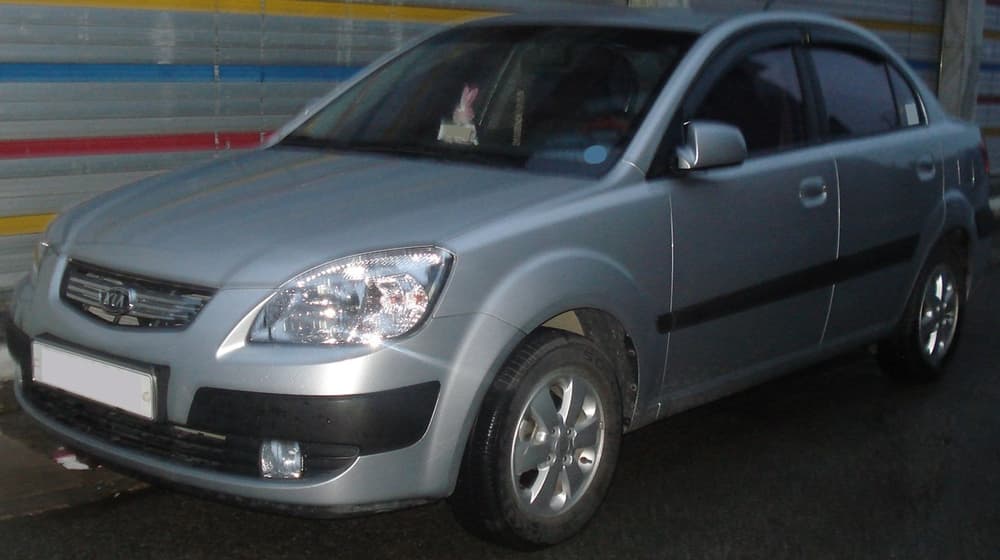
 2005–2012JBJBEngine not documented for this generationEngine not documentedSee faults & what to checkPhoto: Chu via Wikimedia Commons, CC BY-SA 3.0.
Kia2005–2023 Critical issues documented
Kia Pride: common faults & what to check
Thinking about buying a used Kia Pride (2005–2023) in New Zealand? We've documented 14 known faults for this model spanning engine, brakes, transmission, and suspension. Each researched and verified before it's published. The most serious issues here are rated critical. Every one is listed below with its symptoms and repair cost, and each has its own page with where to look and what to ask the seller. Free, no account needed.
Check this exact Kia Pride
- Odometer history
- Money owing
- Reported stolen
- Ownership history
14
Critical
$450–$1,400
5
Which Kia Pride are you looking at?
Engine not documented
2005–2012JBJBEngine not documented for this generationEngine not documentedSee faults & what to checkPhoto: Chu via Wikimedia Commons, CC BY-SA 3.0. 2011–2018UBUBEngine not documented for this generationEngine not documentedSee faults & what to checkKickTyres illustration, not a photograph.
 2017–nowYBYBEngine not documented for this generationEngine not documentedSee faults & what to checkKickTyres illustration, not a photograph.
Start your free check on this Kia Pride
Kia Pride
Can't confirm for this car
Kia Pride
Nothing has been narrowed yet, so nothing below is a claim about a particular car. Pick a year and an engine to see which faults apply.
Tell us the engine, or check the engine code on the car, before relying on this.
matched on no vehicle context
What to look out for
Serious issue
Start cold and listen for a metallic rattle from the front of the engine in the first 5-10 seconds.
G4LA 1.2 Timing Chain Plastic Guide Rail Failure
The G4LA 1.2L engine uses plastic primary and secondary timing chain guide rails that become brittle and crack over time, especially without consistent oil change intervals. Once the guides fragment, chain slack develops rapidly, leading to characteristic cold-start rattling. If left unaddressed, the chain can skip a tooth or jump off the sprocket, causing catastrophic valve-to-piston contact. Kia issued a service campaign covering some markets, but many out-of-warranty vehicles are not captured.
What you would notice
Serious issue
Connect an OBD2 scanner for camshaft/crankshaft correlation codes.
Gamma G4FA/G4FG Timing Chain Stretch
The 1.4L G4FA and 1.6L G4FG Gamma engines in the UB-generation Rio are prone to timing chain elongation before 100,000 km. Kia acknowledged the fault through an extended warranty programme in South Korea covering Gamma-engined vehicles. A stretched chain causes incorrect valve timing, rough running, and can jump a tooth leading to catastrophic engine damage. Oil change discipline is critical; extended intervals accelerate chain and guide wear significantly.
What you would notice
Serious issue
Remove timing cover and check belt deflection against Kia specification (typically 6-9 mm).
Gamma G4EE/G4ED timing belt tensioner spring fatigue
The G4EE 1.4L and G4ED 1.6L Gamma engines use a spring-loaded timing belt tensioner whose coil spring progressively loses preload from repeated thermal cycling and age. Once spring force drops below specification, belt tension becomes insufficient under high rpm or cold-start conditions, allowing the belt to skip one or more teeth on the camshaft sprocket. Because the Gamma is an interference engine, skipping even one tooth causes piston-to-valve contact, bending inlet and exhaust valves and typically destroying the cylinder head. Failure is sudden and gives no audible warning because the belt itself remains intact—only the spring tension is lost. Owners who replaced only the belt without the tensioner spring are at elevated risk.
What you would notice
Serious issue
Check the dashboard for any illuminated ABS, ESC, or brake warning lights.
UB/YB ABS and ESC Control Module Corrosion Failure
The Rio's ABS/ESC hydraulic control unit and module are mounted low in the engine bay, exposing them to road water, salt spray, and mud splash. Internal circuit board corrosion causes the ABS and ESC systems to fail, illuminating both warning lights and disabling stability control. In some cases the ABS pump activates unpredictably at low speeds on dry roads, creating a distressing pedal pulse. This failure is more prevalent in vehicles used in coastal or high-salinity areas, common in New Zealand and coastal Australia. Replacement requires a new ABS modulator/ECU assembly.
What you would notice
Costly issue
During a test drive, pull away slowly from rest multiple times, including on a slight hill.
YB 7-Speed DCT Clutch Pack Judder and Shudder
The YB-generation Rio paired with Hyundai-Kia's 7-speed dual-clutch transmission (D-DCT, code 7DCT300) exhibits clutch judder and shudder during low-speed engagement below approximately 30 km/h, particularly when pulling away from rest on inclines or in traffic. The wet clutch packs develop chatter due to a combination of clutch pack material wear and software calibration. Kia released multiple TSBs and software updates, but hardware replacement of the clutch pack is often the definitive fix. This mirrors the wider Hyundai-Kia DCT complaint wave that triggered investigations in South Korea and the US.
What you would notice
Costly issue
Start engine cold after overnight soak and listen for rattle from timing cover at front of engine.
1.0 T-GDi G3LC timing chain tensioner cold-start rattle
The hydraulic timing chain tensioner on the G3LC 1.0 T-GDi loses oil pressure after the engine sits for several hours. On cold start this causes a brief metallic rattling from the front of the engine lasting 1-3 seconds while oil pressure rebuilds. Repeated episodes accelerate chain and tensioner wear. Kia issued a revised tensioner part and mandated 0W-20 full-synthetic oil specification through service campaigns in affected markets. Prolonged neglect can result in chain stretch and cam timing codes.
What you would notice
See all 14 documented issues
Depends on which engine this Kia Pride has — 14
Engine, transmission & cooling
01G4LA 1.2 Timing Chain Plastic Guide Rail Failure
Can't confirm for this car02Gamma G4FA/G4FG Timing Chain Stretch
Can't confirm for this car
CommonEngine $900–$2,400 to fix
Can't confirm for this car
The 1.4L G4FA and 1.6L G4FG Gamma engines in the UB-generation Rio are prone to timing chain elongation before 100,000 km. Kia acknowledged the fault through an extended warranty programme in South Korea covering Gamma-engined vehicles. A stretched chain causes incorrect valve timing, rough running, and can jump a tooth leading to catastrophic engine damage. Oil change discipline is critical; extended intervals accelerate chain and guide wear significantly.
 Example of the part — not this vehicle
The front of a twin-cam engine with the timing cover off — chain, sprockets and guides.
Symptoms to notice
What to check
Ask the seller
03Gamma G4EE/G4ED timing belt tensioner spring fatigue
Can't confirm for this car
CommonEngine $380–$780 to fix
Can't confirm for this car
The G4EE 1.4L and G4ED 1.6L Gamma engines use a spring-loaded timing belt tensioner whose coil spring progressively loses preload from repeated thermal cycling and age. Once spring force drops below specification, belt tension becomes insufficient under high rpm or cold-start conditions, allowing the belt to skip one or more teeth on the camshaft sprocket. Because the Gamma is an interference engine, skipping even one tooth causes piston-to-valve contact, bending inlet and exhaust valves and typically destroying the cylinder head. Failure is sudden and gives no audible warning because the belt itself remains intact—only the spring tension is lost. Owners who replaced only the belt without the tensioner spring are at elevated risk.
Symptoms to notice
What to check
Ask the seller
04YB 7-Speed DCT Clutch Pack Judder and Shudder
Can't confirm for this car
CommonTransmission $1,500–$3,800 to fix
Can't confirm for this car
The YB-generation Rio paired with Hyundai-Kia's 7-speed dual-clutch transmission (D-DCT, code 7DCT300) exhibits clutch judder and shudder during low-speed engagement below approximately 30 km/h, particularly when pulling away from rest on inclines or in traffic. The wet clutch packs develop chatter due to a combination of clutch pack material wear and software calibration. Kia released multiple TSBs and software updates, but hardware replacement of the clutch pack is often the definitive fix. This mirrors the wider Hyundai-Kia DCT complaint wave that triggered investigations in South Korea and the US.
Symptoms to notice
What to check
Ask the seller
051.0 T-GDi G3LC timing chain tensioner cold-start rattle
Can't confirm for this car
CommonEngine $700–$1,800 to fix
Can't confirm for this car
The hydraulic timing chain tensioner on the G3LC 1.0 T-GDi loses oil pressure after the engine sits for several hours. On cold start this causes a brief metallic rattling from the front of the engine lasting 1-3 seconds while oil pressure rebuilds. Repeated episodes accelerate chain and tensioner wear. Kia issued a revised tensioner part and mandated 0W-20 full-synthetic oil specification through service campaigns in affected markets. Prolonged neglect can result in chain stretch and cam timing codes.
Example of the part — not this vehicleThe front of a twin-cam engine with the timing cover off — chain, sprockets and guides.
Symptoms to notice
What to check
Ask the seller
06G3LC 1.0 Turbo Electronic Wastegate Actuator Failure
Can't confirm for this car
OccasionalEngine $650–$1,600 to fix
Can't confirm for this car
The G3LC 1.0-litre turbocharged three-cylinder engine uses an electronic (motorised) turbocharger wastegate actuator rather than a traditional pneumatic unit. The actuator motor and position sensor are prone to failure, causing the wastegate to stick open or closed. A stuck-open wastegate produces underboost and severe power loss; a stuck-closed wastegate risks overboost. The ECU typically detects the fault and forces the engine into limp mode, limiting boost to protect hardware. Replacement requires removing the turbocharger assembly.
Symptoms to notice
What to check
Ask the seller
07G4LC VVT oil control valve sticking causing P0011
Can't confirm for this car
OccasionalEngine $250–$1,500 to fix
Can't confirm for this car
The G4LC 1.4-litre engine uses a variable valve timing system controlled by an oil control valve on the intake camshaft. The OCV is susceptible to sticking in a partially open or closed position due to oil sludge from infrequent service intervals or internal valve wear. A sticking OCV causes the intake camshaft phaser to hold in an over-advanced position, triggering fault code P0011 (Intake Camshaft Position Timing Over-Advanced Bank 1). Symptoms include rough idle, reduced power, and check engine light. Replacing the OCV with a genuine Kia part resolves most cases; advanced cases with a failed phaser require camshaft phaser replacement at significantly higher cost.
Symptoms to notice
What to check
Ask the seller
081.4 G4LC direct injection intake valve carbon buildup
Can't confirm for this car
CommonEngine $600–$1,400 to fix
Can't confirm for this car
The G4LC 1.4-litre direct-injection engine injects fuel directly into the combustion chamber, bypassing the intake valves entirely. Without fuel washing the valve stems and heads, combustion blow-by gases deposit oily carbon on the back face of the intake valves over time. Buildup becomes significant after 80,000-120,000 km and causes rough idle, hesitation on acceleration, misfires under load, and reduced volumetric efficiency. Walnut-blast media cleaning or manual mechanical scraping is required; standard fuel additives are ineffective as they never contact the valve faces during normal operation.
Symptoms to notice
What to check
Ask the seller
09Coolant Thermostat Failure Causing Overheating or Under-Temperature Running
Can't confirm for this car
OccasionalCooling $220–$580 to fix
Can't confirm for this car
The Rio across UB and YB generations uses a wax-element thermostat that is known to fail in both the stuck-open and stuck-closed positions. A thermostat stuck open causes the engine to run below operating temperature (fan heater blows cold, fuel economy worsens, emissions increase). A thermostat stuck closed is the more dangerous failure mode — coolant cannot circulate to the radiator, leading to rapid overheating. Given the small cooling system volume in these 1.0–1.6 litre engines, overheating can cause head gasket damage within minutes. Kia dealer technicians commonly encounter this at 80,000–130,000 km.
 Example of the part — not this vehicle
A double-valve engine thermostat, labelled: the wax capsule is what sticks.
Symptoms to notice
What to check
Ask the seller
10Gamma 1.4/1.6 oil consumption from PCV valve failure
Can't confirm for this car
CommonEngine $90–$280 to fix
Can't confirm for this car
The Gamma G4EE 1.4L and G4ED 1.6L engines fitted to the Rio JB use a PCV valve integrated into the camshaft cover. The valve contains a spring-loaded diaphragm that regulates crankcase pressure by metering blow-by gases back into the intake. The diaphragm degrades from heat cycling, oil vapour contamination, and age, either sticking open or rupturing. When the valve fails open or the diaphragm tears, crankcase pressure rises above design specification and forces oil vapour through the valve stem seals and past the piston ring pack into the combustion chambers, where it burns. Oil consumption of 500-1,500 mL per 5,000 km results. The intake manifold and throttle body accumulate oil deposits progressively. A blocked PCV has the opposite effect: excessive crankcase vacuum collapses intake hoses and causes oil to be ingested in larger volumes.
Symptoms to notice
What to check
Ask the seller
11G3LC 1.0T Intercooler Boost Pipe Separation Under Load
Can't confirm for this car
OccasionalEngine $120–$450 to fix
Can't confirm for this car
The 1.0T G3LC engine routes compressed air from the turbocharger through a front-mounted intercooler via rubber boost hoses with push-fit or clamp connections. These hoses are routed close to heat sources and are subject to constant pressure cycling. Over time the rubber hardens and cracks, or the hose clamps loosen, particularly at the intercooler outlet-to-throttle body connection. When a hose separates under boost, the engine loses all turbo pressure, enters limp mode, and emits a loud hiss. The failure is typically repeatable under hard acceleration.
Symptoms to notice
What to check
Ask the seller
Body, brakes, suspension & interior
01UB/YB ABS and ESC Control Module Corrosion Failure
Can't confirm for this car
OccasionalBrakes $600–$1,700 to fix
Can't confirm for this car
The Rio's ABS/ESC hydraulic control unit and module are mounted low in the engine bay, exposing them to road water, salt spray, and mud splash. Internal circuit board corrosion causes the ABS and ESC systems to fail, illuminating both warning lights and disabling stability control. In some cases the ABS pump activates unpredictably at low speeds on dry roads, creating a distressing pedal pulse. This failure is more prevalent in vehicles used in coastal or high-salinity areas, common in New Zealand and coastal Australia. Replacement requires a new ABS modulator/ECU assembly.
Symptoms to notice
What to check
Ask the seller
02Front lower control arm ball joint wear
Can't confirm for this car
CommonSuspension $450–$1,000 to fix
Can't confirm for this car
The front lower control arm ball joints on the Rio YB wear prematurely, particularly on vehicles used in urban environments with rough surfaces, or with mileage above 60,000 km. The ball joint is not separately serviceable on the OEM lower arm assembly; the entire lower control arm must be replaced once measurable play or wear is detected. Worn ball joints introduce vagueness into steering and produce clunking noises over road imperfections. In advanced stages, ball joint failure is a safety risk as separation causes sudden loss of front wheel positional control affecting steering and braking.
 Example of the part — not this vehicle
A separated lower ball joint: the control arm has dropped and the wheel has splayed out under the guard.
Symptoms to notice
What to check
Ask the seller
03Rear drum brake adjuster corrosion and seizure
Can't confirm for this car
CommonBrakes $150–$450 to fix
Can't confirm for this car
The rear drum brake self-adjusters on the Rio JB are constructed from dissimilar metals—a steel adjuster screw thread inside a pot-metal or aluminium nut—that form a galvanic corrosion cell in wet climates. Once corrosion prevents the adjuster from rotating, the brake shoes cannot self-compensate for lining wear. The drum-to-shoe clearance grows progressively until the brake pedal must travel significantly further before rear brakes engage, increasing stopping distances. In extreme cases the adjuster seizes in an over-expanded position, making drum removal impossible without destructive intervention to the adjuster or wheel cylinder. New Zealand's winter moisture and road contamination significantly accelerate this failure compared to drier climates.
Symptoms to notice
What to check
Ask the seller
Kia Pride faults in detail
What these repairs cost on other cars
Some of the Kia Pride’s documented faults are repairs other models share. Each page lists the documented NZ cost for every model it affects.
Other Kia models
Kia Pride buyer questions
Is the Kia Pride reliable?
Like any used car, it depends on the specific example and its service history. Across the 14 documented faults for the Kia Pride, the recurring problem areas are engine, brakes, and transmission. A Kia Pride with a full service history and no signs of the issues listed on this page can be a sound buy but each one needs to be checked individually before you commit.
What are the most common problems with a used Kia Pride?
We've catalogued 14 known faults for the Kia Pride, covering engine, brakes, and transmission. All 14 are written out in full on this page, with the symptoms to notice, what to inspect, and typical repair costs for each. Free to read, no account needed.
How much do repairs cost on a Kia Pride?
Most single repairs on the Kia Pride fall between $450–$1,400 at NZ independent-workshop rates. Some of the 14 documented faults cost less and a few cost considerably more, and no one car needs them all. Knowing which ones to look for before you view is what lets you negotiate the price down or walk away.
Should I get a pre-purchase inspection on a Kia Pride?
Yes. A Kia Pride inspection focused on its known weak points is the single best way to avoid an expensive mistake. KickTyres gives you a guided, model-specific inspection plus a market valuation and negotiation figure for $24.90 far less than the cost of missing one of the faults on this page.