 1996–20038L8LEngine not documented for this generationEngine not documentedSee faults & what to checkPhoto: Vauxford via Wikimedia Commons, CC BY-SA 4.0.
Audi1996–2022 Critical issues documented
Audi S3: common faults & what to check
Thinking about buying a used Audi S3 (1996–2022) in New Zealand? We've documented 18 known faults for this model spanning engine, interior, body & rust, and transmission. Each researched and verified before it's published. The most serious issues here are rated critical. Every one is listed below with its symptoms and repair cost, and each has its own page with where to look and what to ask the seller. Free, no account needed.
Check this exact Audi S3
- Odometer history
- Money owing
- Reported stolen
- Ownership history
18
Critical
$500–$1,900
15
Which Audi S3 are you looking at?
Engine not documented
1996–20038L8LEngine not documented for this generationEngine not documentedSee faults & what to checkPhoto: Vauxford via Wikimedia Commons, CC BY-SA 4.0.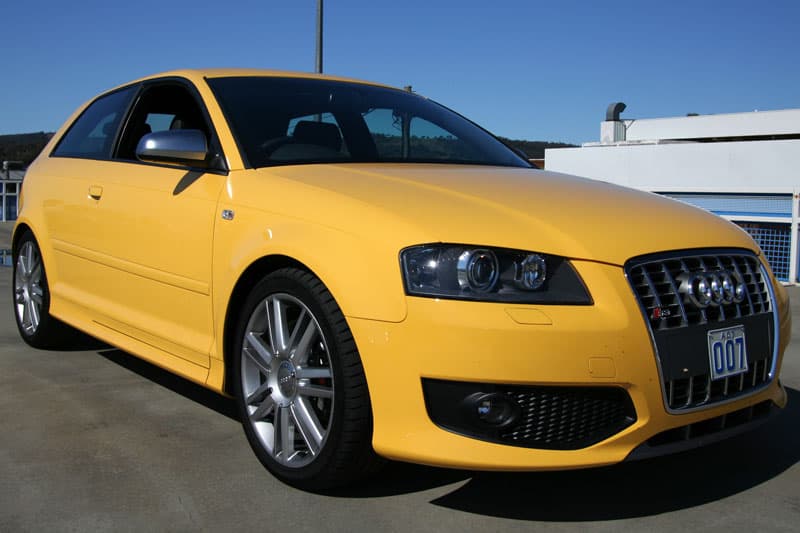 2003–20138P8PEngine not documented for this generationEngine not documentedSee faults & what to checkPhoto: Camelboy at English Wikipedia via Wikimedia Commons, Public domain.
 2012–20208V8VEngine not documented for this generationEngine not documentedSee faults & what to checkKickTyres illustration, not a photograph.
 2020–now8Y8YEngine not documented for this generationEngine not documentedSee faults & what to checkKickTyres illustration, not a photograph.
Now narrow it to the engine
Start your free check on this Audi S3
Audi S3
Likely — same engine family
Audi S3
Narrowed by capacity and fuel. No engine code is recorded for this option, so a fault specific to one engine of that size cannot be confirmed from it.
Matched on capacity and fuel, not on an engine code.
- 1 documented fault names an engine this selection cannot confirm. It is listed separately below.
matched on 2.0L engine
What to look out for
Serious issue
Start the engine from cold and listen immediately for rattling or ticking from the timing chain cover on the driver's side.
2.0 TFSI BPY/BWA Timing Chain Tensioner Wear
The hydraulic timing chain tensioner on BPY and BWA 2.0 TFSI engines loses oil pressure when cold, allowing chain slack to develop. A characteristic rattle on startup lasting 2-5 seconds indicates worn tensioner and plastic chain guides. Left unaddressed, the chain can skip a tooth or snap entirely, causing immediate piston-to-valve contact and catastrophic engine destruction. This is one of the most widely reported failures across the EA113 2.0 TFSI engine family and should be treated as a pre-purchase critical check on any example.
What you would notice
Serious issue
Request VCDS fuel pressure live data — cranking fuel pressure should reach 5-6 MPa rapidly.
2.0 TSI High-Pressure Fuel Pump (HPFP) Cam Follower Failure
The 2.0 TFSI engine fitted to the 8P S3 (BHZ engine code) uses a cam-driven high-pressure fuel pump. The mechanical cam follower that drives the pump wears at an accelerated rate due to insufficient lubrication at the contact surface. Metal debris from the follower contaminates the entire high-pressure fuel circuit — high-pressure pump, fuel rail, and all four injectors. The contamination cannot be flushed and requires replacement of all affected components. This is a catastrophic and expensive failure. VW/Audi extended the warranty period specifically for this fault in multiple markets.
What you would notice
Serious issue
Arrange a cold-start inspection.
2.0 TFSI (CJXC/IS38) Timing Chain Tensioner Wear
The EA888 Gen 3 2.0 TFSI engine fitted to the 8V S3 (CJXC engine code) shares the timing chain tensioner weakness documented across the broader EA888 family. The tensioner's oil feed circuit has marginal oil pressure at cold startup, allowing the chain to slacken momentarily. Over time the chain guide rails wear, and the chain can stretch beyond the tensioner's adjustment range. VW/Audi has issued updated tensioner and guide rail components. The IS38 turbocharger specification in the S3 increases combustion loads, which may marginally accelerate chain wear versus the standard A3 application.
What you would notice
Serious issue
This one is settled on paper, not in the driveway.
Front passenger airbag folding defect — safety recall 69DZ
Audi recalled 4,117 cars from the 2022 model year — 3,681 A3, 420 S3 and 16 RS3 — because the front passenger airbag may have been folded incorrectly during manufacture. An incorrectly folded bag can tear as it inflates and then fail to deploy properly in a crash. Audi and the supplier examined 120 airbags and found deviations in the folding. The remedy is a free replacement of the front passenger airbag module. There is nothing whatever to see or feel from inside the car — the airbag warning light behaves normally because the electrical side of the system is fine — so this is purely a VIN check, and it is a small enough recall that many owners of unaffected cars will tell you truthfully that they never heard of it.
What you would notice
Costly issue
Lift the rubber sill protectors and examine the sill seam for rust perforation.
8L A3 Sill, Wheel Arch, and Subframe Corrosion
First-generation 8L A3 models are now 20-28 years old, and significant corrosion is found on NZ examples that have been driven in coastal areas or on roads salted with sea spray. The most common locations are the inner and outer sills behind the door steps, the rear wheel arch lips, the front subframe mounting points, and the floor pan above the spare wheel well. Structural corrosion at the front subframe mounts can compromise suspension geometry and front-end rigidity. Japanese grey imports may present lower rust risk due to dry conditions, but NZ coastal use post-import accelerates deterioration.
What you would notice
Costly issue
Check the Haldex service stamp in the service book — it should be listed separately from the main gearbox oil change.
Haldex Rear Differential Clutch Failure Due to Neglected Service
The quattro system on both 8P and 8V S3 models uses a Haldex multi-plate clutch coupling at the rear axle to apportion torque to the rear wheels on demand. The Haldex unit requires its own oil change every 20,000-30,000 km, separate from the main gearbox. This service is frequently overlooked by non-specialist garages. Neglected Haldex fluid degrades and fails to lubricate the clutch pack, leading to overheating, clutch plate wear, and eventual seizure of the unit. A failed Haldex causes understeer in corners, loss of quattro function, and in severe cases, binding that affects straight-line driving.
What you would notice
Audi S3 service schedule
Audi S3 8Y · 2021–2026 · 2.0L Turbo (DNFB) - Current Gen Quattro Performance
Due by distance
- 30,000 km
First major inspection, including pollen filter, brake fluid flush, and a thorough Quattro drivetrain check.
- 60,000 km
S-tronic transmission oil and filter service should be prioritised here to maintain shift quality and longevity.
- 90,000 km
Comprehensive service interval: spark plugs are typically due, and the Haldex coupling oil should be checked or replaced for effective power delivery.
Audi S3 8V Facelift · 2017–2020 · 2.0L Turbo (DJH) - Facelift High Output Performance
Due by distance
- 60,000 km
S-tronic DSG fluid and filter service is due; a critical milestone for smooth shifting.
- 90,000 km
Inspect the water pump and thermostat housing for signs of seepage.
- 120,000 km
Carbon clean of the intake valves to keep the 2.0L engine at peak performance.
Audi S3 8V · 2013–2016 · 2.0L Turbo (CJX) - Pre-facelift Performance Quattro
Due by distance
- 60,000 km
Ensure the DSG oil and Haldex fluid have been changed.
- 90,000 km
Check the water pump and thermostat housing, common wear items around this point.
- 120,000 km
Good milestone to inspect suspension bushings and check for intake valve carbon buildup.
Audi S3 8P · 2006–2013 · 2.0L Turbo (CDLA) - Quattro Sportback/Hatch
Due by distance
- 60,000 km
Cam follower inspection and DSG fluid service are critical here.
- 100,000 km
Timing belt and water pump service interval if not already performed.
- 120,000 km
General suspension bushing refresh and Haldex oil change.
Audi S3 8L · 2000–2003 · 1.8L Turbo (BAM) - 210hp Facelift Model
Due by distance
- 100,000 km
Suspension bushings and engine mounts begin to show signs of perishing.
- 150,000 km
Original turbochargers may need inspection or reconditioning to maintain optimal performance.
- 200,000 km
Cooling system components like water pumps and plastic coolant flanges are ideally refreshed here to maintain reliability.
See all 18 documented issues
Engine, transmission & cooling3 critical
012.0 TSI High-Pressure Fuel Pump (HPFP) Cam Follower Failure
022.0 TFSI (CJXC/IS38) Timing Chain Tensioner Wear
OccasionalEngine $2,000–$5,500 to fix
The EA888 Gen 3 2.0 TFSI engine fitted to the 8V S3 (CJXC engine code) shares the timing chain tensioner weakness documented across the broader EA888 family. The tensioner's oil feed circuit has marginal oil pressure at cold startup, allowing the chain to slacken momentarily. Over time the chain guide rails wear, and the chain can stretch beyond the tensioner's adjustment range. VW/Audi has issued updated tensioner and guide rail components. The IS38 turbocharger specification in the S3 increases combustion loads, which may marginally accelerate chain wear versus the standard A3 application.
 Example of the part — not this vehicle
The front of a twin-cam engine with the timing cover off — chain, sprockets and guides.
Symptoms to notice
What to check
Ask the seller
032.0 TFSI BPY/BWA Timing Chain Tensioner Wear
Very commonEngine $900–$1,900 to fix
The hydraulic timing chain tensioner on BPY and BWA 2.0 TFSI engines loses oil pressure when cold, allowing chain slack to develop. A characteristic rattle on startup lasting 2-5 seconds indicates worn tensioner and plastic chain guides. Left unaddressed, the chain can skip a tooth or snap entirely, causing immediate piston-to-valve contact and catastrophic engine destruction. This is one of the most widely reported failures across the EA113 2.0 TFSI engine family and should be treated as a pre-purchase critical check on any example.
Example of the part — not this vehicleThe front of a twin-cam engine with the timing cover off — chain, sprockets and guides.
Symptoms to notice
What to check
Ask the seller
04Haldex Rear Differential Clutch Failure Due to Neglected Service
05Haldex 4th Gen Coupling Filter Blockage — AWD Fault
CommonTransmission $400–$2,800 to fix
The A3 8P Quattro uses a 4th-generation Haldex electro-hydraulic coupling to engage the rear axle on demand. The coupling relies on an internal electric oil pump to pressurize the multi-plate clutch pack; oil is drawn through a small mesh filter that traps wear debris from the clutch plates and pump components. Audi specifies filter and oil replacement every 30,000-40,000 km but this service is frequently missed by owners and independent workshops. As the filter accumulates debris, flow restriction starves the pump of oil, reducing clutch clamping pressure. The rear wheels progressively receive less torque until AWD engagement ceases entirely. The failure manifests as the Quattro or AWD warning light and converts the vehicle to effective front-wheel-drive under power.
Symptoms to notice
What to check
Ask the seller
06Water pump and thermostat housing coolant leak (8V S3 2.0 TFSI EA888 Gen3)
078P S3 2.0 TFSI Carbon Buildup on Intake Valves
Electrical
08MMI infotainment main unit failure — black screen and dead reversing camera
Very commonElectrical $0–$4,000 to fix
The 8Y A3's infotainment is its weak point and the evidence is unusually strong: in What Car?'s reliability survey 59 per cent of 8Y owners reported a fault, and 44 per cent of those faults were the infotainment system. Owners describe touchscreen freezes, unresponsive inputs, random reboots while driving, Bluetooth dropouts and complete black screens. Audi also ran a safety recall on 2021-2022 cars because the infotainment main unit can be damaged internally when the car is switched off, leaving the reversing camera image dead the next time it is started — and on this car the camera, the climate controls and much of the driving information all live behind the same screen, so one failure takes several functions with it. Early production cars are worst; a soldering defect on some early motherboards caused permanent failures rather than software glitches, and Audi's later software updates progressively fixed most of the rest.
Symptoms to notice
What to check
Ask the seller
Body, brakes, suspension & interior2 critical
09Front passenger airbag folding defect — safety recall 69DZ
RareInterior $0–$2,500 to fix
Audi recalled 4,117 cars from the 2022 model year — 3,681 A3, 420 S3 and 16 RS3 — because the front passenger airbag may have been folded incorrectly during manufacture. An incorrectly folded bag can tear as it inflates and then fail to deploy properly in a crash. Audi and the supplier examined 120 airbags and found deviations in the folding. The remedy is a free replacement of the front passenger airbag module. There is nothing whatever to see or feel from inside the car — the airbag warning light behaves normally because the electrical side of the system is fine — so this is purely a VIN check, and it is a small enough recall that many owners of unaffected cars will tell you truthfully that they never heard of it.
Symptoms to notice
What to check
Ask the seller
10Front seat belt tensioner safety recall — inadequate restraint in a crash
OccasionalInterior $0–$1,500 to fix
Audi recalled 2022 A3 and S3 sedans because the retention force of the seat belt tensioner on the driver and front passenger seats may be insufficient to properly restrain an occupant in a crash. The fix is a free replacement of both front seat belt assemblies. There is nothing to see or feel from the driver's seat — the belt looks and works normally in everyday use, and the defect only matters in the one situation where you cannot afford it to. That makes this purely a paperwork check, and an important one on a car being sold privately or imported, because the original owner notification went out in late 2022 to whoever held the car then.
Symptoms to notice
What to check
Ask the seller
118L A3 Sill, Wheel Arch, and Subframe Corrosion
CommonBody & Rust $500–$5,000 to fix
First-generation 8L A3 models are now 20-28 years old, and significant corrosion is found on NZ examples that have been driven in coastal areas or on roads salted with sea spray. The most common locations are the inner and outer sills behind the door steps, the rear wheel arch lips, the front subframe mounting points, and the floor pan above the spare wheel well. Structural corrosion at the front subframe mounts can compromise suspension geometry and front-end rigidity. Japanese grey imports may present lower rust risk due to dry conditions, but NZ coastal use post-import accelerates deterioration.
Symptoms to notice
What to check
Ask the seller
12Front Lower Arm Rear Ball Joint Failure
CommonSuspension $550–$1,150 to fix
The rear pivot point of the front lower control arm on the 8P A3 incorporates a rubber-bonded ball joint that is integral to the arm casting and cannot be replaced separately. The joint deteriorates with age, road shock, and New Zealand or Australian corrugated road conditions, developing lateral play that manifests as vague or imprecise steering, knocking over bumps, and pulling under braking. Failed joints also cause camber change under cornering, producing rapid inner tyre wear. WOF and roadworthy inspection failures on this item are common on high-mileage 8P examples. The complete lower control arm must be replaced as a unit.
 Example of the part — not this vehicle
A separated lower ball joint: the control arm has dropped and the wheel has splayed out under the guard.
Symptoms to notice
What to check
Ask the seller
Depends on which engine this Audi S3 has — 1
Engine, transmission & cooling
01DSG DQ250 Mechatronic Unit Internal Oil Leak
Can't confirm for this car
CommonTransmission $2,200–$4,800 to fix
Can't confirm for this car
The DQ250 6-speed wet-clutch DSG fitted to A3 8P models uses a combined electro-hydraulic Mechatronic control unit. Internal O-ring seals within the unit degrade over time, allowing automatic transmission fluid to migrate into the electrical control section. This causes progressive electrical fault storage, erratic gear selection, shuddering at low speed, and eventual loss of drive in forward gears or reverse. In some cases failure is sudden, leaving the vehicle immobile. The Mechatronic unit must be replaced as a complete assembly — seal-only repair is generally unsuccessful in field conditions. DSG fluid service at 60,000 km intervals significantly reduces failure risk.
Symptoms to notice
What to check
Ask the seller
Other Audi S3 engines and years
Engine, transmission & cooling
011.8T Engine Oil Sludge and Bearing Failure
Does not apply
CommonEngine $3,500–$9,000 to fix
Does not apply
Unconfirmed. This entry does not match our record of which engines and years this model was sold with, and is awaiting review. Confirm it against the car before acting on it.
Early 1.8T engines (AUM/AUQ/ARZ) are highly susceptible to oil sludge accumulation when service intervals exceed 10,000 km or low-quality oil is used. Sludge blocks the oil pickup strainer and narrow oil passages, starving the crankshaft and camshaft bearings of lubrication. This leads to spun bearings, camshaft lobe wear, and eventual catastrophic engine seizure. The 1.8T oiling system has insufficient capacity for extended intervals common in NZ fleet ownership.
Symptoms to notice
What to check
Ask the seller
021.8T Timing Belt Catastrophic Failure on Neglected Intervals
Does not apply
OccasionalEngine $900–$1,600 to fix
Does not apply
Unconfirmed. This entry does not match our record of which engines and years this model was sold with, and is awaiting review. Confirm it against the car before acting on it.
The 1.8T engine family (AUM/AUQ/ARZ) uses a rubber timing belt driving both camshafts and the water pump. Audi specifies replacement every 60,000 km or 4 years, whichever comes first. Belt failure on this interference engine causes pistons to contact open valves, bending all valves and destroying the cylinder head. Many NZ examples have unknown or incomplete service histories, making timing belt status a critical pre-purchase check. The water pump is driven by the same belt and should always be replaced simultaneously.
Symptoms to notice
What to check
Ask the seller
031.8T Plastic Coolant Flange and Expansion Tank Cracking
Does not apply
CommonCooling $200–$600 to fix
Does not apply
Unconfirmed. This entry does not match our record of which engines and years this model was sold with, and is awaiting review. Confirm it against the car before acting on it.
The 1.8T cooling system uses numerous plastic fittings, elbows, and the coolant expansion tank itself. These components embrittle and crack with age and heat cycling on high-mileage NZ examples. The most common failure points are the plastic coolant elbow at the rear of the cylinder head and the expansion tank cap seat, which crack and cause sudden coolant loss. Running low on coolant can trigger overheating within minutes on the 1.8T. Many 8L examples in NZ have never had these components proactively replaced.
Symptoms to notice
What to check
Ask the seller
041.8T Crankcase Breather / PCV System Failure
Does not apply
Very commonEngine $120–$350 to fix
Does not apply
Unconfirmed. This entry does not match our record of which engines and years this model was sold with, and is awaiting review. Confirm it against the car before acting on it.
The crankcase ventilation (PCV) system on 1.8T engines uses a plastic valve integrated into the valve cover that separates oil mist from blowby gasses. This plastic valve cracks and degrades with heat cycling, allowing excessive crankcase pressure to build up. The result is oil pushed through the turbocharger seals, burning oil consumption of 1 litre per 1,000 km or more, blue smoke at startup, and fouled spark plugs. A cracked PCV valve also leans the fuel mixture by admitting unmetered air, causing rough running and fault codes.
Symptoms to notice
What to check
Ask the seller
Electrical
011.8T Ignition Coil Pack Failure
Does not apply
Very commonElectrical $150–$450 to fix
Does not apply
Unconfirmed. This entry does not match our record of which engines and years this model was sold with, and is awaiting review. Confirm it against the car before acting on it.
The early 1.8T family uses four individual pencil-type ignition coil packs. The original Bosch units have a well-documented failure rate, causing individual cylinders to misfire. The failure pattern is often progressive — one coil fails, is replaced, then another fails weeks later. Running on a misfiring cylinder can damage the catalytic converter from raw fuel exposure. Audi released updated coil pack part numbers (now black-topped rather than grey-topped), and all four should be replaced simultaneously given age on 8L examples.
 Example of the part — not this vehicle
A coil-on-plug ignition rail, removed. One coil per cylinder.
Symptoms to notice
What to check
Ask the seller
Audi S3 faults in detail
What these repairs cost on other cars
Some of the Audi S3’s documented faults are repairs other models share. Each page lists the documented NZ cost for every model it affects.
Other Audi models
Audi S3 buyer questions
Is the Audi S3 reliable?
Like any used car, it depends on the specific example and its service history. Across the 18 documented faults for the Audi S3, the recurring problem areas are engine, interior, and body & rust. A Audi S3 with a full service history and no signs of the issues listed on this page can be a sound buy but each one needs to be checked individually before you commit.
What are the most common problems with a used Audi S3?
We've catalogued 18 known faults for the Audi S3, covering engine, interior, and body & rust. All 18 are written out in full on this page, with the symptoms to notice, what to inspect, and typical repair costs for each. Free to read, no account needed.
How much do repairs cost on a Audi S3?
Most single repairs on the Audi S3 fall between $500–$1,900 at NZ independent-workshop rates. Some of the 18 documented faults cost less and a few cost considerably more, and no one car needs them all. Knowing which ones to look for before you view is what lets you negotiate the price down or walk away.
Should I get a pre-purchase inspection on a Audi S3?
Yes. A Audi S3 inspection focused on its known weak points is the single best way to avoid an expensive mistake. KickTyres gives you a guided, model-specific inspection plus a market valuation and negotiation figure for $24.90 far less than the cost of missing one of the faults on this page.