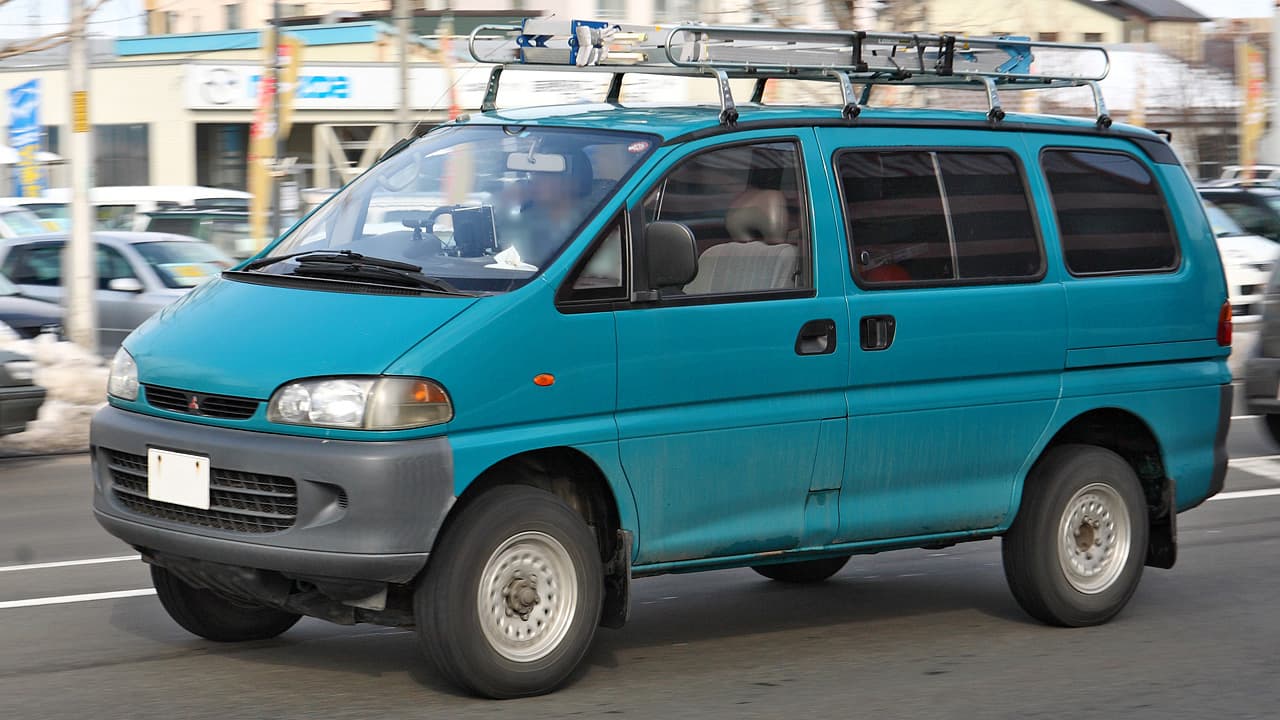
 2000–2007PDPD3.0 V6 petrolPetrolSee faults & what to checkPhoto: Tennen-Gas via Wikimedia Commons, CC BY-SA 3.0.
Mitsubishi1994–2019 Critical issues documented
Mitsubishi Delica D:5: common faults & what to check
Thinking about buying a used Mitsubishi Delica D:5 (1994–2019) in New Zealand? We've documented 19 known faults for this model spanning engine, suspension, transmission, and body & rust. Each researched and verified before it's published. The most serious issues here are rated critical. Every one is listed below with its symptoms and repair cost, and each has its own page with where to look and what to ask the seller. Free, no account needed.
Check this exact Mitsubishi Delica D:5
- Odometer history
- Money owing
- Reported stolen
- Ownership history
19
Critical
$600–$2,200
8
Which Mitsubishi Delica D:5 are you looking at?
Petrol
2000–2007PDPD3.0 V6 petrolPetrolSee faults & what to checkPhoto: Tennen-Gas via Wikimedia Commons, CC BY-SA 3.0. 2007–nowGeneration2.4 petrolPetrolSee faults & what to checkKickTyres illustration, not a photograph.
Diesel
2000–2007PDPD2.8L diesel (4M40)DieselSee faults & what to checkPhoto: Tennen-Gas via Wikimedia Commons, CC BY-SA 3.0.2007–nowGeneration2.2 turbo-dieselDieselSee faults & what to checkKickTyres illustration, not a photograph.Now narrow it to the engine
Start your free check on this Mitsubishi Delica D:5
Mitsubishi Delica D:5Engine not picked yet
Pick the engine above first: the Delica D:5 came with 4, and without it the report has to show all of their faults. Pick the engine
Can't confirm for this car
Mitsubishi Delica D:5
Nothing has been narrowed yet, so nothing below is a claim about a particular car. Pick a year and an engine to see which faults apply.
Tell us the engine, or check the engine code on the car, before relying on this.
matched on no vehicle context
What to look out for
Serious issue
Check oil filler cap underside for white mayonnaise-like emulsion.
4M40 head gasket failure at high mileage
The 4M40 2.8 diesel is susceptible to head gasket failure on high-mileage examples, typically presenting above 200,000 km or after overheating events. The alloy head is prone to warping if the engine has ever run hot, and the factory head bolt torque specification leaves little margin once the gasket begins to compress with age. Head gasket failure allows combustion gases into the coolant, pressurising the cooling system and causing rapid coolant loss. It is one of the most commonly reported terminal failures on neglected L400 Delicas presented for WOF.
What you would notice
Serious issue
Watch for: Clunking or knocking from the front suspension over bumps, particularly with the wheel turned to full lock.
Front Lower Control Arm Ball Joint Wear
The front suspension lower control arm ball joints on the Delica D:5 carry significant load given the vehicle's elevated kerb weight and all-wheel-drive configuration. The ball joint boot is exposed to road debris and water in off-road use; once the rubber boot tears, grease is expelled and abrasive contamination enters the joint, rapidly wearing the ball stud and socket. Progressive wear introduces play that causes vague steering, and a fully failed ball joint can separate, causing immediate loss of steering geometry and wheel collapse.
What you would notice
Serious issue
Start the engine from cold and listen immediately for rattling from the timing cover area.
4N14 2.2D Timing Chain Rattle (JDM Import)
The 4N14 2.2-litre diesel fitted to Delica D:5 imports develops a timing chain rattle similar to Mitsubishi's other 4Nx-series engines. The chain tensioner is oil-pressure dependent and degrades with age, particularly on vehicles with extended or infrequent oil changes. Documented on Japanese Delica owner forums and reported by NZ independent mechanics who service the growing JDM Delica D:5 import fleet. The fault is progressive — ignored rattles lead to full chain replacement.
What you would notice
Costly issue
Drive from cold and again when warm: apply light throttle at 30-50 km/h and feel for shudder or vibration through the floor or seat.
Invecs-III CVT Judder from Fluid Degradation or Overheating
The Invecs-III JATCO-sourced CVT fitted to 4B12 2.4L petrol Delica D:5 models produces a shudder or judder under light throttle at low speed when CVT fluid degrades or overheats from towing or sustained off-road use. The CVT fluid should be changed every 40,000-60,000 km but many JDM-sourced examples arrive with fluid well beyond this interval. A fluid change resolves early cases; persistent judder after a fluid change indicates internal clutch pack or steel belt wear requiring CVT rebuild or replacement.
What you would notice
Costly issue
Watch for: Engine enters limp mode with DPF warning lamp illuminated and power severely reduced.
4N14 Diesel DPF Blockage from Short-Trip Operation
The 4N14 2.2-litre diesel engine's diesel particulate filter accumulates soot rapidly when the vehicle is operated predominantly on short urban trips that do not allow exhaust temperatures to reach the 550–600 °C threshold required for active regeneration. When passive and active regeneration cycles are repeatedly interrupted, the DPF reaches a critically high ash and soot load, causing back-pressure to spike, triggering limp-mode, and ultimately requiring forced regeneration or filter replacement.
What you would notice
Costly issue
From underneath, probe the floor sill sections with a screwdriver for softness or perforation.
Rust in floor sills and rear wheel arches
The L400 Delica has known rust-prone areas in the outer floor sills and inner and outer rear wheel arches. The sill sections trap moisture and road debris, while the rear wheel arches are subject to stone chip damage that breaks through the factory paint and allows rust to establish. Vehicles used in coastal regions of New Zealand or those that have spent time in Japan's snowbelt provinces (where road salt is used) are significantly more affected. Structural sill rust can compromise the vehicle's rigidity and lead to WOF rejection. Rust in wheel arches is cosmetic in early stages but can spread to the structural chassis rails if left untreated.
What you would notice
See all 19 documented issues
Depends on which engine this Mitsubishi Delica D:5 has — 19
Engine, transmission & cooling
014N14 2.2D Timing Chain Rattle (JDM Import)
Can't confirm for this car
OccasionalEngine $2,800–$6,500 to fix
Can't confirm for this car
Unconfirmed. This entry does not match our record of which engines and years this model was sold with, and is awaiting review. Confirm it against the car before acting on it.
The 4N14 2.2-litre diesel fitted to Delica D:5 imports develops a timing chain rattle similar to Mitsubishi's other 4Nx-series engines. The chain tensioner is oil-pressure dependent and degrades with age, particularly on vehicles with extended or infrequent oil changes. Documented on Japanese Delica owner forums and reported by NZ independent mechanics who service the growing JDM Delica D:5 import fleet. The fault is progressive — ignored rattles lead to full chain replacement.
 Example of the part — not this vehicle
The front of a twin-cam engine with the timing cover off — chain, sprockets and guides.
Symptoms to notice
What to check
Ask the seller
024M40 head gasket failure at high mileage
Can't confirm for this car
CommonEngine $1,800–$4,000 to fix
Can't confirm for this car
The 4M40 2.8 diesel is susceptible to head gasket failure on high-mileage examples, typically presenting above 200,000 km or after overheating events. The alloy head is prone to warping if the engine has ever run hot, and the factory head bolt torque specification leaves little margin once the gasket begins to compress with age. Head gasket failure allows combustion gases into the coolant, pressurising the cooling system and causing rapid coolant loss. It is one of the most commonly reported terminal failures on neglected L400 Delicas presented for WOF.
 Example of the part — not this vehicle
A used multi-layer head gasket. Discolouration between a cylinder and a water gallery is the tell.
Symptoms to notice
What to check
Ask the seller
03Invecs-III CVT Judder from Fluid Degradation or Overheating
Can't confirm for this car
CommonTransmission $350–$8,000 to fix
Can't confirm for this car
The Invecs-III JATCO-sourced CVT fitted to 4B12 2.4L petrol Delica D:5 models produces a shudder or judder under light throttle at low speed when CVT fluid degrades or overheats from towing or sustained off-road use. The CVT fluid should be changed every 40,000-60,000 km but many JDM-sourced examples arrive with fluid well beyond this interval. A fluid change resolves early cases; persistent judder after a fluid change indicates internal clutch pack or steel belt wear requiring CVT rebuild or replacement.
Symptoms to notice
What to check
Ask the seller
044N14 Diesel DPF Blockage from Short-Trip Operation
Can't confirm for this car05Automatic transmission solenoid failure
Can't confirm for this car
CommonTransmission $900–$2,800 to fix
Can't confirm for this car
The L400 Delica fitted with the automatic transmission uses electronically controlled shift solenoids in the valve body to manage gear selection. These solenoids fail with age and high mileage, typically due to varnish deposits from degraded automatic transmission fluid blocking the solenoid orifices, or internal solenoid coil failure. The result is incorrect gear engagement, harsh shifts, or the transmission defaulting to limp-home mode. The fault is common on any Delica where automatic transmission fluid changes have been skipped, and is frequently logged as a fault code in Japanese auction inspection sheets.
Symptoms to notice
What to check
Ask the seller
064WD Transfer Case Actuator Motor Wear
Can't confirm for this car
OccasionalTransmission $600–$2,200 to fix
Can't confirm for this car
The Delica D:5's Super Select 4WD or electronic shift-on-the-fly transfer case uses a small electric actuator motor and encoder to switch between 2H, 4H, and 4L modes. The plastic reduction gear cluster within the actuator is prone to stripping under the torque loads of mode-switching, particularly if the transfer is engaged at speed or if the motor runs against a mechanically blocked shaft. Worn encoder sensors can also cause the transfer case to hunt between modes or refuse to complete the shift, leaving the vehicle in an indeterminate state.
Symptoms to notice
What to check
Ask the seller
074B12 Timing Chain Tensioner Wear — Cold Start Rattle
Can't confirm for this car
CommonEngine $850–$2,200 to fix
Can't confirm for this car
The hydraulic timing chain tensioner on the 4B12 2.4L MIVEC loses oil-film retention after extended service intervals or high mileage (typically above 150,000 km). On cold start, oil pressure takes several seconds to build, leaving the tensioner unable to maintain chain tension. This produces an audible metallic rattle from the front of the engine for 3–10 seconds before settling. Repeated cycling accelerates chain and guide wear. If left unaddressed the chain can skip a tooth, causing mistimed valve events, loss of power, and potential valve-to-piston contact on this interference engine. Grey imports arriving at 80,000–120,000 km Japanese odometer readings may still have original tensioners that are near end-of-life by NZ standards.
Example of the part — not this vehicleThe front of a twin-cam engine with the timing cover off — chain, sprockets and guides.
Symptoms to notice
What to check
Ask the seller
084M40 EGR cooler cracking and coolant contamination
Can't confirm for this car
CommonCooling $700–$1,800 to fix
Can't confirm for this car
The exhaust gas recirculation cooler fitted to later 4M40 engines is prone to internal cracking caused by thermal fatigue from repeated hot/cold cycles. A cracked cooler allows coolant to enter the EGR circuit and be drawn into the intake manifold, leading to gradual coolant loss and, in severe cases, hydrostatic lock risk. This is a well-documented failure mode across the 4M40 engine family in Pajero, Triton, and Delica applications.
Symptoms to notice
What to check
Ask the seller
094N14 Diesel EGR Valve Carbon Sticking — P0401
Can't confirm for this car
CommonEngine $420–$1,100 to fix
Can't confirm for this car
The 4N14 2.2L turbodiesel uses exhaust gas recirculation to reduce NOx emissions. The EGR valve and its passage accumulate carbon deposits from diesel blow-by, particularly in vehicles operated predominantly on short urban runs where exhaust temperatures remain low. Carbon build-up causes the valve to stick partially open or fail to open fully on command. A stuck-open valve recirculates excessive exhaust gas, diluting the air charge and causing rough idle, hesitation on acceleration, and increased smoke. A stuck-closed valve triggers P0401 (EGR flow insufficient detected) and may cause elevated NOx emissions that fail a vehicle inspection. The issue is accelerated on grey imports used for NZ urban shuttle duty after a prior JDM life of predominantly highway use.
Symptoms to notice
What to check
Ask the seller
104M40 injector return pipe O-ring seal failure
Can't confirm for this car
CommonEngine $180–$450 to fix
Can't confirm for this car
The rubber O-ring seals on the injector return fuel pipes of the 4M40 2.8 diesel deteriorate with heat cycling and age. Failed seals allow diesel fuel to weep back along the return rail and contaminate the engine bay or mix with engine oil on high-mileage examples. The problem is endemic to the 4M40 engine family and is a routine finding on pre-purchase inspections of L400 Delicas over 150,000 km.
 Example of the part — not this vehicle
A common-rail diesel injector. Contamination damages the nozzle at the tip.
Symptoms to notice
What to check
Ask the seller
Body, brakes, suspension & interior
01Front Lower Control Arm Ball Joint Wear
Can't confirm for this car
CommonSuspension $500–$1,400 to fix
Can't confirm for this car
The front suspension lower control arm ball joints on the Delica D:5 carry significant load given the vehicle's elevated kerb weight and all-wheel-drive configuration. The ball joint boot is exposed to road debris and water in off-road use; once the rubber boot tears, grease is expelled and abrasive contamination enters the joint, rapidly wearing the ball stud and socket. Progressive wear introduces play that causes vague steering, and a fully failed ball joint can separate, causing immediate loss of steering geometry and wheel collapse.
 Example of the part — not this vehicle
A separated lower ball joint: the control arm has dropped and the wheel has splayed out under the guard.
Symptoms to notice
What to check
Ask the seller
02Rust in floor sills and rear wheel arches
Can't confirm for this car
CommonBody & Rust $600–$3,500 to fix
Can't confirm for this car
The L400 Delica has known rust-prone areas in the outer floor sills and inner and outer rear wheel arches. The sill sections trap moisture and road debris, while the rear wheel arches are subject to stone chip damage that breaks through the factory paint and allows rust to establish. Vehicles used in coastal regions of New Zealand or those that have spent time in Japan's snowbelt provinces (where road salt is used) are significantly more affected. Structural sill rust can compromise the vehicle's rigidity and lead to WOF rejection. Rust in wheel arches is cosmetic in early stages but can spread to the structural chassis rails if left untreated.
Symptoms to notice
What to check
Ask the seller
03Rear Multi-Link Suspension Bush Collapse
Can't confirm for this car
CommonSuspension $800–$2,400 to fix
Can't confirm for this car
The Delica D:5 uses a complex rear multi-link independent suspension with numerous rubber compliance bushes in the upper and lower lateral links and the toe-control arm. The inner rubber element of these bushes degrades through a combination of ozone cracking, oil contamination from differential or exhaust proximity, and cyclic fatigue, causing the rubber to delaminate from the metal sleeve. As the bush collapses, the rear wheel geometry shifts under load, producing unpredictable toe-out that causes the vehicle to track poorly and accelerates rear tyre wear.
Symptoms to notice
What to check
Ask the seller
04Front axle birfield (CV) joint failure on 4WD models
Can't confirm for this car
CommonSuspension $450–$1,400 to fix
Can't confirm for this car
The L400 Delica 4WD uses Birfield-type constant-velocity joints in the front axle shafts. These joints are robust but fail when the grease-retaining boots tear — a common occurrence on vehicles used off-road or with high mileage. Once a boot tears, grease is flung out and abrasive grit enters the joint, rapidly wearing the balls and races. Neglected joints eventually seize or fracture, leaving the vehicle undriveable. Boot deterioration accelerates from UV exposure in New Zealand conditions.
Symptoms to notice
What to check
Ask the seller
05Brake Caliper Guide Pin Seizure
Can't confirm for this car
CommonBrakes $250–$900 to fix
Can't confirm for this car
The front and rear brake calipers on the Delica D:5 use sliding guide pins coated with a high-temperature grease to allow the caliper to float and apply even pressure across both brake pads. In the New Zealand and Australian climate, road salt, brake dust, and water infiltration past the guide pin rubber boots cause the pin's chrome surface to corrode, binding the caliper in a partially applied position. A seized guide pin causes one pad to drag continuously against the rotor, producing asymmetric braking, accelerated pad and rotor wear on one side, and brake fluid overheating.
Symptoms to notice
What to check
Ask the seller
06Sliding Door Lower Hinge Bracket and Track Corrosion
Can't confirm for this car
CommonBody & Rust $300–$900 to fix
Can't confirm for this car
The Delica D:5 sliding door lower hinge bracket, roller guide, and sill track corrode in NZ's coastal and high-rainfall regions. Corrosion causes the door to become stiff or misaligned, dragging on the sill when opened. In advanced cases the lower roller bracket can fail entirely, leaving the door supported only by the upper track and creating a safety risk. Particularly prevalent on South Island and Northland examples and vehicles that have not had underbody protection applied.
Symptoms to notice
What to check
Ask the seller
Fluid leaks
01Front Differential Seal Leak (4WD Models)
Can't confirm for this car
OccasionalFluid Leaks $400–$1,200 to fix
Can't confirm for this car
The front differential output seals and front differential input (propshaft) seal on Delica D:5 4WD models are prone to weeping oil, particularly as the vehicles age past 150,000 km or if the differential oil has not been changed at recommended intervals. Seal degradation allows differential oil to leak onto surrounding components and can eventually lead to differential bearing damage if oil level drops significantly. Reported by NZ mechanics servicing the imported Delica fleet.
Symptoms to notice
What to check
Ask the seller
02Power steering pump seal leak
Can't confirm for this car
Very commonFluid Leaks $300–$950 to fix
Can't confirm for this car
The power steering pump fitted to both the 4M40 diesel and 6G72 petrol L400 Delica uses rubber shaft and body seals that harden and weep with age. On vehicles over 15 years old, seal failure is routine rather than exceptional. A weeping pump seal allows power steering fluid to leak onto the front of the engine or onto the accessory belt, creating a fire risk and contaminating the belt. Continued operation with low fluid levels causes pump whine and accelerated pump wear. The fault is very common on any L400 Delica that has not had the power steering system serviced.
Symptoms to notice
What to check
Ask the seller
Mitsubishi Delica D:5 faults in detail
What these repairs cost on other cars
Some of the Mitsubishi Delica D:5’s documented faults are repairs other models share. Each page lists the documented NZ cost for every model it affects.
Other Mitsubishi models
Mitsubishi Delica D:5 buyer questions
Is the Mitsubishi Delica D:5 reliable?
Like any used car, it depends on the specific example and its service history. Across the 19 documented faults for the Mitsubishi Delica D:5, the recurring problem areas are engine, suspension, and transmission. A Mitsubishi Delica D:5 with a full service history and no signs of the issues listed on this page can be a sound buy but each one needs to be checked individually before you commit.
What are the most common problems with a used Mitsubishi Delica D:5?
We've catalogued 19 known faults for the Mitsubishi Delica D:5, covering engine, suspension, and transmission. All 19 are written out in full on this page, with the symptoms to notice, what to inspect, and typical repair costs for each. Free to read, no account needed.
How much do repairs cost on a Mitsubishi Delica D:5?
Most single repairs on the Mitsubishi Delica D:5 fall between $600–$2,200 at NZ independent-workshop rates. Some of the 19 documented faults cost less and a few cost considerably more, and no one car needs them all. Knowing which ones to look for before you view is what lets you negotiate the price down or walk away.
Should I get a pre-purchase inspection on a Mitsubishi Delica D:5?
Yes. A Mitsubishi Delica D:5 inspection focused on its known weak points is the single best way to avoid an expensive mistake. KickTyres gives you a guided, model-specific inspection plus a market valuation and negotiation figure for $24.90 far less than the cost of missing one of the faults on this page.