 2000–2006NPNP3.5L petrol (6G74)PetrolSee faults & what to checkPhoto: Ethan Llamas via Wikimedia Commons, CC BY-SA 4.0.
Mitsubishi1991–2021 Critical issues documented
Mitsubishi Pajero: common faults & what to check
Thinking about buying a used Mitsubishi Pajero (1991–2021) in New Zealand? We've documented 39 known faults for this model spanning engine, fluid leaks, suspension, and transmission. Each researched and verified before it's published. The most serious issues here are rated critical. Every one is listed below with its symptoms and repair cost, and each has its own page with where to look and what to ask the seller. Free, no account needed.
Check this exact Mitsubishi Pajero
- Odometer history
- Money owing
- Reported stolen
- Ownership history
39
Critical
$600–$3,500
8
Which Mitsubishi Pajero are you looking at?
Petrol
2000–2006NPNP3.5L petrol (6G74)PetrolSee faults & what to checkPhoto: Ethan Llamas via Wikimedia Commons, CC BY-SA 4.0. 2006–2021NSNS3.8L petrol (6G75)PetrolSee faults & what to checkKickTyres illustration, not a photograph.
Diesel
2000–2006NPNP3.2L diesel (4M41)DieselSee faults & what to checkPhoto: Ethan Llamas via Wikimedia Commons, CC BY-SA 4.0.2006–2021NSNS3.2L diesel (4M41)DieselSee faults & what to checkKickTyres illustration, not a photograph.Engine not documented
 1982–1991L040L040Engine not documented for this generationEngine not documentedSee faults & what to checkPhoto: OSX via Wikimedia Commons, Public domain.
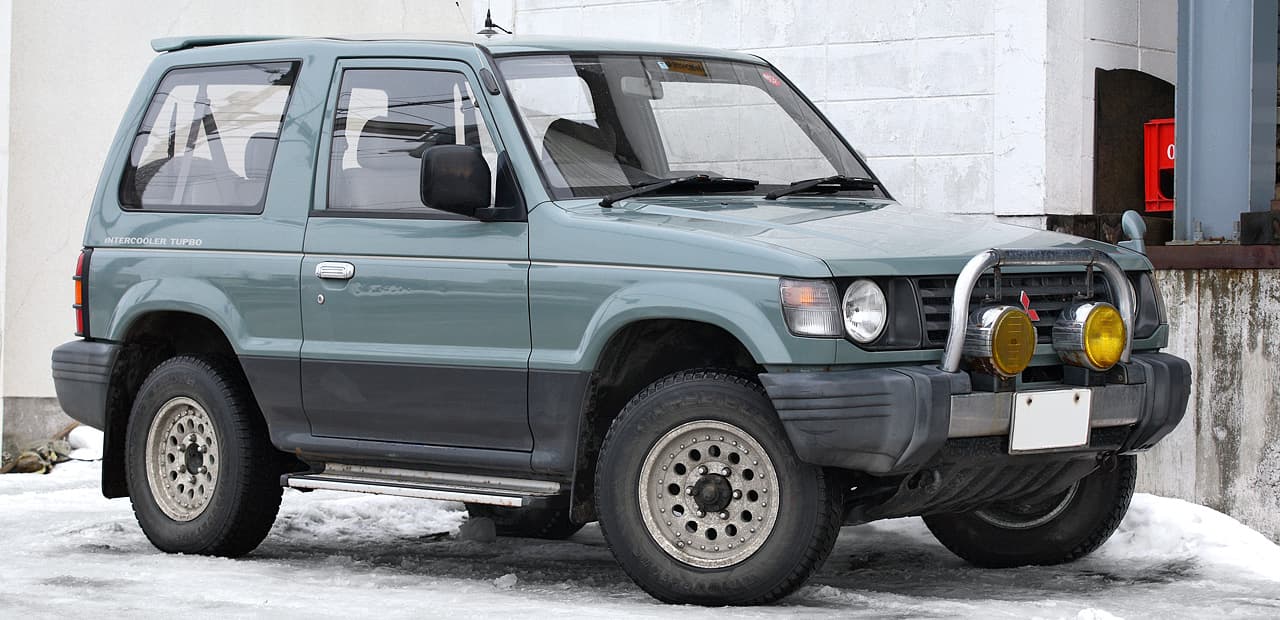 1991–2000V20V20Engine not documented for this generationEngine not documentedSee faults & what to checkPhoto: Tennen-Gas via Wikimedia Commons, CC BY-SA 3.0.
Now narrow it to the engine
Start your free check on this Mitsubishi Pajero
Mitsubishi PajeroEngine not picked yet
Pick the engine above first: the Pajero came with 6, and without it the report has to show all of their faults. Pick the engine
Can't confirm for this car
Mitsubishi Pajero
Nothing has been narrowed yet, so nothing below is a claim about a particular car. Pick a year and an engine to see which faults apply.
Tell us the engine, or check the engine code on the car, before relying on this.
matched on no vehicle context
What to look out for
Serious issue
Confirm with the seller and in service records that BOTH the timing belt AND balance shaft belt were replaced together.
6G72 3.0L V6 Balance Shaft Belt Failure — Oil Pump Drive and Engine Seizure
The 6G72 has a secondary balance shaft belt that also drives the oil pump. If this belt fails the oil pump stops immediately, causing catastrophic oil starvation and engine seizure within seconds with no warning. This belt must be replaced simultaneously with the timing belt yet is frequently omitted by mechanics unfamiliar with the engine. Many belt replacement invoices list only the timing belt, leaving the balance shaft belt in an unknown state. Engine replacement is the typical outcome of balance shaft belt failure.
What you would notice
Serious issue
Check the engine oil dipstick for a cream or milky appearance indicating coolant contamination.
4M41 3.2 DI-D Injector Cup Seal Failure
The 4M41 3.2 diesel injector cups (sleeves pressed into the cylinder head) develop seal failures allowing coolant to leak into the oil or combustion chamber. Symptoms include white steam from exhaust, coolant loss without external leak, and oil with a cream/milky appearance. In severe cases the hydraulic lock from coolant entry causes catastrophic engine damage.
What you would notice
Serious issue
Ask for documented evidence of a timing belt replacement with mileage recorded.
6G74 Timing Belt Failure on Interference Engine
The 6G74 3.5L SOHC V6 petrol engine fitted to V60 and V65 series Pajeros is an interference design, meaning that if the timing belt fails the open valves will contact the descending pistons, causing immediate and catastrophic internal engine damage. Mitsubishi specifies a 100,000 km service interval for the timing belt, but belt condition degrades faster in hot climates or if coolant has contaminated the belt housing via a leaking water pump — a common failure mode on this engine. Many examples have unrecorded service histories, and a belt that appears visually intact may have hardened backing that is internally cracked.
What you would notice
Serious issue
Ask for documented timing belt replacement history with workshop receipts.
6G72 3.0L V6 Timing Belt Failure (Interference Engine)
The 6G72 is an interference engine where timing belt failure causes catastrophic piston-to-valve contact and complete engine destruction. The OEM replacement interval is 90,000 km but many imported examples have no documented service history. Belt tensioner and idler pulley failure can cause premature belt snapping independent of mileage. If the belt jumps or breaks, the repair outcome is typically a full engine rebuild or replacement.
What you would notice
Serious issue
Grip the tyre at 9 and 3 o'clock and feel for play in the swivel hub bearing.
Front Lower Control Arm Ball Joint and Swivel Hub Bearing Wear
The Pajero front suspension uses a double-wishbone arrangement with the lower control arm ball joint carrying a significant proportion of the vertical and lateral loads generated by the vehicle's substantial kerbweight and common off-road use. The ball joint boot cracks with age, allowing water and grit ingress that accelerates wear of the ball stud and socket, eventually producing excessive radial and axial play. The swivel hub (steering knuckle) bearing that the hub rotates on is also a known wear point, particularly on vehicles that have been used in water crossings or operated in wet environments without adequate regreasing; worn swivel hub bearings produce a characteristic grinding and vibration that is often misdiagnosed as wheel bearing failure.
What you would notice
Serious issue
Listen at the front of the engine on a cold start for chain rattle in the first seconds.
Timing chain guide wear and timing case oil/coolant leaks (4M41, NS-NX)
The 4M41's upper timing chain guide wears thin with age; pieces can break off, jam the chain and let it jump teeth, which puts the engine out of time and can cause major damage. Separately, the front timing case is notorious for oil leaks that are expensive to fix because the case is buried behind the radiator and accessories - and a botched reseal can let coolant into the oil. A rattly chain at cold start or long-standing oil weep from behind the crank pulley both point to a big front-of-engine job.
What you would notice
See all 39 documented issues
Depends on which engine this Mitsubishi Pajero has — 39
Engine, transmission & cooling
016G74 3.5L V6 Balance Shaft Belt Failure and Engine Destruction
Can't confirm for this car026G72 3.0L V6 Balance Shaft Belt Failure — Oil Pump Drive and Engine Seizure
Can't confirm for this car034M41 3.2 DI-D Injector Cup Seal Failure
Can't confirm for this car
CommonEngine $1,500–$8,000 to fix
Can't confirm for this car
The 4M41 3.2 diesel injector cups (sleeves pressed into the cylinder head) develop seal failures allowing coolant to leak into the oil or combustion chamber. Symptoms include white steam from exhaust, coolant loss without external leak, and oil with a cream/milky appearance. In severe cases the hydraulic lock from coolant entry causes catastrophic engine damage.
 Example of the part — not this vehicle
A common-rail diesel injector. Contamination damages the nozzle at the tip.
Symptoms to notice
What to check
Ask the seller
046G74 Timing Belt Failure on Interference Engine
Can't confirm for this car056G74 3.5L V6 DOHC Timing Belt Failure (Interference Engine)
Can't confirm for this car
OccasionalEngine $900–$5,500 to fix
Can't confirm for this car
The 6G74 3.5L DOHC V6 fitted to petrol Gen 3 Pajeros is an interference engine with a cam-driven timing belt requiring scheduled replacement. Failure of the belt, tensioner, or idler causes piston-to-valve contact and complete engine destruction. The DOHC arrangement means four cam sprockets must align correctly on reassembly, making this a complex specialist job. Belt services are frequently deferred on higher-mileage examples, particularly those with no service history.
Symptoms to notice
What to check
Ask the seller
066G75 3.8 V6 Timing Belt Tension Roller Failure
Can't confirm for this car
OccasionalEngine $900–$4,500 to fix
Can't confirm for this car
The 3.8-litre 6G75 V6 petrol engine fitted to NS through NX Pajeros uses a timing belt rather than a chain. The belt tensioner and idler roller bearings are prone to bearing seizure or collapse at or before the scheduled replacement interval of 100,000 km. When a roller bearing seizes it causes the belt to track incorrectly or shred, and because the 6G75 is an interference engine, even a brief belt slip causes piston-to-valve contact resulting in bent valves and substantial head damage. Failure can be sudden with no warning, or preceded by a squealing noise from the timing belt cover under light acceleration. Many high-mileage examples in NZ and AU have not had the belt kit replaced on schedule, making this a critical pre-purchase check. Full belt kit including tensioner, all idler rollers, and water pump should be replaced as a set.
Symptoms to notice
What to check
Ask the seller
076G72 3.0L V6 Timing Belt Failure (Interference Engine)
Can't confirm for this car084M41 Timing Chain Tensioner Wear at High Mileage
Can't confirm for this car
OccasionalEngine $1,400–$3,800 to fix
Can't confirm for this car
The 3.2 DI-D 4M41 engine uses a hydraulic timing chain tensioner that relies on adequate oil pressure and viscosity to maintain chain tension. At high mileage, typically above 200,000 km, the tensioner ratchet pawl and its spring wear, reducing the tensioner's ability to take up chain slack when oil pressure is low at cold start. The resulting chain rattle on a cold morning clears within 30 to 60 seconds as oil pressure builds. If ignored, chain wear accelerates and the risk of chain jump increases, which can cause severe valve-to-piston contact on this interference engine. Neglected oil changes and use of low-viscosity oil outside Mitsubishi specification significantly accelerate tensioner and chain wear. The tensioner itself is inexpensive but the labour to access it correctly is substantial.
 Example of the part — not this vehicle
The front of a twin-cam engine with the timing cover off — chain, sprockets and guides.
Symptoms to notice
What to check
Ask the seller
094M41 3.2L DI-D Common Rail Injector Seizure and Carbon Fouling
Can't confirm for this car10V5A51 5-Speed Automatic Transmission Valve Body and Solenoid Wear
Can't confirm for this car11DPF blockage and failed regeneration (NX with diesel particulate filter)
Can't confirm for this car
OccasionalEngine $1,500–$6,500 to fix
Can't confirm for this car
Late NX Pajeros gained a diesel particulate filter, and Australian owners report DPF failures before 130,000 km with replacement bills over NZ$6,000 at dealers. Suburban short-trip driving never gets the exhaust hot enough to regenerate, so soot accumulates until the filter blocks, putting the engine into limp mode. Forum consensus among AU buyers is to either confirm a healthy DPF with a diagnostic scan or buy the pre-DPF NW model. Aftermarket DPFs and specialist cleaning bring the cost down substantially versus a genuine dealer filter.
Symptoms to notice
What to check
Ask the seller
12Super Select 4WD Transfer Case Bearing Wear and Output Seal Leaks
Can't confirm for this car
OccasionalTransmission $1,500–$4,500 to fix
Can't confirm for this car
The Super Select 4WD transfer case on Gen 3 Pajeros develops bearing noise and play at high mileage, typically presenting above 180,000 km. Front and rear output bearings wear first, producing a speed-related drone or vibration through the floor. Oil seals typically fail alongside bearing wear, resulting in fluid loss from the transfer case output flanges. Full transfer case rebuild or replacement is required; parts availability can be limited and the labour to remove and reinstall the unit is extensive.
Symptoms to notice
What to check
Ask the seller
134D56 2.5L Diesel Head Gasket Failure and Head Bolt Stretch
Can't confirm for this car143.2 DiD (4M41) injector wear and fuel pump problems (NM/NP)
Can't confirm for this car15Common-rail 4M41 injector failure and suction control valve surging (NS-NX)
Can't confirm for this car164M41 EGR Cooler Cracking and Coolant Loss
Can't confirm for this car
CommonCooling $1,200–$4,000 to fix
Can't confirm for this car
The 4M41 EGR cooler cracks internally allowing engine coolant to enter the EGR system and ultimately the intake manifold. Symptoms include white smoke from exhaust, loss of coolant, and a rough idle from coolant reaching the combustion chambers.
Symptoms to notice
What to check
Ask the seller
174M40 2.8L Turbo Diesel Injector Pump Failure (Bosch/Zexel VE Rotary Pump)
Can't confirm for this car184M41 3.2D Engine Oil Cooler O-ring Failure and Coolant Contamination
Can't confirm for this car19Automatic Transmission Torque Converter Shudder
Can't confirm for this car
CommonTransmission $400–$2,500 to fix
Can't confirm for this car
5-speed automatic develops torque converter lock-up clutch shudder under light throttle at highway cruise.
 Example of the part — not this vehicle
A torque converter, sectioned. The lock-up clutch inside is what shudders.
Symptoms to notice
What to check
Ask the seller
20Super Select 4WD Transfer Case Actuator Motor Failure
Can't confirm for this car214M41 3.2L DI-D EGR Valve Sticking and Inlet Manifold Carbon Build-Up
Can't confirm for this car224M40 2.8L EGR System Carbon Clogging and Inlet Manifold Restriction
Can't confirm for this car234M41 3.2D Injector Copper Washer Blow-out and O-ring Failure
Can't confirm for this car24NS/NT Transfer Case Actuator Failure Causing Stuck 4LO
Can't confirm for this car25NS/NT EGR Valve Sticking Causing Rough Idle & Smoke
Can't confirm for this car26NM/NP 4M41 Intercooler Pipe Split at Boost Clamp
Can't confirm for this car274M41 and 4D56 Diesel EGR Valve and Inlet Manifold Carbon Fouling
Can't confirm for this car
Very commonEngine $300–$1,200 to fix
Can't confirm for this car
Recirculated exhaust gases deposit a thick, oily carbon sludge in the EGR valve passages and inlet manifold runners of the 4M41 3.2D and 4D56 2.5D engines. Over time, this buildup restricts airflow into the cylinders, reducing combustion efficiency and power output. The EGR valve can stick open (causing rough idle and smoke) or closed (triggering an EGR fault code and check engine light). Vehicles used predominantly for short urban trips accumulate deposits fastest.
Symptoms to notice
What to check
Ask the seller
Electrical
01Instrument cluster temperature gauge fault masking overheating (3.5/3.8 V6)
Can't confirm for this car
OccasionalElectrical $300–$1,200 to fix
Can't confirm for this car
A known fault on this era of Pajero is a failing chip on the instrument cluster circuit board that makes the temperature gauge read incorrectly or sit dead - dangerous on the 6G74/6G75 petrol V6s, which do not tolerate overheating and can crack cylinder heads if cooked. Owners towing with a faulty gauge have no warning until steam appears. The petrol V6s also weep oil from hardened rocker cover, cam and spark plug tube seals, which fouls plugs and is fiddly to reseal properly.
Symptoms to notice
What to check
Ask the seller
Body, brakes, suspension & interior
01Front Lower Control Arm Ball Joint and Swivel Hub Bearing Wear
Can't confirm for this car02Rust from blocked drainage channels in front guards, sills and door bottoms (NM/NP)
Can't confirm for this car03Rear Wheel Arch Lip and Sill Seam Rust
Can't confirm for this car04Front Axle Birfield Joint Wear and Clicking Under Load
Can't confirm for this car05Rear Leaf Spring Cracking Under Sustained Load
Can't confirm for this car
OccasionalSuspension $450–$1,100 to fix
Can't confirm for this car
The long-wheelbase Pajero uses a rear live axle suspended on multi-leaf springs. When operated consistently at or near the vehicle's gross vehicle mass — common in touring or towing applications — the main leaf and secondary leaves are subjected to high cyclic stress at the spring eyes and at the point where the leaves bear against the axle pad. Fatigue cracks initiate at these stress concentrations, propagating through the leaf cross-section. A cracked main leaf causes the rear of the vehicle to sag on one side and can ultimately snap under dynamic load, causing sudden loss of ride height and in severe cases the fractured leaf end can contact the tyre or body.
Symptoms to notice
What to check
Ask the seller
06Brake Caliper Guide Pin Seizure
Can't confirm for this car
CommonBrakes $150–$550 to fix
Can't confirm for this car
The Pajero front and rear disc brake calipers use sliding guide pins that allow the caliper body to float and maintain equal pad pressure on both sides of the rotor. The guide pins are protected by rubber boots, but in the Australasian environment the boots crack with age and UV exposure, allowing moisture and road salt contamination to enter and corrode the pin surface inside the caliper bracket bore. A seized guide pin prevents the caliper from sliding freely, causing the inboard brake pad to remain in constant contact with the rotor while the outboard pad barely contacts it at all. This results in severely uneven pad wear, rotor scoring, brake pull, and significantly elevated operating temperatures on the affected corner.
Symptoms to notice
What to check
Ask the seller
07Rear door rust under the door rubbers (NT recall)
Can't confirm for this car
OccasionalBody & Rust $300–$2,000 to fix
Can't confirm for this car
NT-series Pajeros had a corrosion problem where rust develops under the rubber seals of the rear passenger doors, hidden until the rubber is lifted. There was a recall/service campaign in Australia for affected vehicles, but cars that missed it can have rot quietly spreading along the door bottoms and frames. It is cosmetic at first but becomes a panel repair or door replacement if ignored, and hidden rust anywhere invites closer WOF scrutiny.
Symptoms to notice
What to check
Ask the seller
08Rear Leaf Spring Shackle Bush Wear
Can't confirm for this car
CommonSuspension $300–$800 to fix
Can't confirm for this car
Rear leaf spring shackle bushes wear causing rear-end clunking and imprecise handling on the live-axle Pajero.
Symptoms to notice
What to check
Ask the seller
Fluid leaks
01Timing chain guide wear and timing case oil/coolant leaks (4M41, NS-NX)
Can't confirm for this car
OccasionalFluid Leaks $2,000–$6,000 to fix
Can't confirm for this car
The 4M41's upper timing chain guide wears thin with age; pieces can break off, jam the chain and let it jump teeth, which puts the engine out of time and can cause major damage. Separately, the front timing case is notorious for oil leaks that are expensive to fix because the case is buried behind the radiator and accessories - and a botched reseal can let coolant into the oil. A rattly chain at cold start or long-standing oil weep from behind the crank pulley both point to a big front-of-engine job.
Example of the part — not this vehicleThe front of a twin-cam engine with the timing cover off — chain, sprockets and guides.
Symptoms to notice
What to check
Ask the seller
02Rear differential side-shaft circlip/flange oil leak leading to diff failure
Can't confirm for this car
OccasionalFluid Leaks $300–$3,500 to fix
Can't confirm for this car
A known Mitsubishi fault across third and fourth generation Pajeros: the rear side-shafts can work slightly out of the differential because of a weak circlip/flange design, letting diff oil spray out over the underside. If it runs dry the rear diff is destroyed, turning a cheap circlip and seal fix into a full diff rebuild. Mitsubishi revised the circlip design, but plenty of unmodified diffs are still on the road. Any oil mist pattern around the rear diff and inner wheel area is this fault until proven otherwise.
Symptoms to notice
What to check
Ask the seller
03Transfer Case Front Output Seal Leak — Front Propshaft Oil Loss
Can't confirm for this carMitsubishi Pajero faults in detail
3.2 DiD (4M41) injector wear and fuel pump problems (NM/NP)4D56 2.5L Diesel Head Gasket Failure and Head Bolt Stretch4M40 2.8L EGR System Carbon Clogging and Inlet Manifold Restriction4M40 2.8L Turbo Diesel Injector Pump Failure (Bosch/Zexel VE Rotary Pump)4M41 3.2D Engine Oil Cooler O-ring Failure and Coolant Contamination4M41 3.2D Injector Copper Washer Blow-out and O-ring Failure4M41 3.2L DI-D Common Rail Injector Seizure and Carbon Fouling4M41 3.2L DI-D EGR Valve Sticking and Inlet Manifold Carbon Build-Up6G72 3.0L V6 Balance Shaft Belt Failure — Oil Pump Drive and Engine Seizure6G72 3.0L V6 Timing Belt Failure (Interference Engine)6G74 3.5L V6 Balance Shaft Belt Failure and Engine Destruction6G74 Timing Belt Failure on Interference EngineCommon-rail 4M41 injector failure and suction control valve surging (NS-NX)Front Axle Birfield Joint Wear and Clicking Under LoadFront Lower Control Arm Ball Joint and Swivel Hub Bearing WearNM/NP 4M41 Intercooler Pipe Split at Boost ClampNS/NT EGR Valve Sticking Causing Rough Idle & SmokeNS/NT Transfer Case Actuator Failure Causing Stuck 4LORear Wheel Arch Lip and Sill Seam RustRust from blocked drainage channels in front guards, sills and door bottoms (NM/NP)Super Select 4WD Transfer Case Actuator Motor FailureTransfer Case Front Output Seal Leak — Front Propshaft Oil LossV5A51 5-Speed Automatic Transmission Valve Body and Solenoid Wear
What these repairs cost on other cars
Some of the Mitsubishi Pajero’s documented faults are repairs other models share. Each page lists the documented NZ cost for every model it affects.
Other Mitsubishi models
Mitsubishi Pajero buyer questions
Is the Mitsubishi Pajero reliable?
Like any used car, it depends on the specific example and its service history. Across the 39 documented faults for the Mitsubishi Pajero, the recurring problem areas are engine, fluid leaks, and suspension. A Mitsubishi Pajero with a full service history and no signs of the issues listed on this page can be a sound buy but each one needs to be checked individually before you commit.
What are the most common problems with a used Mitsubishi Pajero?
We've catalogued 39 known faults for the Mitsubishi Pajero, covering engine, fluid leaks, and suspension. All 39 are written out in full on this page, with the symptoms to notice, what to inspect, and typical repair costs for each. Free to read, no account needed.
How much do repairs cost on a Mitsubishi Pajero?
Most single repairs on the Mitsubishi Pajero fall between $600–$3,500 at NZ independent-workshop rates. Some of the 39 documented faults cost less and a few cost considerably more, and no one car needs them all. Knowing which ones to look for before you view is what lets you negotiate the price down or walk away.
Should I get a pre-purchase inspection on a Mitsubishi Pajero?
Yes. A Mitsubishi Pajero inspection focused on its known weak points is the single best way to avoid an expensive mistake. KickTyres gives you a guided, model-specific inspection plus a market valuation and negotiation figure for $24.90 far less than the cost of missing one of the faults on this page.