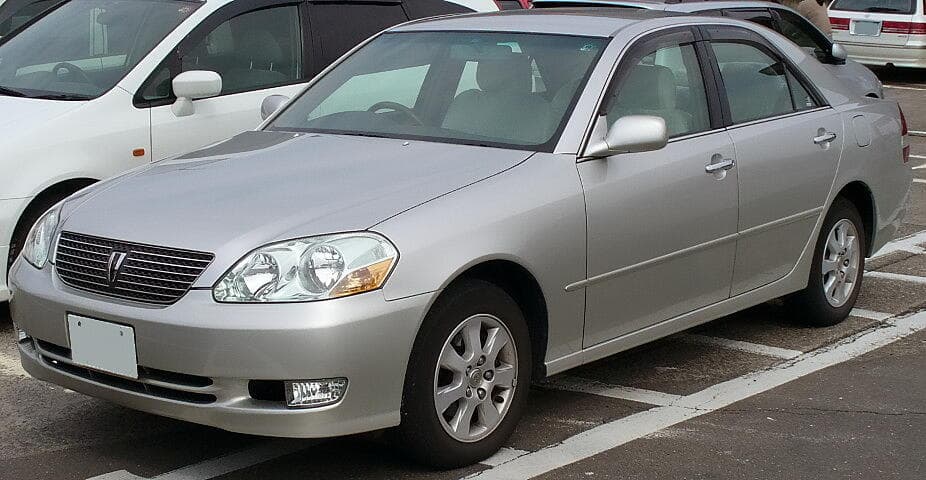
 2000–2008JZX110JZX1102.0 petrolPetrolSee faults & what to checkPhoto: Kuha455405 via Wikimedia Commons, CC BY-SA 3.0.
Toyota1992–2007 Critical issues documented
Toyota Mark II: common faults & what to check
Thinking about buying a used Toyota Mark II (1992–2007) in New Zealand? We've documented 22 known faults for this model spanning engine, suspension, transmission, and body & rust. Each researched and verified before it's published. The most serious issues here are rated critical. Every one is listed below with its symptoms and repair cost, and each has its own page with where to look and what to ask the seller. Free, no account needed.
Check this exact Toyota Mark II
- Odometer history
- Money owing
- Reported stolen
- Ownership history
22
Critical
$450–$2,000
17
Which Toyota Mark II are you looking at?
Petrol
2000–2008JZX110JZX1102.0 petrolPetrolSee faults & what to checkPhoto: Kuha455405 via Wikimedia Commons, CC BY-SA 3.0.2000–2008JZX110JZX1102.5 petrolPetrolSee faults & what to checkPhoto: Kuha455405 via Wikimedia Commons, CC BY-SA 3.0.2000–2008JZX110JZX1102.5 turbo petrolPetrolSee faults & what to checkPhoto: Kuha455405 via Wikimedia Commons, CC BY-SA 3.0.Engine not documented
 1992–1997JZX90JZX90Engine not documented for this generationEngine not documentedSee faults & what to checkPhoto: Mld61294 via Wikimedia Commons, CC BY-SA 4.0.
 1996–2001JZX100JZX100Engine not documented for this generationEngine not documentedSee faults & what to checkPhoto: TTTNIS via Wikimedia Commons, Public domain.
Now narrow it to the engine
Start your free check on this Toyota Mark II
Toyota Mark IIEngine not picked yet
Pick the engine above first: the Mark II came with 3, and without it the report has to show all of their faults. Pick the engine
Can't confirm for this car
Toyota Mark II
Nothing has been narrowed yet, so nothing below is a claim about a particular car. Pick a year and an engine to see which faults apply.
Tell us the engine, or check the engine code on the car, before relying on this.
matched on no vehicle context
What to look out for
Serious issue
With the suspension hanging, inspect the rubber boot on the ball joint for splits, tears, or missing grease.
Front Lower Control Arm Ball Joint Wear
The front lower control arm ball joints on JZX90 and JZX100 Mark II are a standard wear item that sees accelerated deterioration on New Zealand roads due to pot-hole stress and the age of imported examples. The ball joint boot splits with age, allowing grease to escape and water and grit to enter the joint. Once contaminated, the joint wears rapidly. At sufficient wear, the ball joint can separate entirely, causing sudden and complete loss of steering control — this is the single most common reason for WOF failure on these chassis in New Zealand.
What you would notice
Serious issue
Check belt tension with light finger pressure; a correctly tensioned belt should not deflect more than 10–15 mm.
1JZ-GE Timing Belt Failure on Neglected Examples
The 1JZ-GE 2.5-litre inline-six uses a rubber timing belt that Toyota specifies for replacement at 100,000 km intervals. On JZX90 examples imported into New Zealand with incomplete service histories, the belt is routinely found well beyond this interval. The engine is an interference design, meaning belt failure causes piston-to-valve contact and catastrophic internal damage. Oil contamination from a weeping valve cover gasket accelerates belt degradation significantly.
What you would notice
Serious issue
Remove timing cover inspection plug and check belt condition, tension, and idler pulley play.
1JZ-GTE Timing Belt Failure and Turbo Oil Feed Seal Leak
The 1JZ-GTE is an interference engine; belt failure causes piston-to-valve contact and catastrophic engine damage. The turbo oil return line O-ring and banjo bolt seals degrade with age and heat cycles, causing oil to pool in the turbo housing and burn at startup. Both faults are age-related and the majority of NZ-import JZX90/100 examples have no documented belt replacement history.
What you would notice
Serious issue
Spin the tensioner and idler pulleys by hand — any roughness, grinding, or play indicates bearing wear.
Timing Belt Tensioner Pulley Bearing Collapse
The 1JZ-GTE and 2JZ-GE engines fitted to JZX100 and JZX110 Mark II models use a rubber timing belt driven by a spring-loaded hydraulic tensioner and a fixed idler pulley. The tensioner pulley bearing and idler pulley bearing are known to fatigue and collapse — particularly on vehicles where the original belt has not been replaced at the Toyota-specified 100,000 km interval. Bearing collapse causes the belt to skip teeth or jump off entirely, resulting in catastrophic piston-to-valve contact on the interference-design engine. Imported JZX100 examples often arrive in New Zealand at 100,000–180,000 km with no evidence of belt service history.
What you would notice
Costly issue
Attempt to move each arm in the plane of its pivot by hand to feel for bush play or slop.
JZX90 rear multi-link lower arm bush deterioration
The JZX90 uses a complex rear multi-link independent suspension system with multiple rubber pivot bushes per side. The lower lateral arm inner and outer bushes are prone to cracking and deformation after 25 or more years of service, causing toe and camber geometry to shift dynamically under cornering and braking loads. Rear handling becomes vague or unpredictable during cornering and motorway lane changes. The deterioration is gradual and owners frequently adapt to the degraded feel without realising how far the geometry has shifted from specification.
What you would notice
Costly issue
Check ATF colour, level, and smell on dipstick.
A341E/A340E solenoid wear & clutch pack slip
The four-speed A341E (JZX100) and A340E automatics use shift solenoids (S1/S2/S3) and a linear solenoid for line pressure control. Over time and with infrequent ATF changes, varnish deposits cause solenoid plungers to stick or develop inconsistent travel, producing erratic shift timing. Simultaneously, clutch pack clearances grow as friction material wears; low ATF pressure from a sticky linear solenoid fails to apply the clutches firmly, causing slip under load. Third-to-fourth shift is typically the first to show slip. The accumulator pistons also develop O-ring weep, dropping apply pressure. Fluid degradation accelerates all wear mechanisms — many JZX100 units still run original ATF at 150,000+ km.
What you would notice
Toyota Mark II service schedule
Eighth Generation (X100 Facelift) · 2000–2000 · 2.0L (1G-FE) - 2.0 Beams
Due by distance
- 150,000 km
Renewing the original suspension bushes about now tightens up the steering feel.
- 200,000 km
The alternator and starter motor often want a professional assessment or a light service here.
Eighth Generation (X100 Facelift) · 2000–2000 · 2.5L (1JZ-GTE) - 2.5 Tourer V Turbo
Due by distance
- 100,000 km
The timing belt is due here, so it is worth confirming it has been replaced.
- 150,000 km
Look closely at the radiator and cooling system parts so heat is being shed properly.
- 200,000 km
Check the suspension parts, ball joints and tie rods for any play.
Eighth Generation (X100 Facelift) · 2000–2000 · 2.5L (1JZ-GE) - 2.5 Grande
Due by distance
- 150,000 km
Time for a thorough cooling system overhaul, paying attention to the radiator neck and the ageing coolant hoses.
- 200,000 km
Suspension bushings and ball joints can wear here, and the smooth ride this car is known for suffers.
- 250,000 km
Check the alternator and starter motor so the charging system keeps working steadily.
Ninth Generation (X110) · 2000–2004 · 2.0L (1G-FE) - 2.0 Grande
Due by distance
- 150,000 km
Make sure the timing belt and water pump have been dealt with, as the 1G-FE engine depends on them.
- 200,000 km
Check the suspension struts and steering rack mounts to keep the ride quality Toyota is known for.
- 250,000 km
Flush the cooling system and consider new rubber hoses to save yourself trouble later.
Ninth Generation (X110) · 2000–2004 · 2.5L (1JZ-FSE) - 2.5 Grande/iR-S D-4
Due by distance
- 100,000 km
The second major service falls here, which can mean new spark plugs and a thorough cooling system check.
- 150,000 km
Original suspension parts such as struts and bushings often show their age and need replacing to handle properly.
- 200,000 km
An important milestone where a full check of the fuel system parts and a deep clean of the intake manifold may be needed.
Ninth Generation (X110) · 2000–2004 · 2.5L (1JZ-GTE) - 2.5 iR-V Turbo
Due by distance
- 100,000 km
The first major timing belt service should already be done by here, with the water pump and tensioner replaced at the same time.
- 150,000 km
Check the turbocharger's oil feed lines and the state of the cooling system parts.
- 200,000 km
Suspension bushings and ball joints can start wearing here, which takes the crispness out of the handling.
See all 22 documented issues
Depends on which engine this Toyota Mark II has — 22
Engine, transmission & cooling
011JZ-GE Timing Belt Failure on Neglected Examples
Can't confirm for this car021JZ-GTE Timing Belt Failure and Turbo Oil Feed Seal Leak
Can't confirm for this car
CommonEngine $900–$2,800 to fix
Can't confirm for this car
The 1JZ-GTE is an interference engine; belt failure causes piston-to-valve contact and catastrophic engine damage. The turbo oil return line O-ring and banjo bolt seals degrade with age and heat cycles, causing oil to pool in the turbo housing and burn at startup. Both faults are age-related and the majority of NZ-import JZX90/100 examples have no documented belt replacement history.
Symptoms to notice
What to check
Ask the seller
03Timing Belt Tensioner Pulley Bearing Collapse
Can't confirm for this car04A341E/A340E solenoid wear & clutch pack slip
Can't confirm for this car05Automatic Transmission Torque Converter Lock-Up Shudder
Can't confirm for this car06JZX90 Head Gasket Seepage on High-Mileage Engines
Can't confirm for this car
OccasionalEngine $1,300–$2,800 to fix
Can't confirm for this car
JZX90 Mark II 1JZ-GE engines with odometer readings above 180,000 km — common on examples that have been re-complied in New Zealand after accumulated Japanese mileage — exhibit coolant seepage past the head gasket, particularly at the front and rear corners of the cylinder head. The failure typically begins as slow weeping rather than catastrophic breach, making it easy to miss at a casual inspection. Improper past overheats from cooling system neglect accelerate head gasket deterioration.
 Example of the part — not this vehicle
A used multi-layer head gasket. Discolouration between a cylinder and a water gallery is the tell.
Symptoms to notice
What to check
Ask the seller
071JZ-GTE turbo oil smoke and abuse/modification history on the turbo cars
Can't confirm for this car081JZ-GE timing chain tensioner wear cold start rattle
Can't confirm for this car091JZ-GTE Turbo Oil Return Line Cracking and Oil Burning
Can't confirm for this car101JZ-GE VVTi actuator failure P0011 cam timing fault
Can't confirm for this car111JZ-GTE intercooler pipe hose clamp boost leak
Can't confirm for this carBody, brakes, suspension & interior
01Front Lower Control Arm Ball Joint Wear
Can't confirm for this car
Very commonSuspension $280–$650 to fix
Can't confirm for this car
The front lower control arm ball joints on JZX90 and JZX100 Mark II are a standard wear item that sees accelerated deterioration on New Zealand roads due to pot-hole stress and the age of imported examples. The ball joint boot splits with age, allowing grease to escape and water and grit to enter the joint. Once contaminated, the joint wears rapidly. At sufficient wear, the ball joint can separate entirely, causing sudden and complete loss of steering control — this is the single most common reason for WOF failure on these chassis in New Zealand.
 Example of the part — not this vehicle
A separated lower ball joint: the control arm has dropped and the wheel has splayed out under the guard.
Symptoms to notice
What to check
Ask the seller
02Structural rust in sills, rear arches, floor pans and rear subframe mounts
Can't confirm for this car03Rear Chassis Stress Cracking at Coilover Conversion Mount Points
Can't confirm for this car
OccasionalSuspension $600–$2,500 to fix
Can't confirm for this car
The JZX90 and JZX100 Mark II are popular drift and performance platforms in New Zealand, and a high proportion of imported examples have been fitted with aftermarket coilover suspension kits. The factory rear upper shock mounting points in the boot floor and wheel well area were engineered for the original suspension loads and geometry. Poorly fitted top hats, incorrect spring rates, or extended hard use concentrate stress on the thin sheet metal around these mounts, causing cracking that can propagate into structural chassis rails. This fault is frequently concealed under boot liner or underbody coating at the time of sale.
Symptoms to notice
What to check
Ask the seller
04Collapsed rear suspension arm bushes and cracked/rusted rear subframe mounts
Can't confirm for this car05JZX90 rear multi-link lower arm bush deterioration
Can't confirm for this car06JZX110 front lower arm inner bush failure steering shimmy
Can't confirm for this car07TEMS Suspension Actuator Failure and Ride Height Error
Can't confirm for this car
CommonSuspension $400–$2,800 to fix
Can't confirm for this car
The JZX100 Mark II Tourer V is fitted with Toyota Electronically Modulated Suspension (TEMS), which uses electric actuators at each corner to switch damper firmness between Sport and Normal modes. The actuator motor assemblies are prone to internal motor failure and seized rotary valves after more than 15–20 years of service. A failed actuator causes that corner to default to its hard stop damping mode, resulting in noticeably uneven ride quality — one corner feeling significantly firmer than the others. The TEMS warning light illuminates and the system cannot complete its self-test, and replacement OEM actuators are scarce, often requiring second-hand units or conversion to non-TEMS aftermarket coilovers.
Symptoms to notice
What to check
Ask the seller
Fluid leaks
01Rear Differential Output Shaft and Pinion Oil Seal Leak
Can't confirm for this car
CommonFluid Leaks $250–$650 to fix
Can't confirm for this car
JZX100 and JZX110 Mark II models commonly develop oil seepage at the rear differential output shaft seals and pinion seal. NZ-import examples often show dried oil residue around the diff housing from decades of neglected seal maintenance. Minor seepage left unattended leads to low fluid, premature bearing wear, and eventual gear howl.
Symptoms to notice
What to check
Ask the seller
021JZ-GTE turbo oil return banjo bolt crush washer leak
Can't confirm for this car03Power Steering Rack Inner Seal Leak
Can't confirm for this car
CommonFluid Leaks $400–$1,100 to fix
Can't confirm for this car
The hydraulic power steering rack on JZX-platform Mark II develops inner tie rod seal and rack end seal weeping with age, particularly on high-mileage imports. Fluid loss leads to heavier steering and pump whine as the reservoir runs low. Rack reseal or replacement is the only lasting fix; power steering fluid top-ups are a temporary measure that many sellers rely on before sale.
Symptoms to notice
What to check
Ask the seller
04Power Steering Pump Seal and Hose Leak
Can't confirm for this car
CommonFluid Leaks $220–$950 to fix
Can't confirm for this car
The rack-and-pinion power steering system on JZX90 and JZX100 Mark II models uses an engine-driven vane pump with rubber shaft seals and high-pressure hose connections that deteriorate with age and heat cycling. Seals harden and crack after 25–30 years, allowing power steering fluid to weep from the pump body, the high-pressure hose banjo fitting, or the return line. Fluid loss is typically slow, but if left unattended the reservoir empties and the pump runs dry, causing rapid bearing and vane wear.
Symptoms to notice
What to check
Ask the seller
Toyota Mark II faults in detail
1JZ-GE Timing Belt Failure on Neglected Examples1JZ-GE timing chain tensioner wear cold start rattle1JZ-GE VVTi actuator failure P0011 cam timing fault1JZ-GTE intercooler pipe hose clamp boost leak1JZ-GTE turbo oil return banjo bolt crush washer leak1JZ-GTE Turbo Oil Return Line Cracking and Oil Burning1JZ-GTE turbo oil smoke and abuse/modification history on the turbo carsA341E/A340E solenoid wear & clutch pack slipAutomatic Transmission Torque Converter Lock-Up ShudderCollapsed rear suspension arm bushes and cracked/rusted rear subframe mountsJZX110 front lower arm inner bush failure steering shimmyJZX90 rear multi-link lower arm bush deteriorationStructural rust in sills, rear arches, floor pans and rear subframe mountsTiming Belt Tensioner Pulley Bearing Collapse
What these repairs cost on other cars
Some of the Toyota Mark II’s documented faults are repairs other models share. Each page lists the documented NZ cost for every model it affects.
Other Toyota models
Toyota Mark II buyer questions
Is the Toyota Mark II reliable?
Like any used car, it depends on the specific example and its service history. Across the 22 documented faults for the Toyota Mark II, the recurring problem areas are engine, suspension, and transmission. A Toyota Mark II with a full service history and no signs of the issues listed on this page can be a sound buy but each one needs to be checked individually before you commit.
What are the most common problems with a used Toyota Mark II?
We've catalogued 22 known faults for the Toyota Mark II, covering engine, suspension, and transmission. All 22 are written out in full on this page, with the symptoms to notice, what to inspect, and typical repair costs for each. Free to read, no account needed.
How much do repairs cost on a Toyota Mark II?
Most single repairs on the Toyota Mark II fall between $450–$2,000 at NZ independent-workshop rates. Some of the 22 documented faults cost less and a few cost considerably more, and no one car needs them all. Knowing which ones to look for before you view is what lets you negotiate the price down or walk away.
Should I get a pre-purchase inspection on a Toyota Mark II?
Yes. A Toyota Mark II inspection focused on its known weak points is the single best way to avoid an expensive mistake. KickTyres gives you a guided, model-specific inspection plus a market valuation and negotiation figure for $24.90 far less than the cost of missing one of the faults on this page.