 1999–2007HZJ78HZJ782.8 turbo-dieselDieselSee faults & what to checkPhoto: M 93 via Wikimedia Commons, CC BY-SA 3.0 de.
Toyota1990–2024 Critical issues documented
Toyota Land Cruiser 70: common faults & what to check
Thinking about buying a used Toyota Land Cruiser 70 (1990–2024) in New Zealand? We've documented 20 known faults for this model spanning engine, body & rust, suspension, and transmission. Each researched and verified before it's published. The most serious issues here are rated critical. Every one is listed below with its symptoms and repair cost, and each has its own page with where to look and what to ask the seller. Free, no account needed.
Check this exact Toyota Land Cruiser 70
- Odometer history
- Money owing
- Reported stolen
- Ownership history
20
Critical
$700–$4,500
8
Which Toyota Land Cruiser 70 are you looking at?
Diesel
1999–2007HZJ78HZJ782.8 turbo-dieselDieselSee faults & what to checkPhoto: M 93 via Wikimedia Commons, CC BY-SA 3.0 de.1999–2007HZJ78HZJ784.2 dieselDieselSee faults & what to checkPhoto: M 93 via Wikimedia Commons, CC BY-SA 3.0 de.1999–2007HZJ78HZJ784.5 V8 turbo-dieselDieselSee faults & what to checkPhoto: M 93 via Wikimedia Commons, CC BY-SA 3.0 de. 2007–nowVDJ79VDJ792.8 turbo-dieselDieselSee faults & what to checkKickTyres illustration, not a photograph.2007–nowVDJ79VDJ794.2 dieselDieselSee faults & what to checkKickTyres illustration, not a photograph.2007–nowVDJ79VDJ794.5 V8 turbo-dieselDieselSee faults & what to checkKickTyres illustration, not a photograph.
Engine not documented
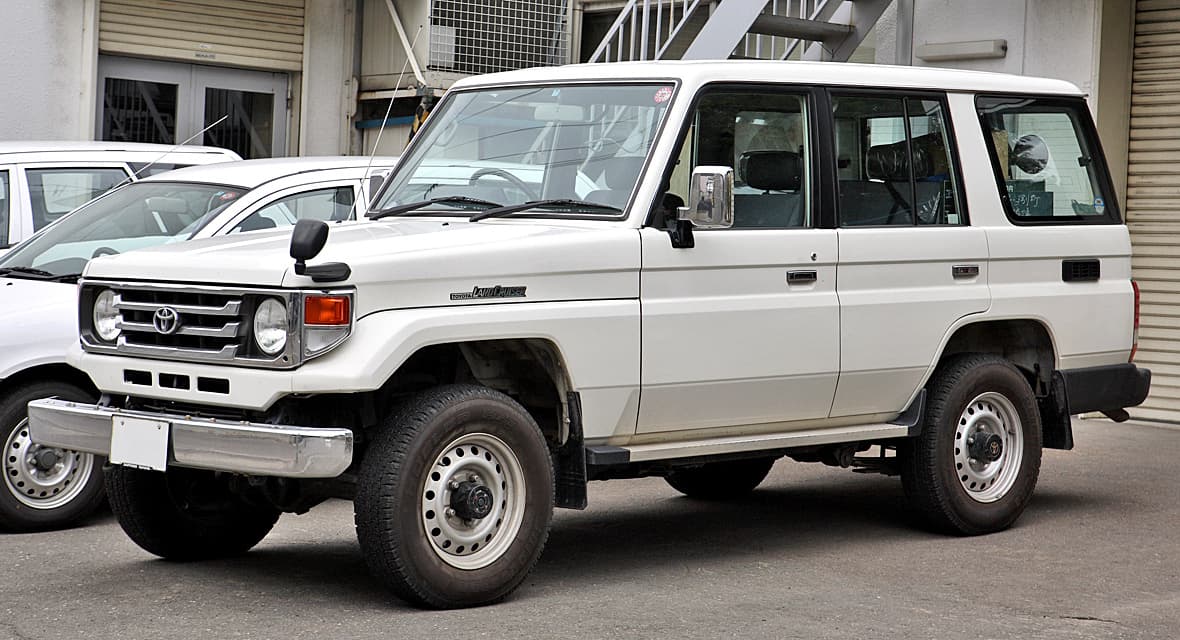 1984–1999J70J70Engine not documented for this generationEngine not documentedSee faults & what to checkPhoto: Tennen-Gas via Wikimedia Commons, CC BY-SA 3.0.
Now narrow it to the engine
Start your free check on this Toyota Land Cruiser 70
Toyota Land Cruiser 70Engine not picked yet
Pick the engine above first: the Land Cruiser 70 came with 3, and without it the report has to show all of their faults. Pick the engine
Can't confirm for this car
Toyota Land Cruiser 70
Nothing has been narrowed yet, so nothing below is a claim about a particular car. Pick a year and an engine to see which faults apply.
Tell us the engine, or check the engine code on the car, before relying on this.
matched on no vehicle context
What to look out for
Serious issue
Ask for invoices showing injector replacement - on anything over 150,000 km with original injectors, budget for the job.
1VD-FTV V8 injector failure leading to melted/cracked pistons
The 4.5 V8 turbo-diesel's Denso common-rail injectors wear internally and erode at the nozzle, especially with contaminated or poor-lubricity fuel and stretched service intervals. A worn injector over-fuels one cylinder, and the classic end-game on 70 Series and 200 Series is a melted or cracked piston - turning a $4,000-8,000 injector job into a five-figure engine rebuild. Diesel specialists on both sides of the Tasman treat injectors as a service item at roughly 150,000-200,000 km. A compression test showing more than about 10% variation between cylinders is a red flag for existing piston damage.
What you would notice
Serious issue
Start the engine from cold and listen carefully to the front of the engine for the first 60 seconds.
1VD-FTV Timing Chain Elongation & Stretch
The 1VD-FTV 4.5L V8 diesel uses a multi-stage timing chain system that is highly sensitive to oil change intervals. At high mileage or with neglected oil changes, the primary and secondary timing chains elongate, causing the variable valve timing (VVT) system to lose accuracy. This produces a characteristic cold-start rattle that clears within 30-60 seconds as oil pressure builds. Left unaddressed, timing drift triggers P0016/P0017 correlation fault codes and can lead to catastrophic engine damage if a chain skips or breaks. The repair requires full front-of-engine teardown and is labour-intensive. Oil change history is the single best predictor of whether a given engine will develop this fault.
What you would notice
Serious issue
Stand back and check the truck sits level unladen - rear sag is obvious.
Rear leaf spring sag and chassis cracking at the spring hanger
Factory rear leaf springs on 76/78/79 models sag with sustained heavy loading, dropping ride height and travel, and the more serious follow-on is chassis cracking at the weld where the rear spring hanger meets the rail - a known failure on heavily loaded touring and farm utes, driven by over-GVM loading and corrugated-road pounding. Once a crack starts it spreads quickly, and a cracked or previously welded chassis is a walk-away item on a used truck unless certified engineering repair paperwork exists. Sagged springs alone are a routine, moderately priced fix.
What you would notice
Costly issue
Open the bonnet and find the black plastic airbox on the inner guard.
Airbox lid seal lets dust past the filter on the 4.5 V8 (1VD-FTV) — 'dusting'
The factory airbox on the V8 70 Series does not clamp the air filter down evenly, so fine dust slips around the edge of the filter instead of through it and goes straight into the engine. Owners and 4WD workshops call it dusting, and it is common enough that several Australian companies exist purely to sell sealed replacement airboxes for these trucks. Mild cases upset the air-flow sensor and put the vehicle into limp mode; worse cases sandblast the turbocharger; the bad outcome is dust reaching the cylinders and wearing the bores, which turns a cheap seal into an engine rebuild. It is most likely on a vehicle that has done outback, farm, beach or convoy driving where it sits in someone else's dust. The tell is dust on the clean side of the filter, which should be spotless.
What you would notice
Costly issue
Confirm the 2019 heat shield/manual-regen recall was completed (Toyota dealer can check by VIN).
DPF blocking, failed regens and grass-fire recall on DPF-equipped V8s
From mid-2016 the V8 70 Series (VDJ76/78/79) gained a DPF, and trucks doing short runs or low-load farm work suffer incomplete regenerations, blocked filters and limp mode. Toyota recalled about 22,971 June 2016 - November 2018 builds in Australia because red-hot regen exhausts could ignite dry grass packed under the vehicle - the fix added a heat shield and enabled a manual regeneration switch. The wider Toyota DPF saga (the AU class action centred on the 2.8 Hilux/Prado system) shows how expensive neglected DPFs get: a replacement filter alone runs into the thousands. Check the recall was done and the DPF regenerates properly.
What you would notice
Costly issue
Run your fingers around the windscreen surround and A-pillars feeling for bubbling under the paint.
Body and chassis rust - A-pillars, sills, door bottoms and rails on coastal/farm trucks
NZ 70 Series lead hard lives on farms and beaches, and rust is the number one value-killer: A-pillar and windscreen surround rust is a documented model weak point, along with door sills, door bottoms, under-bonnet seams and surface-to-structural rust on chassis rails. Stock trucks that carted fertiliser, lived near salt water or launched boats can rot badly while looking tidy from three metres. Windscreen-surround and pillar repairs mean glass out and panel work, so costs escalate fast, and structural chassis rust can make a WoF unobtainable.
What you would notice
See all 20 documented issues
Depends on which engine this Toyota Land Cruiser 70 has — 20
Engine, transmission & cooling
011VD-FTV V8 injector failure leading to melted/cracked pistons
Can't confirm for this car021VD-FTV Timing Chain Elongation & Stretch
Can't confirm for this car03Airbox lid seal lets dust past the filter on the 4.5 V8 (1VD-FTV) — 'dusting'
Can't confirm for this car04Diesel particulate filter blocking on September-2016-onward V8 (1VD-FTV)
Can't confirm for this car05DPF blocking, failed regens and grass-fire recall on DPF-equipped V8s
Can't confirm for this car06Manual gearbox crunching into 2nd and 3rd — worn synchros, often from wrong GL-5 gear oil
Can't confirm for this car071VD-FTV Variable Geometry Turbo Actuator Failure
Can't confirm for this car08V8 clutch shudder and premature clutch wear; short 5th gear on pre-2017 trucks
Can't confirm for this car091HZ Timing Chain Tensioner Wear at High Mileage
Can't confirm for this car
OccasionalEngine $1,200–$3,200 to fix
Can't confirm for this car
The 1HZ 4.2L inline-six naturally aspirated diesel (and its turbo variant the 1HD-T) uses a single row timing chain with a hydraulic tensioner that relies on oil pressure and a spring-loaded mechanism to maintain chain tension. At high mileage, typically above 250,000 km with neglected or extended oil change intervals, the tensioner's hydraulic element loses its ability to maintain adequate pressure, and the chain can develop slack. This produces a cold-start rattle very similar in character to the 1VD-FTV chain noise: a metallic clattering from the front of the engine that fades once oil pressure is established. Unlike the 1VD-FTV, the 1HZ repair is somewhat simpler due to the single overhead cam in-line layout, but the front cover still needs removal. The fault is well-documented in the 80 Series platform where the same engine family was used.
 Example of the part — not this vehicle
The front of a twin-cam engine with the timing cover off — chain, sprockets and guides.
Symptoms to notice
What to check
Ask the seller
101VD-FTV EGR Cooler Bypass Pipe Cracking & Coolant Loss
Can't confirm for this carElectrical
011HZ glow plug system faults - relays, timer and plugs causing poor cold starts
Can't confirm for this car
CommonElectrical $300–$900 to fix
Can't confirm for this car
The 4.2 1HZ is famously understressed and routinely exceeds 500,000 km, but its glow system is its cold-morning weak spot: the pre-heat timer and the two glow relays (one runs afterglow while the engine warms) fail with age, and individual plugs burn out. The classic pattern is a truck that starts fine in summer but cranks long, blows white smoke and misfires for the first seconds on frosty mornings. Persistent hard cold-starting also masks or accelerates low compression, so it should be diagnosed rather than lived with. Parts are cheap and the job is simple for any diesel shop.
Symptoms to notice
What to check
Ask the seller
Body, brakes, suspension & interior
01Chassis rail cracking at the rear leaf-spring hanger welds on hard-worked vehicles
Can't confirm for this car02Rear leaf spring sag and chassis cracking at the spring hanger
Can't confirm for this car03Windscreen-surround and A-pillar rust on coastal, beach and gravel-road vehicles
Can't confirm for this car0479 Dual Cab Rear Chassis Rust at Spring Hangers
Can't confirm for this car05Body and chassis rust - A-pillars, sills, door bottoms and rails on coastal/farm trucks
Can't confirm for this car06Leaf Spring Auxiliary Shackle Pin Corrosion & Binding
Can't confirm for this car07Flat pinch-weld door seals let dust and wind noise into the cabin
Can't confirm for this car
Very commonInterior $150–$700 to fix
Can't confirm for this car
The 70 Series has used the same flat strip door seal pushed onto the door pinch weld since the mid-1980s, and it was marginal when new. Once the rubber has gone hard from sun and age it stops sealing, so the cabin fills with fine dust on gravel and roars at open-road speed. On a New Zealand vehicle that lives on metal roads or farm tracks this shows up as an even film of dust on the dash, the door tops and inside the glovebox no matter how often it is cleaned, and it gets into the ventilation and the electrics as well. It is not expensive to fix — an aftermarket bulb-type seal kit and an afternoon — but heavy dust inside also tells you where the vehicle has spent its life, which matters for everything else you are checking. Treat water in the cabin as a different and more serious problem than dust.
Symptoms to notice
What to check
Ask the seller
Fluid leaks
011VD-FTV Injector Return Line O-ring Failure
Can't confirm for this car02Front swivel hub leaks - grease/oil onto wheels and diff oil contamination
Can't confirm for this car
Very commonFluid Leaks $700–$1,600 to fix
Can't confirm for this car
The solid front axle's swivel housings seal with a felt/rubber/steel wiper arrangement that wears with age, dirt and water crossings. Leaking swivels sling grease or oily sludge onto the inside of the front wheels and tyres (a WoF fail if it reaches braking surfaces), and a failed inner axle seal lets diff oil migrate into the swivel or grease into the diff, thinning both. The full fix is a both-sides strip-down with new bearings and seal kits - routine for any 4WD workshop but several hours per side. It is the single most common leak on any working 70 Series.
Symptoms to notice
What to check
Ask the seller
Toyota Land Cruiser 70 faults in detail
1VD-FTV EGR Cooler Bypass Pipe Cracking & Coolant Loss1VD-FTV Injector Return Line O-ring Failure1VD-FTV Timing Chain Elongation & Stretch1VD-FTV V8 injector failure leading to melted/cracked pistons1VD-FTV Variable Geometry Turbo Actuator Failure79 Dual Cab Rear Chassis Rust at Spring HangersAirbox lid seal lets dust past the filter on the 4.5 V8 (1VD-FTV) — 'dusting'Body and chassis rust - A-pillars, sills, door bottoms and rails on coastal/farm trucksChassis rail cracking at the rear leaf-spring hanger welds on hard-worked vehiclesDiesel particulate filter blocking on September-2016-onward V8 (1VD-FTV)DPF blocking, failed regens and grass-fire recall on DPF-equipped V8sLeaf Spring Auxiliary Shackle Pin Corrosion & BindingManual gearbox crunching into 2nd and 3rd — worn synchros, often from wrong GL-5 gear oilRear leaf spring sag and chassis cracking at the spring hangerV8 clutch shudder and premature clutch wear; short 5th gear on pre-2017 trucksWindscreen-surround and A-pillar rust on coastal, beach and gravel-road vehicles
What these repairs cost on other cars
Some of the Toyota Land Cruiser 70’s documented faults are repairs other models share. Each page lists the documented NZ cost for every model it affects.
Other Toyota models
Toyota Land Cruiser 70 buyer questions
Is the Toyota Land Cruiser 70 reliable?
Like any used car, it depends on the specific example and its service history. Across the 20 documented faults for the Toyota Land Cruiser 70, the recurring problem areas are engine, body & rust, and suspension. A Toyota Land Cruiser 70 with a full service history and no signs of the issues listed on this page can be a sound buy but each one needs to be checked individually before you commit.
What are the most common problems with a used Toyota Land Cruiser 70?
We've catalogued 20 known faults for the Toyota Land Cruiser 70, covering engine, body & rust, and suspension. All 20 are written out in full on this page, with the symptoms to notice, what to inspect, and typical repair costs for each. Free to read, no account needed.
How much do repairs cost on a Toyota Land Cruiser 70?
Most single repairs on the Toyota Land Cruiser 70 fall between $700–$4,500 at NZ independent-workshop rates. Some of the 20 documented faults cost less and a few cost considerably more, and no one car needs them all. Knowing which ones to look for before you view is what lets you negotiate the price down or walk away.
Should I get a pre-purchase inspection on a Toyota Land Cruiser 70?
Yes. A Toyota Land Cruiser 70 inspection focused on its known weak points is the single best way to avoid an expensive mistake. KickTyres gives you a guided, model-specific inspection plus a market valuation and negotiation figure for $24.90 far less than the cost of missing one of the faults on this page.