 2012–2017GPGP2.0 boxer petrolPetrolSee faults & what to checkKickTyres illustration, not a photograph.
Subaru2011–2023 Critical issues documented
Subaru XV: common faults & what to check
Thinking about buying a used Subaru XV (2011–2023) in New Zealand? We've documented 19 known faults for this model spanning suspension, transmission, engine, and fluid leaks. Each researched and verified before it's published. The most serious issues here are rated critical. Every one is listed below with its symptoms and repair cost, and each has its own page with where to look and what to ask the seller. Free, no account needed.
Check this exact Subaru XV
- Odometer history
- Money owing
- Reported stolen
- Ownership history
19
Critical
$450–$1,600
12
Which Subaru XV are you looking at?
Petrol
2012–2017GPGP2.0 boxer petrolPetrolSee faults & what to checkKickTyres illustration, not a photograph. 2017–2023Generation2.0 boxer petrolPetrolSee faults & what to checkKickTyres illustration, not a photograph.
 2023–nowGUGU2.0 boxer petrolPetrolSee faults & what to checkKickTyres illustration, not a photograph.
Hybrid
2017–2023Generation2.0 e-Boxer hybridHybridSee faults & what to checkKickTyres illustration, not a photograph.2023–nowGUGU2.0 e-Boxer hybridHybridSee faults & what to checkKickTyres illustration, not a photograph.Engine not documented
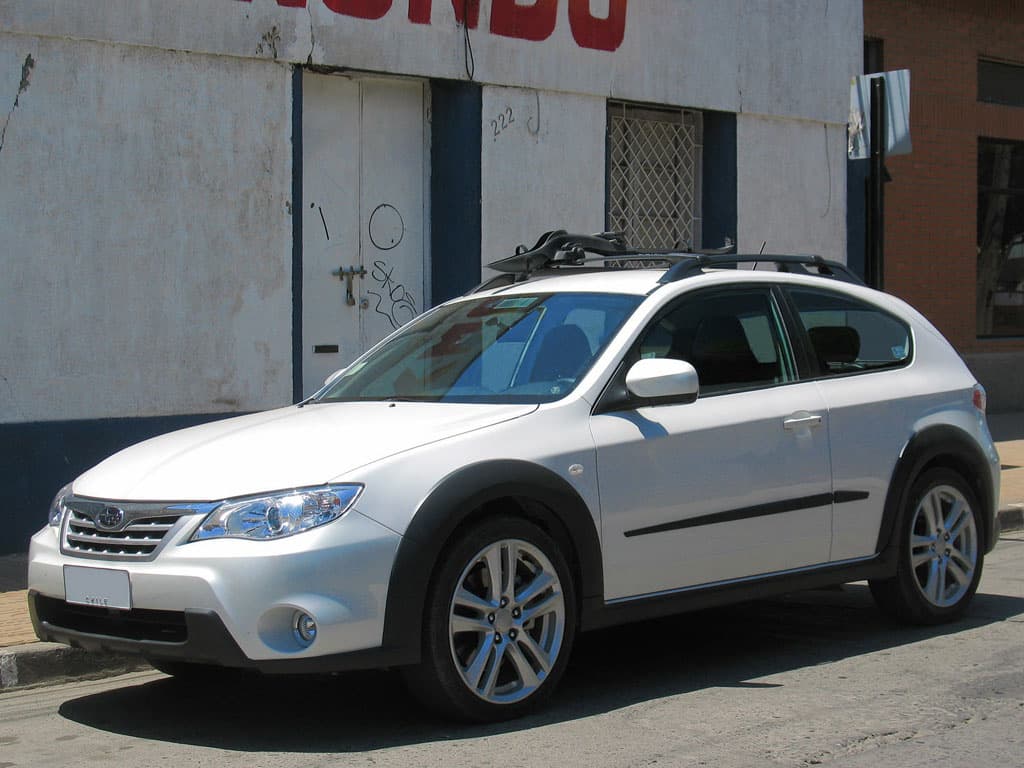 2010–2012GHGHEngine not documented for this generationEngine not documentedSee faults & what to checkPhoto: papurojugarpool via Wikimedia Commons, CC BY-SA 2.0.
Now narrow it to the engine
Start your free check on this Subaru XV
Subaru XV
Can't confirm for this car
Subaru XV
Nothing has been narrowed yet, so nothing below is a claim about a particular car. Pick a year and an engine to see which faults apply.
Tell us the engine, or check the engine code on the car, before relying on this.
matched on no vehicle context
What to look out for
Serious issue
Inspect the rubber boot on each ball joint for cracking, splitting, or grease contamination on the surrounding components.
Front Lower Control Arm Ball Joint Wear
The front suspension of the GP XV uses a MacPherson strut arrangement with a pressed-in or bolt-on ball joint at the lower control arm. These ball joints are subject to high vertical and lateral loads, particularly on the rough or unsealed roads common in New Zealand, and the grease seals can fail prematurely, allowing lubricant to escape and contamination to enter. A worn ball joint allows the front wheel to have excessive angular play relative to the arm, degrading steering precision and tyre wear, and in severe cases the joint can separate, causing sudden loss of vehicle control.
What you would notice
Costly issue
Check for a DPF warning light on the instrument cluster.
EE20 Diesel DPF Blockage from Urban Use
The EE20 2.0 SkyActiv-D diesel XV Diesel Particulate Filter blocks up on vehicles used primarily for short urban trips where exhaust temperatures never sustain the level needed for passive DPF regeneration. A blocked DPF illuminates the DPF warning and eventually causes limp mode.
What you would notice
Costly issue
Check oil level at every fuel stop and measure consumption over a known distance.
FB20 Excessive Engine Oil Consumption from Piston Ring Wear
The FB20 2.0-litre horizontally-opposed engine fitted to the GP-generation XV is known to consume engine oil at an abnormally high rate due to premature wear of the piston rings, particularly the oil control rings. The ring land geometry and oil control ring tension on early FB-series engines allowed oil to be drawn past the rings into the combustion chamber, burning it without producing obvious blue smoke until consumption became severe. Left unaddressed, this leads to low oil level damage to bearings and camshaft journals, and can cause catalytic converter contamination from unburnt oil residue.
What you would notice
Costly issue
Check the oil dipstick at the start of inspection and compare with any recent service record entry.
FB20 Excessive Oil Consumption — Piston Ring and Valve Stem Seal Wear
Subaru documented oil consumption concerns across the FB20 direct-injection engine family in a published owner notification and multiple TSBs. The FB20D in the GK/GT XV is known to consume oil at rates that Subaru internally classified as within-spec (up to approximately 1 litre per 1,200 km) but which owners consider excessive. The mechanism involves piston ring flutter at light throttle loads and valve stem seal degradation, both exacerbated by the short-stroke boxer layout and crankcase ventilation characteristics. High-mileage examples and those run on extended oil change intervals show accelerated consumption. Subaru's remediation involved updated piston rings and valve stem seals.
What you would notice
Costly issue
Start engine fully cold and immediately listen for chain rattle from the engine front.
FB20 timing chain cold-start rattle
The FB20 2.0-litre engine fitted to all XV generations (GP 2012–2017 and GT 2017–2023) shares the same documented cold-start timing chain rattle as the Impreza. Subaru issued a TSB for updated chain guides. On the XV, the issue is compounded by the higher ground clearance and the fact that many XV owners use their vehicles in conditions that cause more frequent cold-start cycles. Chain rattle on cold start that persists indicates worn guides and potential for timing deviation at high mileage.
What you would notice
Costly issue
Inspect the rear inboard bush for cracking, splitting, or offset movement of the inner sleeve.
Front lower arm rear bush failure - highway speed shimmy
The GT-generation XV front lower control arm uses a compliance bush at the rear inboard pivot that is calibrated for ride comfort but degrades relatively early, typically from 60,000-90,000 km. As the rubber matrix breaks down, lateral and longitudinal compliance increases beyond tolerance, allowing the front wheel to toe-out slightly under cornering and braking load. The primary symptom is a steering shimmy or wobble felt through the wheel at 90-120 km/h, particularly pronounced over minor road undulations. The condition worsens progressively. Because the bush is integrated into the pressed-in lower arm assembly on most variants, Subaru dealers typically replace the complete arm rather than re-bushing. Aftermarket polyurethane bush kits are available and are a cost-effective alternative when installed with correct torque.
What you would notice
Subaru XV service schedule
Third Generation (GU) - Rebranded as Crosstrek · 2023–2026 · 2.0L (FB20) - 2.0i / 2.0i-S
Due by distance
- 60,000 km
The first major service, at which inspecting the CVT fluid and looking at the spark plugs is standard practice.
- 100,000 km
A thorough check of the suspension parts and cooling system hoses, and the accessory drive belt may need replacing.
- 150,000 km
Worth getting ahead of the cooling system parts and suspension dampers here to keep that signature Subaru ride quality.
Second Generation (GT) - e-Boxer · 2019–2023 · 2.0L Hybrid (FB20 + Motor) - e-Boxer Hybrid
Due by distance
- 60,000 km
The first major service, where inspecting the CVT fluid and assessing the spark plugs are both advised.
- 100,000 km
Coolant is normally replaced here, along with a fuller check of the hybrid battery's health and the cooling system.
- 150,000 km
Review the suspension geometry and confirm the bushings are still delivering a firm ride.
Second Generation (GT) · 2017–2023 · 2.0L (FB20) - 2.0i / 2.0i-S
Due by distance
- 100,000 km
A major service normally falls here, with new spark plugs and an inspection of the CVT fluid.
- 150,000 km
Keep a close watch on the suspension components and the cooling system hoses.
- 200,000 km
A full fluid flush across the car makes sense, along with a detailed check of every ignition coil.
First Generation (GP) · 2012–2017 · 2.0L (FB20) - 2.0i / 2.0i-S
Due by distance
- 100,000 km
Inspect the spark plugs and check what condition the auxiliary drive belts are in.
- 150,000 km
Review the CVT fluid and confirm the cooling system parts are all working as they should.
- 200,000 km
Have a qualified technician look over the suspension bushings and steering rack boots for wear.
See all 19 documented issues
Depends on which engine this Subaru XV has — 19
Engine, transmission & cooling
01Lineartronic CVT Belt Judder and Shudder Under Acceleration
Can't confirm for this car02e-Boxer Integrated Motor Bearing Noise and Whine
Can't confirm for this car
OccasionalEngine $3,500–$8,000 to fix
Can't confirm for this car
The e-Boxer variant of the XV (sold in NZ/AU from 2020) integrates a 12.3 kW electric motor directly inside the Lineartronic CVT housing on the front axle. A documented failure mode identified in Japanese domestic market TSBs and confirmed in Australian owner forums involves bearing wear inside the integrated motor unit producing a distinct high-frequency whine or drone under electric-only crawl, regenerative braking, or during the transition between electric and combustion drive at low speed. The motor/generator assembly is not field-serviceable separately and typically requires CVT-motor assembly replacement.
Symptoms to notice
What to check
Ask the seller
03FB20 Excessive Engine Oil Consumption from Piston Ring Wear
Can't confirm for this car04FB20 Excessive Oil Consumption — Piston Ring and Valve Stem Seal Wear
Can't confirm for this car05EE20 Diesel DPF Blockage from Urban Use
Can't confirm for this car
Very commonEngine $500–$3,000 to fix
Can't confirm for this car
The EE20 2.0 SkyActiv-D diesel XV Diesel Particulate Filter blocks up on vehicles used primarily for short urban trips where exhaust temperatures never sustain the level needed for passive DPF regeneration. A blocked DPF illuminates the DPF warning and eventually causes limp mode.
Symptoms to notice
What to check
Ask the seller
06FB20 timing chain cold-start rattle
Can't confirm for this car07FB20D Intake Valve Carbon Buildup — Direct Injection Fouling
Can't confirm for this car
CommonEngine $650–$1,600 to fix
Can't confirm for this car
The FB20D engine uses Subaru's direct injection system (fuel sprays directly into the cylinder, bypassing the intake valves). Unlike port-injected engines where fuel flow washes the intake valves clean, direct injection means oil vapour from the PCV system coats the intake valve stems and heads with carbon deposits over time. This is a documented and inherent characteristic of all GDI engines. On the FB20D, significant buildup typically manifests between 60,000 and 120,000 km and causes rough idle, misfires, and reduced throttle response. The only effective remediation is mechanical walnut blasting or chemical cleaning of the intake ports with the inlet manifold removed.
Symptoms to notice
What to check
Ask the seller
Electrical
01e-Boxer 12V Auxiliary Battery Drain and Hybrid System Non-Start
Can't confirm for this car
OccasionalElectrical $280–$900 to fix
Can't confirm for this car
The e-Boxer hybrid system in the XV uses a conventional 12V AGM auxiliary battery to initialise the high-voltage hybrid system before the main traction battery can supply power. This 12V battery is smaller than a conventional vehicle's starter battery and is documented to drain rapidly if the vehicle sits unused for more than a few days, or if there is any parasitic draw from the hybrid control modules or infotainment system in sleep mode. A drained 12V battery prevents the hybrid system from powering up entirely, leaving the vehicle unable to start even though the high-voltage traction battery may be fully charged. Subaru issued guidance on this pattern and the 12V battery is considered a higher-wear component on the e-Boxer.
Symptoms to notice
What to check
Ask the seller
02EyeSight Stereo Camera Recalibration Required After Windscreen Replacement
Can't confirm for this carBody, brakes, suspension & interior
01Front Lower Control Arm Ball Joint Wear
Can't confirm for this car
CommonSuspension $350–$900 to fix
Can't confirm for this car
The front suspension of the GP XV uses a MacPherson strut arrangement with a pressed-in or bolt-on ball joint at the lower control arm. These ball joints are subject to high vertical and lateral loads, particularly on the rough or unsealed roads common in New Zealand, and the grease seals can fail prematurely, allowing lubricant to escape and contamination to enter. A worn ball joint allows the front wheel to have excessive angular play relative to the arm, degrading steering precision and tyre wear, and in severe cases the joint can separate, causing sudden loss of vehicle control.
 Example of the part — not this vehicle
A separated lower ball joint: the control arm has dropped and the wheel has splayed out under the guard.
Symptoms to notice
What to check
Ask the seller
02Electric power steering rack rattle on cold start
Can't confirm for this car
OccasionalSuspension $900–$3,200 to fix
Can't confirm for this car
The GT-generation XV (2017–2023) uses an electric power steering rack that has a documented rattle or knock noise on cold start and when driving over sharp bumps at low temperatures. The rack mounting bushes and internal steering rack components produce noise before the EPS system reaches operating temperature. In some cases the noise is structural — the steering column universal joint develops play. This is distinct from NVH and represents a documented mechanical fault with the EPS rack assembly and associated mountings.
Symptoms to notice
What to check
Ask the seller
03Front lower arm rear bush failure - highway speed shimmy
Can't confirm for this car04CV Joint Boot Cracking and Grease Loss
Can't confirm for this car05Rear Brake Caliper Guide Pin Seizure
Can't confirm for this car
CommonBrakes $180–$650 to fix
Can't confirm for this car
The rear brake calipers on the GP XV use a sliding caliper design where the caliper body floats on two steel guide pins coated with a lubricating grease, allowing the caliper to centre itself over the brake rotor as the pads wear. The guide pins are enclosed in rubber boots that deteriorate with age and road exposure, allowing moisture and road salt to displace the grease and initiate corrosion on the pin surface. A seized guide pin prevents the caliper from retracting fully after brake application, causing the inboard or outboard pad to remain in constant contact with the rotor. This results in accelerated and uneven pad wear, excessive rotor heat and warping, and reduced fuel economy from the parasitic drag.
Symptoms to notice
What to check
Ask the seller
06Brake Caliper Guide Pin Seizure
Can't confirm for this car
CommonBrakes $150–$500 to fix
Can't confirm for this car
Front brake caliper guide pins seize from corrosion causing uneven pad wear.
Symptoms to notice
What to check
Ask the seller
07Electric Power Steering Rack Internal Rattle
Can't confirm for this car
OccasionalSuspension $150–$2,200 to fix
Can't confirm for this car
The GP XV is equipped with a column-assist electric power steering (EPS) system that drives a conventional rack-and-pinion gear through an electric motor and torque sensor. The rack-and-pinion gear itself uses a spring-loaded yoke to maintain contact between the pinion gear and the rack, and the yoke preload can diminish with wear, allowing the rack to develop a small amount of lateral free-play. This manifests as a rattle or knock transmitted directly through the steering column and wheel, typically over small bumps and road texture, as the rack moves slightly against the yoke. In addition, the inner tie rod ball joints at each end of the rack can develop play, producing a similar symptom.
Symptoms to notice
What to check
Ask the seller
08Rear Suspension Multi-Link Bush Collapse
Can't confirm for this car
CommonSuspension $400–$1,200 to fix
Can't confirm for this car
Rear multi-link suspension arm bushes harden and collapse causing rear knocking and handling imprecision.
Symptoms to notice
What to check
Ask the seller
Fluid leaks
01FB20 head gasket external oil seep at cylinder deck
Can't confirm for this car
OccasionalFluid Leaks $1,300–$2,600 to fix
Can't confirm for this car
The first-generation GP-series XV with the FB20 engine exhibits an external oil seep originating at the head gasket-to-block interface on the exhaust side of the cylinder head, typically between cylinders 2 and 3. Unlike the catastrophic internal coolant-combustion breach seen on the older EJ-series engines, the FB20 failure is predominantly an external oil weep that tracks down the side of the block and accumulates on the exhaust manifold heat shield and underbody. It does not usually cause coolant loss or overheating unless left untreated for an extended period. The seep is accelerated by cooling system pressure cycling and is more prevalent on higher-mileage examples that have not had the cooling system flushed at recommended intervals. Repair requires cylinder head removal, resurfacing, and new multi-layer steel head gasket installation.
 Example of the part — not this vehicle
A used multi-layer head gasket. Discolouration between a cylinder and a water gallery is the tell.
Symptoms to notice
What to check
Ask the seller
02Rear Differential Rear Output Shaft Seal Oil Leak
Can't confirm for this car
OccasionalFluid Leaks $250–$800 to fix
Can't confirm for this car
The GP XV uses Subaru's symmetrical all-wheel-drive system with a rear differential integrated into the rear final drive unit. The output shaft seals on each side of the rear differential are subject to heat cycling, contamination, and age-related hardening that causes them to lose their sealing ability, allowing gear oil to weep past the lip seal and onto the brake components or driveshaft. Contaminated rear brake pads and discs are a direct safety consequence, as differential oil on friction material severely reduces braking effectiveness. Early detection allows relatively inexpensive seal replacement, but delayed repair leads to gear oil starvation in the differential and subsequent bearing or gear damage.
Symptoms to notice
What to check
Ask the seller
Subaru XV faults in detail
CV Joint Boot Cracking and Grease LossEyeSight Stereo Camera Recalibration Required After Windscreen ReplacementFB20 Excessive Engine Oil Consumption from Piston Ring WearFB20 Excessive Oil Consumption — Piston Ring and Valve Stem Seal WearFB20 timing chain cold-start rattleFront lower arm rear bush failure - highway speed shimmyLineartronic CVT Belt Judder and Shudder Under Acceleration
What these repairs cost on other cars
Some of the Subaru XV’s documented faults are repairs other models share. Each page lists the documented NZ cost for every model it affects.
Other Subaru models
Subaru XV buyer questions
Is the Subaru XV reliable?
Like any used car, it depends on the specific example and its service history. Across the 19 documented faults for the Subaru XV, the recurring problem areas are suspension, transmission, and engine. A Subaru XV with a full service history and no signs of the issues listed on this page can be a sound buy but each one needs to be checked individually before you commit.
What are the most common problems with a used Subaru XV?
We've catalogued 19 known faults for the Subaru XV, covering suspension, transmission, and engine. All 19 are written out in full on this page, with the symptoms to notice, what to inspect, and typical repair costs for each. Free to read, no account needed.
How much do repairs cost on a Subaru XV?
Most single repairs on the Subaru XV fall between $450–$1,600 at NZ independent-workshop rates. Some of the 19 documented faults cost less and a few cost considerably more, and no one car needs them all. Knowing which ones to look for before you view is what lets you negotiate the price down or walk away.
Should I get a pre-purchase inspection on a Subaru XV?
Yes. A Subaru XV inspection focused on its known weak points is the single best way to avoid an expensive mistake. KickTyres gives you a guided, model-specific inspection plus a market valuation and negotiation figure for $24.90 far less than the cost of missing one of the faults on this page.