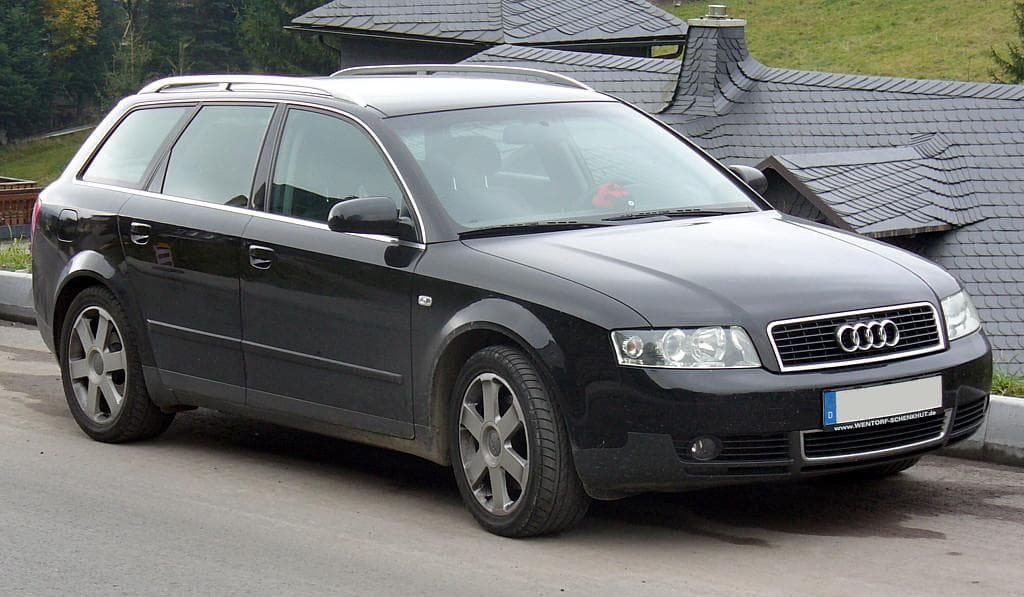
 2001–2008B6B61.8 turbo petrolPetrolSee faults & what to checkPhoto: Thomas doerfer via Wikimedia Commons, CC BY-SA 3.0.
Audi1995–2024 Critical issues documented
Audi A4: common faults & what to check
Thinking about buying a used Audi A4 (1995–2024) in New Zealand? We've documented 46 known faults for this model spanning transmission, engine, electrical, and cooling. Each researched and verified before it's published. The most serious issues here are rated critical. Every one is listed below with its symptoms and repair cost, and each has its own page with where to look and what to ask the seller. Free, no account needed.
Check this exact Audi A4
- Odometer history
- Money owing
- Reported stolen
- Ownership history
46
Critical
$600–$3,000
31
Which Audi A4 are you looking at?
Petrol
2001–2008B6B61.8 turbo petrolPetrolSee faults & what to checkPhoto: Thomas doerfer via Wikimedia Commons, CC BY-SA 3.0.2001–2008B6B63.0 V6 petrolPetrolSee faults & what to checkPhoto: Thomas doerfer via Wikimedia Commons, CC BY-SA 3.0.Fuel not stated
2001–2008B6B62.0 TFSIFuel not statedSee faults & what to checkPhoto: Thomas doerfer via Wikimedia Commons, CC BY-SA 3.0. 2008–2016B8B81.8 TFSIFuel not statedSee faults & what to checkPhoto: IFCAR via Wikimedia Commons, Public domain.2008–2016B8B82.0 TFSIFuel not statedSee faults & what to checkPhoto: IFCAR via Wikimedia Commons, Public domain.2008–2016B8B82.0 TDIFuel not statedSee faults & what to checkPhoto: IFCAR via Wikimedia Commons, Public domain.2008–2016B8B83.0 V6 TFSI (S4)Fuel not statedSee faults & what to checkPhoto: IFCAR via Wikimedia Commons, Public domain.
 2016–nowB9B92.0 TFSIFuel not statedSee faults & what to checkKickTyres illustration, not a photograph.2016–nowB9B92.0 TDIFuel not statedSee faults & what to checkKickTyres illustration, not a photograph.2016–nowB9B92.9 twin-turbo (RS4)Fuel not statedSee faults & what to checkKickTyres illustration, not a photograph.
Now narrow it to the engine
No engine code is recorded for this option, so faults are matched on capacity and fuel alone. Two engines of the same size cannot be told apart that way, so this list may be wider than your car.
Start your free check on this Audi A4
Audi A4 3.0 V6 petrol
Likely — same engine family
Audi A4 · 3.0 V6 petrol
Narrowed by capacity and fuel. No engine code is recorded for this option, so a fault specific to one engine of that size cannot be confirmed from it.
Matched on capacity and fuel, not on an engine code.
- 7 documented faults name an engine this selection cannot confirm. They are listed separately below.
matched on 3.0L engine
What to look out for
Serious issue
Test drive in slow stop-start traffic and note any shuddering when pulling away from rest.
S tronic DL501 7-speed mechatronic and clutch faults (B8 A4 quattro)
The 7-speed S-tronic dual-clutch transmission (DL501 / 0B5 code) used longitudinally in the A4 pairs a wet multi-plate clutch pack with an electro-hydraulic mechatronic control unit. The mechatronic valve body develops internal hydraulic leaks and solenoid faults causing shuddering at low speed, harsh or refused gear engagement, and in severe cases complete loss of drive. Clutch pack wear also produces juddering when pulling away from rest. Audi extended the warranty in some markets but units outside warranty require full replacement. B9 variants retained DL501 and share the same failure mode.
What you would notice
Serious issue
Cold start and immediately drive: shudder or delayed engagement when cold is the classic early sign.
Multitronic CVT failure (front-wheel-drive B6/B7/B8)
Front-wheel-drive A4s across three generations used the multitronic chain-driven CVT, which suffers chain/variator wear, clutch pack shudder and control unit failure. Symptoms escalate from flashing PRND display and juddering to complete loss of drive; rebuilds are expensive and many NZ workshops refuse them, quoting used gearboxes instead. It is the single biggest reason to walk away from a FWD auto A4 of this era with no gearbox history.
What you would notice
Serious issue
Ask for Audi paperwork showing campaigns 42L1 and 42L5 were done, or have an Audi dealer check the VIN for open recalls.
Rear axle nuts may break, recall REC-001665 and follow-up REC-005076 (B9 A4, 2019-2021, check VIN)
On 2019 to 2021 B9 A4 models (all engines) the nuts that clamp the rear axle assembly may not meet specification and can break, which can let the rear axle move suddenly (Australian recall REC-001665, Audi campaign 42L1). A follow-up recall (REC-005076, campaign 42L5) checks rear axle alignment on cars whose nuts were replaced, because misalignment can cause fast tyre wear and sudden flat tyres. Both are free at an Audi dealer.
What you would notice
Serious issue
Check transmission fluid change history — fluid must be replaced every 40,000-60,000 km maximum; many are never changed.
Multitronic 0AW CVT Chain Slip and Hydraulic Pump Wear
The Multitronic 0AW CVT uses a steel push-belt chain running between two variable-diameter conical pulley pairs whose clamping force is controlled by a hydraulic pump. The system is acutely sensitive to transmission fluid condition because degraded fluid reduces the coefficient of friction between the chain and pulley faces, allowing micro-slip events. Each slip event generates heat, further degrading fluid and accelerating pulley surface scoring. The internal hydraulic pump also wears over high mileage, reducing maximum clamping pressure and compounding the slip problem. Progressive chain wear causes the characteristic shudder and rev-hang on acceleration. Complete chain or pulley destruction requires full transmission replacement. Many owners and independent workshops treated this as a sealed lifetime unit, accelerating fluid degradation failures.
What you would notice
Costly issue
On the test drive, go slowly over speed bumps and into a driveway with the window down and listen for clunks or knocks from the front.
B5 front multi-link upper control arm ball joint and bush wear
The B5 A4 uses a four link front suspension with two upper control arms on each side, and their integral ball joints and rubber bushes wear out quickly, often every 80,000 to 120,000 km. Worn B5 front multi-link upper control arms cause clunks over bumps, vague steering, wandering on the motorway and uneven inner tyre wear. The upper arms are normally replaced in pairs on both sides, and many owners do the full kit including the lower arms and tie rod ends.
What you would notice
Costly issue
Inspect the front control arm bushes visually for splitting, tearing, or separation of the rubber from the steel insert.
Front Lower Control Arm Ball Joint and Bush Wear
The front suspension on B6, B7, and B8 A4 models uses aluminium lower control arms (wishbones) with pressed-in rubber-bonded bushes and an integral ball joint at the outboard end. Both the front bush and the ball joint wear faster than expected on these arms, particularly on vehicles used in urban driving with frequent low-speed cornering and kerbing. On OEM control arms, the ball joint cannot be replaced separately — once the ball joint wears beyond limits, the entire control arm must be replaced. The front bush deteriorates under load cycling and can allow the arm to move fore-aft, degrading steering response and causing tyre wear. Worn ball joints, if left uncorrected, eventually develop enough play to separate under load, causing sudden loss of front-wheel steering geometry control.
What you would notice
All 17 issues for this one
5 rated criticalElectrical1 critical
01Front airbag control unit software recall, airbags may not inflate correctly (B8 A4, 2012-2014)
OccasionalElectrical $0–$300 to fix
B8 A4 sedans and Avants built from November 2011 to October 2014 (all engines) were recalled in Australia because the front airbags may not inflate correctly in a crash (PRA 2014/14402). The fix is a free software update to the airbag control unit at an Audi dealer. A car that missed the recall gives no warning sign, so the only check is the VIN.
Symptoms to notice
What to check
Ask the seller
02Air conditioning auxiliary heater element overheating recall 80C5 (B8 A4, built April 2011 to May 2015)
RareElectrical $0–$800 to fix
The B8 A4 sedan and Avant built from April 2011 to May 2015 (all engines) was recalled in Australia because the electric auxiliary heater element in the heating and air conditioning unit can overheat where it connects, with a risk of smouldering or fire (PRA 2018/16956, Audi campaign 80C5). The repair is free at an Audi dealer. Whether a particular car is affected is decided by its VIN.
Symptoms to notice
What to check
Ask the seller
03MMI 2G/3G Display and Control Unit Failure
CommonElectrical $400–$2,800 to fix
The B8 A4 introduced Audi's MMI (Multi Media Interface) infotainment system in both 2G and 3G hardware generations. The display module uses a TFT screen with ribbon cable connections that are prone to fatigue cracking from repeated thermal cycling and vibration. Failure typically presents as vertical pixel lines, partial blackouts, or a completely black screen while the audio and navigation systems continue to function (confirming the processor is running but the display has failed). In other cases the control unit itself fails — the MMI becomes unresponsive to inputs, reboots continuously, or loses stored settings after ignition cycles. The 3G MMI navigation hard drive can also fail, causing the satellite navigation to become unavailable while the rest of the unit continues to operate.
Symptoms to notice
What to check
Ask the seller
0412V AGM Battery Premature Failure and BMS Coding Fault
CommonElectrical $380–$750 to fix
The B9 A4 carries a large number of always-on control modules that impose a significant parasitic drain, causing the OEM AGM start-stop battery (located in the boot) to fail within 3–4 years in typical ownership. The Battery Management System (BMS) controller must be coded to the exact replacement battery specification via VCDS or dealer tooling — fitting a replacement without coding leaves the BMS charging on an incorrect profile, shortening the new battery's life significantly and preventing the start-stop system from re-enabling.
Symptoms to notice
What to check
Ask the seller
05Instrument cluster display missing pixels (B5 centre LCD)
Very commonElectrical $250–$700 to fix
The LCD display in the middle of the B5 instrument cluster, which shows the odometer, trip computer and warning information, commonly loses pixels or whole rows because the bonded ribbon connection to the circuit board fails. It starts with a few blank segments and gets worse until the display is unreadable, which can hide the odometer reading and warning messages. It is fixed by fitting a new LCD and ribbon at a cluster repair specialist.
Symptoms to notice
What to check
Ask the seller
06Seat belt warning may not sound continuously, software recall REC-001650 (B9 A4, 2018-2021)
CommonElectrical $0–$200 to fix
2018 to 2021 B9 A4 models (all engines) were recalled in Australia because the unbuckled seat belt warning may only sound now and then instead of continuously, so an unbelted occupant can go unnoticed (REC-001650, Audi campaign 90P5). The fix is a free software update at an Audi dealer.
Symptoms to notice
What to check
Ask the seller
Body, brakes, suspension & interior1 critical
07Rear axle nuts may break, recall REC-001665 and follow-up REC-005076 (B9 A4, 2019-2021, check VIN)
OccasionalSuspension $0–$600 to fix
On 2019 to 2021 B9 A4 models (all engines) the nuts that clamp the rear axle assembly may not meet specification and can break, which can let the rear axle move suddenly (Australian recall REC-001665, Audi campaign 42L1). A follow-up recall (REC-005076, campaign 42L5) checks rear axle alignment on cars whose nuts were replaced, because misalignment can cause fast tyre wear and sudden flat tyres. Both are free at an Audi dealer.
Symptoms to notice
What to check
Ask the seller
08B5 front multi-link upper control arm ball joint and bush wear
09Rear Subframe Bush Deterioration
10Front Lower Control Arm Ball Joint and Bush Wear
Very commonSuspension $550–$1,900 to fix
The front suspension on B6, B7, and B8 A4 models uses aluminium lower control arms (wishbones) with pressed-in rubber-bonded bushes and an integral ball joint at the outboard end. Both the front bush and the ball joint wear faster than expected on these arms, particularly on vehicles used in urban driving with frequent low-speed cornering and kerbing. On OEM control arms, the ball joint cannot be replaced separately — once the ball joint wears beyond limits, the entire control arm must be replaced. The front bush deteriorates under load cycling and can allow the arm to move fore-aft, degrading steering response and causing tyre wear. Worn ball joints, if left uncorrected, eventually develop enough play to separate under load, causing sudden loss of front-wheel steering geometry control.
 Example of the part — not this vehicle
A separated lower ball joint: the control arm has dropped and the wheel has splayed out under the guard.
Symptoms to notice
What to check
Ask the seller
Only if it's 4WD or AWD: 2 issues
01S tronic DL501 7-speed mechatronic and clutch faults (B8 A4 quattro)
Can't confirm for this car02DL501 (0B5) 7-speed S tronic mechatronic failure (quattro B8)
Can't confirm for this car
CommonTransmission $3,000–$7,000 to fix
Can't confirm for this car
Quattro B8 A4s use the DL501 wet-clutch 7-speed S tronic whose mechatronic unit suffers circuit board and pressure sensor failures — symptoms range from harsh shifts and no reverse to sudden limp mode. Specialist mechatronic repair is possible but the unit is inside the gearbox, so labour is significant. Regular 60,000 km fluid services help but do not prevent the electronic failures.
Symptoms to notice
What to check
Ask the seller
Only with a certain gearbox: 4 issues
01Multitronic 0AW CVT Chain Slip and Hydraulic Pump Wear
Can't confirm for this car
OccasionalTransmission $4,500–$12,000 to fix
Can't confirm for this car
The Multitronic 0AW CVT uses a steel push-belt chain running between two variable-diameter conical pulley pairs whose clamping force is controlled by a hydraulic pump. The system is acutely sensitive to transmission fluid condition because degraded fluid reduces the coefficient of friction between the chain and pulley faces, allowing micro-slip events. Each slip event generates heat, further degrading fluid and accelerating pulley surface scoring. The internal hydraulic pump also wears over high mileage, reducing maximum clamping pressure and compounding the slip problem. Progressive chain wear causes the characteristic shudder and rev-hang on acceleration. Complete chain or pulley destruction requires full transmission replacement. Many owners and independent workshops treated this as a sealed lifetime unit, accelerating fluid degradation failures.
Symptoms to notice
What to check
Ask the seller
02Multitronic CVT failure (front-wheel-drive B6/B7/B8)
Can't confirm for this car03S-tronic DL382 7-Speed Selector Fork and Clutch Pack Wear
Can't confirm for this car04DL382 7-speed S tronic low-speed shunt and clutch shudder (B9)
Can't confirm for this car
OccasionalTransmission $400–$4,000 to fix
Can't confirm for this car
The B9's DL382 wet-clutch S tronic is more reliable than the old DL501 but is widely reported to shunt and hesitate in stop-start traffic, with some cars developing clutch shudder and a few needing mechatronic work. Software updates improved calibration. Mostly a refinement complaint, but genuine shudder on take-off means clutch work.
Symptoms to notice
What to check
Ask the seller
Only on the turbo version: 1 issue
Other Audi A4 engines and years
Engine, transmission & cooling
01EA113 2.0 TFSI Cam Follower Disintegration and HPFP Failure
Does not apply02EA888 Gen1/2 1.8/2.0 TFSI excessive oil consumption (piston rings)
Does not apply03CAGA/CJCA 2.0 TDI Cam Follower and HPFP Lobe Wear
Does not apply04EA113 2.0 TFSI Hydraulic Timing Chain Tensioner Failure
Does not apply05Oil sludge, blocked oil pickup screen and coked turbo oil feed line (1.8T 20v AEB/APU/ANB)
Does not apply061.8T oil sludge and turbo oil starvation (B6)
Does not apply
OccasionalEngine $2,000–$7,000 to fix
Does not apply
The B6 1.8 turbo has a small 3.7-litre sump and tight oil galleries; extended oil intervals cause sludge that blocks the pickup and starves the turbo and cam journals. VW/Audi faced class actions over it in the US and extended warranties (long expired). Twenty years on, survivors are either well-serviced or already rebuilt — a sludged engine needs a turbo, pickup clean-out and sometimes a full rebuild.
Symptoms to notice
What to check
Ask the seller
07EA888 timing chain tensioner failure (B8)
Does not apply
CommonEngine $1,200–$7,000 to fix
Does not apply
Early EA888 engines in the B8 use a ratchet-style timing chain tensioner that can let the chain skip on start-up, bending valves and wrecking the top end. Audi revised the tensioner (updated part from ~2012); un-updated engines are a known gamble. Preventive tensioner replacement is far cheaper than the cylinder head rebuild that follows failure.
 Example of the part — not this vehicle
The front of a twin-cam engine with the timing cover off — chain, sprockets and guides.
Symptoms to notice
What to check
Ask the seller
08CAEB/CDNB 2.0 TFSI Timing Chain Tensioner Failure
Does not apply09Timing belt, tensioner and water pump failure on interference engines (1.8T 20v and 2.4/2.8 V6 30v)
Does not apply10Water pump failure and coolant leak (2.0 TFSI EA888 Gen2, B8 A4)
Does not apply11Oil consumption from piston rings (2.0 TFSI EA888 Gen3 petrol, B9 A4 2016 on)
Does not apply12EA888 Gen4 (CVNA) Excessive Oil Consumption
Does not apply
CommonEngine $2,800–$9,000 to fix
Does not apply
The CVNA EA888 Gen4 2.0 TFSI piston rings and valve stem seals allow oil to pass into the combustion chamber at an accelerated rate. Owners consistently report consumption of 0.5–1.5 litres per 1,000 km, often exceeding Audi's own published tolerance of 0.5 L/1,000 km. Residual carbon from burned oil fouls spark plugs and catalytic converters, adding further repair costs.
Symptoms to notice
What to check
Ask the seller
13DETA 2.0 TDI EGR Cooler Failure and Coolant Loss
Does not apply14Excessive oil consumption from piston rings (1.8 and 2.0 TFSI EA888 Gen2, built to November 2011)
Does not apply152.0 TDI (EA288) EGR and DPF blockage on short-run cars (B9)
Does not apply
OccasionalEngine $800–$4,500 to fix
Does not apply
B9 diesels driven mainly around town clog the EGR valve/cooler and diesel particulate filter, causing limp mode and failed regenerations. The EA288 is otherwise durable, but an EGR cooler and DPF clean or replacement together can exceed $4,000 at Euro parts prices. City-driven ex-lease cars are the risk profile.
Symptoms to notice
What to check
Ask the seller
16EA888 TFSI High-Pressure Fuel Pump Cam Follower Wear
Does not apply
OccasionalEngine $320–$4,200 to fix
Does not apply
The mechanical high-pressure fuel pump on the EA888 TFSI is driven by a dedicated eccentric lobe on the intake camshaft through a steel roller cam follower. The follower wears prematurely, generating metal debris that circulates through the engine oil and fuel system. As the follower cup wears flat, the pump stroke shortens, rail pressure drops, and the engine exhibits hard starting, stalling, and injector damage from contaminated fuel.
Symptoms to notice
What to check
Ask the seller
172.0 TDI DPF Blockage and Failure
Does not apply
CommonEngine $800–$3,500 to fix
Does not apply
The diesel particulate filter on CAHA, CGKA, and DCYA 2.0 TDI engines requires periodic active regeneration at exhaust temperatures above 550°C, achievable only during sustained highway driving. Short-trip urban use in NZ and Australian cities prevents regeneration, leading to progressive soot loading. A fully blocked DPF triggers reduced-power limp mode. Repeated forced regenerations or removal attempts damage the filter substrate. Replacement DPF units are expensive, and downstream oxygen sensor and EGR system damage often accompanies a failed filter.
Symptoms to notice
What to check
Ask the seller
18High-pressure fuel pump cam follower wear (2.0 TFSI)
Does not apply192.0 TFSI (B7, EA113) cam follower wear and oil consumption
Does not apply
CommonEngine $300–$3,000 to fix
Does not apply
The B7 2.0 TFSI shares the EA113 high-pressure fuel pump cam follower wear problem: the follower wears through and damages the camshaft and pump. B7s also commonly develop PCV valve failure and moderate oil consumption. The follower is a cheap periodic replacement, but neglected examples get expensive fast.
Symptoms to notice
What to check
Ask the seller
202.0 TDI EGR System Carbon Buildup
Does not apply21Water pump and thermostat housing coolant leak (2.0 TFSI EA888 Gen3, B9 A4)
Does not apply
CommonCooling $900–$2,000 to fix
Does not apply
Coolant leaks from the plastic water pump and thermostat housing module are a known issue on the 2.0 TFSI EA888 Gen3 petrol engine in the B9 A4. Heat cycling can warp or crack the plastic and the seals weep, so the engine slowly loses coolant. Audi issued a service bulletin covering water pump and thermostat housing leaks on EA888 Gen3 engines. Left alone, low coolant can lead to overheating.
 Example of the part — not this vehicle
A double-valve engine thermostat, labelled: the wax capsule is what sticks.
Symptoms to notice
What to check
Ask the seller
22Electric auxiliary coolant pump overheating, fire-risk recall REC-000020 (A4 2.0 TFSI EA888 petrol)
Does not apply
OccasionalCooling $600–$1,800 to fix
Does not apply
On A4 models with the 2.0 TFSI EA888 turbo petrol built from 2011 to early 2017, the electric auxiliary coolant pump that keeps coolant moving through the turbo and heater after shutdown can be blocked by debris in the cooling system or take in moisture, then short circuit and overheat; in the worst case it can smoulder and start a fire. Audi recalled these cars in Australia in 2018 (REC-000020, PRA 2018/16842, campaign 19N3) and replaces the pump free of charge. A failed pump that was not caught by the recall can also let the engine and turbo run hot, so check the recall was done and watch the temperature gauge.
Symptoms to notice
What to check
Ask the seller
23EA888 Gen3 water pump / thermostat module coolant leaks (B9)
Does not apply
CommonCooling $800–$1,600 to fix
Does not apply
B9 2.0 TFSI engines carry over the composite water pump and thermostat module that cracks and leaks, usually from 60,000-100,000 km. Audi has revised the part multiple times. Left alone it progresses from slow coolant loss to overheating; access is tight so labour dominates the bill.
Example of the part — not this vehicleA double-valve engine thermostat, labelled: the wax capsule is what sticks.
Symptoms to notice
What to check
Ask the seller
24PCV oil separator valve failure (2.0 TFSI EA888, B8 A4)
Does not apply25Intake valve carbon build-up (1.8 and 2.0 TFSI direct injection, B8 A4 2008-2015)
Does not apply
Very commonEngine $600–$1,500 to fix
Does not apply
The 1.8 and 2.0 TFSI petrol engines in the B8 A4 (2008-2015) use direct injection only, so fuel never passes over the intake valves to clean them. Oil vapour from the crankcase ventilation bakes onto the backs of the valves and builds hard carbon that restricts airflow. At higher mileage this causes rough idle, cold-start misfires and lost power. The fix is removing the intake manifold and cleaning the valves by walnut blasting or solvent soaking, which is a labour-heavy job. The later B9 A4 2.0 TFSI added port injection and is much less affected.
Symptoms to notice
What to check
Ask the seller
Electrical
01Belt starter-alternator water entry and fire risk recall 27H2 (2.0 TFSI mild hybrid MHEV petrol, B9 A4, 2017-2020)
Does not apply
OccasionalElectrical $0–$2,500 to fix
Does not apply
On B9 A4 models with the 2.0 TFSI petrol engine and 12 volt mild hybrid (MHEV) system built from May 2017 to March 2020, moisture can get into a gap in the belt starter-alternator housing and make it overheat, with a risk of fire (Australian recall PRA 2020/18379, Audi campaign 27H2). The dealer fix is free. Cars without the mild hybrid system are not affected.
Symptoms to notice
What to check
Ask the seller
02Ignition coil pack and ignition module failure causing misfires (1.8T 20v)
Does not applyAudi A4 service schedule
B10 · 2024–2026 · 2.0 TFSI (2.0L Turbo Mild-Hybrid) - New Generation Tech
Due by distance
- 60,000 km
Inspect the dual-clutch transmission fluid and assess the mild-hybrid regenerative braking components.
- 90,000 km
Key interval for cooling system health, checking the turbocharger cooling lines for fatigue.
- 120,000 km
Comprehensive inspection of the suspension bushings and electronic control module health, to maintain that classic Audi drive quality.
B10 · 2024–2026 · 2.0 TDI (2.0L Turbo Diesel Mild-Hybrid) - Efficiency Focused
Due by distance
- 60,000 km
Full transmission fluid and filter service keeps the S-tronic gearbox smooth.
- 100,000 km
Suspension component wear is common here, specifically control arm bushings and possibly shock absorbers.
- 120,000 km
Likely window for a major service, which may include auxiliary belt checks and advanced fuel system inspections.
B9 · 2016–2023 · 3.0 TDI (3.0L V6 Turbo Diesel) - Quattro/Performance Diesel
Due by distance
- 80,000 km
Major transmission fluid flush and filter change to keep the S-tronic shifting crisp.
- 120,000 km
Thoroughly inspect the auxiliary drive belt and tensioner assembly, which often see fatigue around this mark.
- 150,000 km
The DPF and EGT sensors may reach their functional limit, depending on short city trips versus long motorway cruising.
B9 · 2016–2023 · 2.0 TFSI (2.0L Turbo) - 40 TFSI/Sport
Due by distance
- 60,000 km
The S-tronic transmission oil and filter should be replaced here for longevity.
- 90,000 km
Spark plugs should be replaced, plus a thorough inspection of the water pump and thermostat housing.
- 120,000 km
Inspect suspension bushings and mounts for natural wear.
B8 · 2008–2015 · 1.8 TFSI (1.8L Turbo) - Efficiency/Entry
Due by distance
- 80,000 km
Ignition coils and spark plugs are due for their first major refresh.
- 100,000 km
The PCV valve and coolant pump often need a health check or replacement here.
- 120,000 km
Suspension bushings and control arms might begin to show NZ road wear.
- 150,000 km
Transmission fluid flush and turbocharger health assessments become priority items here.
B8 · 2008–2015 · 2.0 TDI (2.0L Turbo Diesel) - Long Distance/Economy
Due by distance
- 100,000 km
Suspension bushings and engine mounts are worth a friendly inspection for continued comfort.
- 150,000 km
The DPF (Diesel Particulate Filter) system appreciates a good highway run here, to stay clear and efficient.
- 200,000 km
Alternator and starter motor health checks help ensure your Audi stays reliable for long-distance NZ road trips.
B7 · 2005–2008 · 3.2L FSI V6 - Quattro/Luxury
Due by distance
- 150,000 km
Original suspension control arms may begin to show play.
- 200,000 km
Alternator or starter motor may need a professional assessment here.
- 250,000 km
Milestone for the timing chain assembly to have been inspected.
B7 · 2005–2008 · 2.0 TFSI (2.0L Turbo) - Sport/S-Line
Due by distance
- 100,000 km
Ensure the timing belt and water pump have been addressed if not already completed.
- 150,000 km
Have the suspension components inspected for wear and check for oil leaks around the valve cover gasket.
- 200,000 km
Comprehensive check of the PCV system and turbocharger hoses for peak performance.
B6 · 2001–2005 · 3.0L V6 - Luxury/Quattro
Due by distance
- 150,000 km
Confirm the timing belt service was completed - critical for 3.0L V6 longevity.
- 180,000 km
Inspect the suspension control arms and bushings, as Kiwi roads can accelerate wear on these components.
- 200,000 km
Review the health of the cooling system - water pump and radiator hoses.
B6 · 2001–2005 · 1.8T (1.8L Turbo) - Entry Level/SE
Due by distance
- 150,000 km
Ensure the timing belt has been replaced - a critical maintenance item for the 1.8T powerplant.
- 200,000 km
Control arms and bushings may begin to show age here, affecting handling feel.
- 250,000 km
Monitor the turbocharger's efficiency and ensure oil feed lines remain clear for longevity.
Looking at a Audi A4 for sale?
- Odometer history
- Money owing
- Reported stolen
- Ownership history
Audi A4 faults in detail
B5 front multi-link upper control arm ball joint and bush wearMultitronic CVT failure (front-wheel-drive B6/B7/B8)Rear Subframe Bush DeteriorationS tronic DL501 7-speed mechatronic and clutch faults (B8 A4 quattro)S-tronic DL382 7-Speed Selector Fork and Clutch Pack WearWater pump internal seal failure, coolant into vacuum system (3.0 TFSI EA839 V6 turbo, B9 A4 and S4)
What these repairs cost on other cars
Some of the Audi A4’s documented faults are repairs other models share. Each page lists the documented NZ cost for every model it affects.
Other Audi models
Audi A4 buyer questions
Is the Audi A4 reliable?
Like any used car, it depends on the specific example and its service history. Across the 46 documented faults for the Audi A4, the recurring problem areas are transmission, engine, and electrical. A Audi A4 with a full service history and no signs of the issues listed on this page can be a sound buy but each one needs to be checked individually before you commit.
What are the most common problems with a used Audi A4?
We've catalogued 46 known faults for the Audi A4, covering transmission, engine, and electrical. All 46 are written out in full on this page, with the symptoms to notice, what to inspect, and typical repair costs for each. Free to read, no account needed.
How much do repairs cost on a Audi A4?
Most single repairs on the Audi A4 fall between $600–$3,000 at NZ independent-workshop rates. Some of the 46 documented faults cost less and a few cost considerably more, and no one car needs them all. Knowing which ones to look for before you view is what lets you negotiate the price down or walk away.
Should I get a pre-purchase inspection on a Audi A4?
Yes. A Audi A4 inspection focused on its known weak points is the single best way to avoid an expensive mistake. KickTyres gives you a guided, model-specific inspection plus a market valuation and negotiation figure for $24.90 far less than the cost of missing one of the faults on this page.